Languages
Thursday, November 12, 2026



News and Views from the Global South
Health

Pope Francis Donates to FAO for Drought, Conflict-Stricken East Africa
As an unprecedented gesture, Pope Francis has donated 25,000 euro to the UN Food and Agriculture Organisation's efforts supporting people facing food insecurity and famine in East Africa.
WHO Urges Govt’s to Raise Taxes on Tobacco
Seven million people die each year from tobacco-related deaths, according to a new report published by the World Health Organisation today.
Educating Children One Radio Wave at a Time
Nigeria’s conflict has displaced more than a million children, leaving them without access to education. However, an innovative radio program aims to transform this bleak scenario.
East Africa’s Poor Rains: Hunger Worsened, Crops Scorched, Livestock Dead
Poor rains across East Africa have worsened hunger and left crops scorched, pastures dry and thousands of livestock dead, the United Nations food and agriculture agency has warned in a new alert.
Digitizing Family Planning: The Way of the Future
Online shopping may have its pros and cons, but when it comes to buying products that have an invisible morality tag, it’s the safest possible option, believes Franklin Paul.
2 Billion People Don’t Have Access To Clean Water, Opens up Fissures of Inequality
More than two billion people lack access to clean and safe drinking water, according to a new report released by the World Health Organisation (WHO).
Promoting Sustainable Population Growth, Key to Raising Human Rights Standards
The world population has witnessed a remarkable growth during the recent decades. In 1965, it stood at 3.3 billion people. In 2017 –52 years later-- the global population reached a staggering 7.5 billion people corresponding to more than a doubling of the Earth’s residents over the last half-century.
For India’s Urban Marginalized, Reproductive Healthcare Still a Distant Dream
In a semi-lit room of a southern Chennai neighborhood, a group of women sit in a circle around a table surrounded by large cardboard boxes of "Nirodh" – India’s most popular condom.
Will the UN “Leave No One Behind” and Improve LGBTI Health and Well-Being?
While there has been progress in researching the health and well-being of lesbian, gay, bisexual, transgender, and intersex (LGBTI) people and responding to certain emerging health threats in high-income countries - elsewhere in the world such research is inadequate and incomplete.
Three-Zone Biosecurity Offers New Hope to Indonesian Farmers
Poultry farmer Bambang Sutrisno Setiawan had long heard about biosecurity but never gave serious thought to it, even when the highly pathogenic avian influenza H5N1 forced him to cull thousands of his layer chickens in 2003 and 2009.
Is Religion the New Colonial Frontier in International Development?
A decade ago, it was difficult to get Western policy makers in governments to be interested in the role of religious organizations in human development. The secular mind-set was such that religion was perceived, at best, as a private affair. At worst, religion was deemed the cause of harmful social practices, an obstacle to the “sacred” nature of universal human rights, and/or the root cause of terrorism. In short, religion belonged in the ‘basket of deplorables’.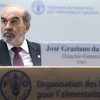
Progress on World Hunger Has Reversed
World hunger has increased, reversing years of progress, said a UN specialised agency. During its biennial conference held in Rome, Italy from 3-8 July, the Food and Agriculture Organisation (FAO) noted that the world is facing it’s worst food crisis since World War II.
Ending Child Marriage Could Add Trillions to World Economy
The benefits of ending child marriage are many—boosting a young girl’s morale and increasing her chances of education and work, and by that virtue, curbing high population rates in developing economies and boosting growth.
More Bang for Your Buck: Saving Lives by Investing in the Poorest
Investing in the health of the poorest communities saves almost twice as many lives, according to a UN agency’s analysis.
Working Toward a World Without Parkinson’s Disease
As one expert recently noted, if Parkinson’s were an infectious disease, we would call it an epidemic. Worldwide, 10 million people live with Parkinson’s disease, a number expected to double in the next 20 years. While there is no cure for Parkinson’s and no proven way to slow its progression, there is new reason to hope for a world without Parkinson’s.
The High Cost of Ageing
Evidence shows that health systems must be recast to accommodate the needs of chronic disease prevention.
UN Response Teams Underfunded as Costs Hit Staggering $23.5 Billion
UN response teams that help the most vulnerable people in the world are still largely underfunded, a new status report has revealed. The funding available to the teams is no match for the record number of people—141 million—who need assistance today.
“Big Reflection” Needed on Opioid Crisis
Opioids are among the most devastating drugs and are creating a crisis of epidemic proportions, said the UN drug agency.
The World Society Needs to Express Greater Solidarity for Refugees Worldwide
The world is heading into troubled waters as we are witnessing an unprecedented movement of people – refugees, migrants and internally displaced persons (IDPs) alike – fleeing from misery, poverty and conflicts. The refugee crisis that has swept across Europe and the Middle East is becoming the 21st century’s most protracted crisis with no immediate solution in sight. The world has not witnessed a more complex movement of people since the end of the Second World War; thousands of human beings undertake perilous and treacherous journeys in hope for a better and a safer future. Many of them perish during these hazardous journeys.
Achieving Universal Health Coverage (UHC) in Kenya through Innovative Financing
Every year, one million Kenyans are driven below the poverty line by healthcare-related expenditures. Poverty predisposes them to disease and slows all aspects of growth in the economy.
Housing Refugees of the Middle East Conflicts: Where Will They Go?
Prolonged conflicts in the Middle East have led to a deadly humanitarian crisis, with as many as 17.5 million people displaced in Syria, Iraq and Yemen.« Previous Page — Next Page »





 Bangladesh: Sarid, born one month early, receives specialized newborn care and grows stronger every day. Credit: UNICEF/UNI944397/Mojumder
Since the onset of the 2000s, global life expectancy has seen an overall rise, attributed to significant technological and scientific innovations in healthcare. Due to an increased understanding of different conditions as well as a rise in cooperation among healthcare experts around the world, there have been major strides made in ensuring that as few people die from chronic illnesses as possible. Despite the belief that healthcare is a fundamental human right, people from low- or middle-class backgrounds, marginalized groups, and underdeveloped countries have far more limited access to basic healthcare services.
The COVID-19 pandemic showed how marginalized communities are disproportionately affected by health crises, proving that we have much work to do in ensuring that no one dies of terminal conditions. While the global response to the coronavirus saw significant strides in immunization and vaccine development, the global outbreak of mpox in 2022 and its upsurge in parts of Africa in 2024 must remind us to remain vigilant.
Other major disease outbreaks in recent years have been linked to the destruction of infrastructure during warfare. Notably, in 2024, the Gaza Strip witnessed a return of the poliovirus since its eradication in the region 25 years ago. Israel’s blockade on Gaza has resulted in the collapse of the region’s sewage plants and desalination plants, and also destroyed healthcare capacities. The UN stated that this lack of clean water and sanitation would lead to an outbreak of cholera and other deadly infectious diseases. The 2026 OCHA Humanitarian Situation Report confirmed that the over two years of conflict in Gaza has produced a catastrophic health emergency, with millions remaining dependent on relief aid amid tight restrictions and no functioning public health system.
IPS is committed to providing full and comprehensive coverage on healthcare challenges around the world. IPS seeks to address the multifaceted causes of such challenges, including unprecedented pandemics, conflict-driven disease outbreaks, as well as socioeconomic barriers to equal healthcare access. IPS is also dedicated to reporting on innovations in the healthcare industry.

The Week with IPS

NEXT STOP - SDGs
Tracking global progress towards a sustainable world
Tracking global progress towards a sustainable world
