Languages
Friday, November 13, 2026



News and Views from the Global South
Health
Laws Criminalizing Drug Possession Can Cause More Harm
In many countries, a criminal record, even for a minor offense can have serious implications. Being convicted of a criminal offence renders one ineligible for certain jobs, social grants or benefits or from even being able to exercise one’s right to vote. It can also severely limit the ability to travel to certain countries and can result in the loss of custody of minor children. As prison conditions are often poor and health care services limited, a custodial sentence can have implications on the health outcomes of individuals.
HIV Time Bomb Ticks On
Radhika Banarjee, a 24 year-old CSW, listened carefully at an advocacy gathering in the heart of Dhaka, Bangladesh’s capital.
Arsenic Threat Looms Large in India: Well Switching Provides the Way Forward
An Indian Govt. Parliamentary Committee on Estimates on “Occurrence of High Arsenic (As) content in Groundwater” in December, 2014 stated that more than 70 million people in 96 districts in India is under threat due to As occurrence in groundwater.
Desert Locust Invading Yemen, More Arab States
Now that Yemenis begin to hope that their year-long armed conflict may come to an end as a result of the Gulf Cooperation Council and the United Nations sponsored round of talks between the parties in dispute, scheduled on 18 April in Kuwait, a new threat to their already desperate humanitarian crisis has just appeared in the form of a much feared massive desert locust invasion.
Gender Equality and Equity in Health Will Anchor Drive Towards a Sustainable National Development
Last month, the Government of Kenya (GoK) in partnership with United Nations Population Fund (UNFPA) at the sidelines of the 60th Session of the UN Commission of Women in New York, launched the report on the ‘Assessment of the UNFPA Campaign to End Preventable Maternal and New-born Mortality in support of the Campaign for Accelerated Reduction of Maternal Mortality in Africa’
Plan for Poorer Countries to Fund HIV Response Raises Concerns
Calls for low and middle income countries to contribute an additional 6.1 billion dollars to the global HIV response by 2020 could see some vulnerable groups left behind, said HIV activists meeting at the United Nations last week.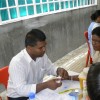
World Health Day: Rapidly Rising Diabetes Closely Linked to Poverty
Diabetes, which now affects more than 400 million people worldwide, is closely linked to poverty in most regions of the world, World Health Organization Medical Officer Alessandro Demaio told IPS Thursday.
‘Little Boy’ Devouring African Food
There is a ‘Little Boy’ who has nothing to do with the atomic bomb that the United States dropped on the Japanese city of Hiroshima on 6 August 1945. This time it is about another ‘Little Boy’ who has been devastating the harvests in many regions, especially in Africa.
Want to Feel Fit? Eat Falafel, Dahl, Cow Pea and…!
This is not a minor issue. Chickpea, faba bean, lentil, common bean, field pea, mung bean, black gram, pigeon pea, cowpea, and grass pea are the major pulse crops produced globally. And these especially play an important role in food and nutritional security and sustainable agricultural production systems in the drylands, which cover over 40 per cent of the world’s land area and are home to approximately 2.5 billion people.
Challenges of Polio Vaccination
Pakistan and Afghanistan, the two remaining polio-endemic countries, have joined forces to eradicate poliomyelitis by vaccinating their children in synchronised campaigns.
Saving Children’s Lives Through Drones
The first successful test-flight of an unmanned aerial vehicle (UAV) or drone was an unhindered 10 km journey from a community health centre to the Kamuzu central hospital laboratory in the capital Lilongwe. Local community members watched with excitement as the drone rose into the sky, after being launched by the United Nations Children’s Emergency Fund (UNICEF) and government of Malawi at the area 25 health centre.
NGO Pledges $500 Million Towards Sustainable Development Goals
CMMB -Healthier Lives Worldwide– a leading international nonprofit health non-governmental organisation (NGO) – has pledged 500 million dollars to help implement the UN’s Sustainable Development Goals (SDGs)– with a specific focus on maternal, newborn, child and adolescent health.
Corruption Swallows a Huge Dose of Water
While the United Nations marked this year’s World Water Day on March 22 focusing on the connection between water and jobs, a new report has rung loud alarm bells about the heavy impact of corruption on the massive investments being made in the water sector.
Build Healthy, Sustainable Food Systems to Fight Malnutrition
Creating healthy and sustainable food systems is key to overcoming hunger and all forms of malnutrition (undernourishment, micronutrient deficiencies, obesity) around the world. Food production has tripled since 1945 while average food availability per person has risen by 40 per cent. Current food systems are not delivering well on ensuring healthy diets for all. We have to fix the problem. The most efficient and sustainable approach will be to reshape and strengthen food systems that support healthy diets for all.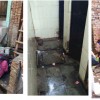
Water and Sanitation Challenges Amidst Social Inequality in Urban Areas in India
During the month of March 2016 and ironically very close to the World Water Day, the Supreme Court of India had to step in to resolve a water sharing dispute between three contiguous states including the National Capital Region. That, this was not the first time that the Supreme Court had to intervene is a stark indicator of the extent of the water crisis that is confronting India, a country that aspires to be a global power. Earlier Supreme Court had to step in to resolve a bitter dispute on water sharing between two Southern states of India – Karnataka and Tamil Nadu.
One Year After Sendai – What The World Can Learn from Armenia
Armenia is prone to natural disasters. Eight out of every 10 citizens are likely to experience a natural disaster at some point during their lifetimes – an earthquake, landslide, hailstorm or flooding. Each year, the country incurs $33 million in damage from such disasters.Using Smarter Stoves to Combat Household Air Pollution
When it comes to cooking indoors over open fires, the harmful health effects can be equal to smoking two packs of cigarettes a day. This indoor air pollution plagues nearly nine out of every 10 Bangladeshi households, which use wood and other biofuels to cook inside.
Fat’s Heavy Burden on the World Economy
About 2.1 billion people are regarded as overweight or obese today, or almost thirty per cent of the world’s population. With over 800 million people estimated to be chronically hungry in the world, it appears that the number of overweight is more than 2.5 times the number of undernourished.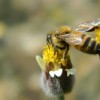
Asian Scientists Grapple with How to Foster Crop Pollination
Pollinators, whose role is essential in a third of what the world eats, are at center stage after a landmark new United Nations report warned that many of the 20,000 species are threatened by human behaviour.
Anti-Retrovirals but No Food
Silindiwe Moyana, an HIV positive mother of five from Chipinge east of Zimbabwe, cannot hide her anxiety. She was worried she might not survive this year as drought-induced starvation stalks her and her family. The country is in the throes of a devastating drought which has compromised the nutrition of people living with HIV.Garbage, Garbage Everywhere, but…
Imagine a river bursting its banks and flooding entire cities and towns. But when the river is made of malodorous garbage and is in Beirut, this is a stark and dramatic situation affecting the city’s 2.226 million people. It all started in July 2015, when the Lebanese administration closed the major landfill of the city. Since then, trash is being piled all over the streets of Jdeideh in Beirut’s northern suburbs. This river of garbage grew steadily, as reported in recent days by a wide section of news media, including Al Jazeera, CNN and Reuters. Thousands of kilometers away in Pakistan, a very similar situation is reported by Dawn.« Previous Page — Next Page »


 Bangladesh: Sarid, born one month early, receives specialized newborn care and grows stronger every day. Credit: UNICEF/UNI944397/Mojumder
Since the onset of the 2000s, global life expectancy has seen an overall rise, attributed to significant technological and scientific innovations in healthcare. Due to an increased understanding of different conditions as well as a rise in cooperation among healthcare experts around the world, there have been major strides made in ensuring that as few people die from chronic illnesses as possible. Despite the belief that healthcare is a fundamental human right, people from low- or middle-class backgrounds, marginalized groups, and underdeveloped countries have far more limited access to basic healthcare services.
The COVID-19 pandemic showed how marginalized communities are disproportionately affected by health crises, proving that we have much work to do in ensuring that no one dies of terminal conditions. While the global response to the coronavirus saw significant strides in immunization and vaccine development, the global outbreak of mpox in 2022 and its upsurge in parts of Africa in 2024 must remind us to remain vigilant.
Other major disease outbreaks in recent years have been linked to the destruction of infrastructure during warfare. Notably, in 2024, the Gaza Strip witnessed a return of the poliovirus since its eradication in the region 25 years ago. Israel’s blockade on Gaza has resulted in the collapse of the region’s sewage plants and desalination plants, and also destroyed healthcare capacities. The UN stated that this lack of clean water and sanitation would lead to an outbreak of cholera and other deadly infectious diseases. The 2026 OCHA Humanitarian Situation Report confirmed that the over two years of conflict in Gaza has produced a catastrophic health emergency, with millions remaining dependent on relief aid amid tight restrictions and no functioning public health system.
IPS is committed to providing full and comprehensive coverage on healthcare challenges around the world. IPS seeks to address the multifaceted causes of such challenges, including unprecedented pandemics, conflict-driven disease outbreaks, as well as socioeconomic barriers to equal healthcare access. IPS is also dedicated to reporting on innovations in the healthcare industry.

The Week with IPS

NEXT STOP - SDGs
Tracking global progress towards a sustainable world
Tracking global progress towards a sustainable world
