Languages
Friday, November 13, 2026



News and Views from the Global South
Health

Tackle ‘Hidden Hunger’ by Improving Food Systems
Nutrition is complex and multi-dimensional. Micronutrient deficiencies or ‘hidden hunger’ are much more widespread than chronic undernourishment or hunger, understood as inadequate dietary energy. Micronutrient deficiencies refer to the lack of essential vitamins, minerals and other substances required over the human life cycle by the body in small amounts. Micronutrient undernutrition has long-term effects on health, learning ability and productivity, leading to high social and public costs, reduced work capacity in populations due to high rates of illness and disability, and loss of human potential.
Zika Epidemic Offers Sanitation a Chance in Brazil
Three decades of dengue fever epidemic did not manage to awaken a sense of urgency in Brazil regarding the need for improving and expanding basic sanitation. But the recent surge in cases of microcephaly in newborns, associated with the Zika virus, apparently has.
Sterilisation of HIV-Positive Women
Mayimuna Monica* has been living with HIV for over 10 years and wants to have a baby. But she can’t because her uterus was removed against her will at a government hospital where she had gone to deliver her last child now aged eight. “My uterus was removed in 2007. When I got pregnant and went for medical check-up, the doctor asked me why I was pregnant. I told him I want to have a third child. The doctor said, you people living with HIV at times annoy us because you understand your situation but you come to disturb us.” Mayimuna narrates.
Kidneys Going Cheap in Poor Estate Community
One and half years ago, Johnson, a 20- something youth, hailing from Sri Lanka’s tea plantations, received an unusual request. The caller, someone Johnson knew casually, made an offer for his kidney. “It was for a half a million rupees (around US $3,500),” he said.UN Seeks Zero Tolerance for Female Genital Mutilation
The United Nations says it is determined to end female genital mutilation (FGM) – a ritual practiced mostly in Africa, the Middle East, parts of Asia and even among some migrant communities in Europe. And the world body’s determination is being backed with facts, figures -- and a global campaign by a Joint Programme against FGM initiated by the UN Population Fund (UNFPA) and the UN children’s agency UNICEF.
Family Planning in India is Still Deeply Sexist
The tragic death of 12 women after a state-run mass sterilisation campaign in the central Indian state of Chhattisgarh went horribly wrong in 2014 made global headlines. The episode saw about 80 women "herded like cattle" into makeshift camps without being properly examined before the laparoscopic tubectomies that snuffed out their lives. In another incident in 2013, police in the eastern Indian state of Bihar arrested three men after they performed a botched sterilisation surgery without anaesthesia on 53 women over two hours in a field.
Microcephaly Revives Battle for Legal Abortion in Brazil
The Zika virus epidemic and a rise in the number of cases of microcephaly in newborns have revived the debate on legalising abortion in Brazil. However, the timing is difficult as conservative and religious groups are growing in strength, especially in parliament.
Women’s Empowerment Will Accelerate Kenya’s Economic Prosperity
When President Barack Obama made his first visit to Kenya as US President in July 2015, one of the poignant messages he left was an exhortation for communities to shun cultures that degrade women and girls.
Rabbit Farming Now a Big Hit in Zimbabwe
Tichaona Muzariri, 44, a villager based at Range in Chivhu, a town 143 kilometers south of Harare, the Zimbabwean capital, quit his job as a teacher in 2009 to start a rabbit farm on a small scale with three does (female rabbits) and one buck (male). With around US$30 as capital, Muzariri waded into rabbit farming back then. Today, his rabbit farm breeds nearly 3,000 rabbits every year and slaughters up to 120 every week for sale to grocery stores, restaurants and hotels.

Brazil Wages War against Zika Virus on Several Fronts
Brazil is deploying 220,000 troops to wage war against the Zika virus, in response to the alarm caused by the birth of thousands of children with abnormally small heads. But eradicating the Aedes aegypti mosquito requires battles on many fronts, including science and the pharmaceutical industry.
Combating HIV among Teens
Keziah Juma is coming to terms with her shattered life at the shanty she shares with her family in Kenya’s sprawling Kibera slum where friends and relatives are gathered for her son’s funeral arrangements. While attending an antenatal clinic, Juma who is only 16 years discovered that she had been infected with HIV. “I went into shock and stopped going to the clinic, that is why they could not save my baby and I have been bed-ridden since giving birth two months ago,” she told IPS.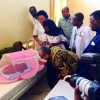
Maternal and Child Health Key to Kenya’s Economic Growth
On Friday, 06 November 2015, we had the honor of meeting the First Lady of Kenya Ms Margaret Kenyatta, a tireless advocate for “every woman and every child”, during the launch of the Beyond Zero campaign in Mandera County, North-Eastern Kenya, a place which has often been described as ‘the worst place on earth to give birth’.
India’s Children: Plagued by Preventable Diseases from Poor Sanitation
Though the state of Karnataka in India counts for a higher Human Development Index of 0.478 against the national average of 0.472 in the subcontinent, the continued deficit in water and sanitation continues and the children there are bearing the brunt of the lack of infrastructure.
Zimbabwe: Poverty Stunting Minds and Growth
Mildren Ndlovu* knows the mental toll of Zimbabwe's long-drawn economic hardships in a country where a long rehashed statistic by labour unions puts unemployment at 90 per cent.
Syrian Government to Allow Aid, Loosening the Stranglehold on Madaya
The Syrian government says it will allow humanitarian aid into the besieged rebel-held town of Madaya, according to the United Nations, following reports and horrific pictures of residents starving to death. Aid is expected to reach the area by Monday, but for some it is too little and too late.
India Needs to “Save its Daughters” Through Education and Gender Equality
Women constitute nearly half of the country's 1.25 billion people and gender equality -- whether in politics, economics, education or health -- is still a distant dream for most. This fact was driven home again sharply by the recently released United National Development Programme’s Human Development Report (HDR) 2015 which ranks India at a lowly 130 out of 155 countries in the Gender Inequality Index (GII). India trails behind most Asian countries, including lesser developed Bangladesh and Pakistan which rank 111 and 121 respectively, and fares not much ahead of war-ravaged Afghanistan at 152.
Wrong Time of the Month: a Rights Gap for Developing Countries’ Girls
The onset of menstruation is a landmark event in the life of a young woman. Yet many complications and challenges accompany such an event. One in 10 adolescent girls miss school and eventually drop out due to menstruation-related issues.
Hail to the Cowpea: a Blue Ribbon for the Black-Eyed Pea
2016 is the International Year of Pulses, and we at the International Institute of Tropical Agriculture are proud to be organizing what promises to be the landmark event, the Joint World Cowpea and Pan-African Grain Legume Research Conference.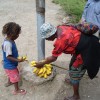
Malnutrition a Silent Emergency in Papua New Guinea
High up in the mountainous interior of Papua New Guinea (PNG), the most populous Pacific Island state of 7.3 million people, rural lives are marked by strenuous work toiling land in rugged terrain with low access to basic services.Despite Health Risks, Many Argue GMOs Could Help Solve Food Security
Cameroon is on the path to introduce genetically modified organisms (GMO’s). This would be overseen by the Cameroon Academy of Sciences, in collaboration with the National Biosafety Committee, if the Cameroon Cotton Corporation successfully implements a three-year test cultivation of cotton.
Disabled Persons Not Part of AIDS Success in Zimbabwe
Wheelchair-bound, her body now skeletal from full blown AIDS, disabled 38-year-old Melisa Chigumba attempts to wave away a swarm of flies hovering around her face as she sits outside her home in Chachacha, a remote area in Shurugwi, 278 kilometers south of the capital, Harare.« Previous Page — Next Page »


 Bangladesh: Sarid, born one month early, receives specialized newborn care and grows stronger every day. Credit: UNICEF/UNI944397/Mojumder
Since the onset of the 2000s, global life expectancy has seen an overall rise, attributed to significant technological and scientific innovations in healthcare. Due to an increased understanding of different conditions as well as a rise in cooperation among healthcare experts around the world, there have been major strides made in ensuring that as few people die from chronic illnesses as possible. Despite the belief that healthcare is a fundamental human right, people from low- or middle-class backgrounds, marginalized groups, and underdeveloped countries have far more limited access to basic healthcare services.
The COVID-19 pandemic showed how marginalized communities are disproportionately affected by health crises, proving that we have much work to do in ensuring that no one dies of terminal conditions. While the global response to the coronavirus saw significant strides in immunization and vaccine development, the global outbreak of mpox in 2022 and its upsurge in parts of Africa in 2024 must remind us to remain vigilant.
Other major disease outbreaks in recent years have been linked to the destruction of infrastructure during warfare. Notably, in 2024, the Gaza Strip witnessed a return of the poliovirus since its eradication in the region 25 years ago. Israel’s blockade on Gaza has resulted in the collapse of the region’s sewage plants and desalination plants, and also destroyed healthcare capacities. The UN stated that this lack of clean water and sanitation would lead to an outbreak of cholera and other deadly infectious diseases. The 2026 OCHA Humanitarian Situation Report confirmed that the over two years of conflict in Gaza has produced a catastrophic health emergency, with millions remaining dependent on relief aid amid tight restrictions and no functioning public health system.
IPS is committed to providing full and comprehensive coverage on healthcare challenges around the world. IPS seeks to address the multifaceted causes of such challenges, including unprecedented pandemics, conflict-driven disease outbreaks, as well as socioeconomic barriers to equal healthcare access. IPS is also dedicated to reporting on innovations in the healthcare industry.

The Week with IPS

NEXT STOP - SDGs
Tracking global progress towards a sustainable world
Tracking global progress towards a sustainable world
