Languages
Saturday, November 7, 2026



News and Views from the Global South
Humanitarian Emergencies

2020: A Yet More Devastating Year Closes With At Least Some Signs Of Hope
Despite its grim record of multiple natural disasters and a deepening climate crisis, one could be forgiven for looking back on 2019 with a degree of nostalgia. There is no disguising the extent of the calamity wrought this year by COVID-19, yet as we approach the end of 2020 we may also draw strength from positive developments emerging.
Hope Thrives on Action
As Mohammed, a Palestine refugee with impaired vision who attends a specialized UNRWA programme for children with disabilities, told us during our mission to Lebanon a week ago: “I was worried. I was worried that I could not continue my education because the programme was going to be cut. Now I have hope that I can continue to study and make my dream come true.” As 2020 comes to a close and we reflect on Education Cannot Wait’s mission this past year, two things stand out: hope and action. Amidst multiple crises around the globe, exacerbated by the COVID-19 global pandemic, hope has been the fuel driving us all forward to take action to deliver to those left furthest behind. Indeed, while hope is life-sustaining for a young girl or boy enduring conflict, forced displacement and disaster, it cannot be sustained without action.
‘We Might Have a Covid-21 or Covid-22 Coming Our Way’
Cristián Samper is working for the Wildlife Conservation Society, an organization that concerns itself with the health of wildlife all over the globe. And he warned --even before the Covid-19 pandemic – about the dangers of a viral pandemic.
The World in 2021
The year 2020 is ending with the world caught up in an unprecedented human and economic crisis. The pandemic has contaminated 75 million people and killed 1.7 million. With the lockdowns, the global economy has suffered the worst recession in 75 years, causing the loss of income for millions of people. In such a bleak environment, what will the new year bring? Whilst uncertainty is the only certainty, eight points are likely to be key in the year ahead:
2020: The Year of COVID 19
 At the end of this year, we must pay our respects to the nearly 1.5 million people who have died from the Coronavirus.
COVID 19 has inflicted extensive damage beyond human casualties, exposing the frailties of governments, societies, economies and health systems, particularly in those countries that chose to ignore the warnings and advice of the WHO.
The Impact of COVID-19 on Child Marriage and Other Gender-Based Violence
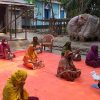
I recently visited rural areas of Bangladesh amid the COVID-19 pandemic and returned to Dhaka with a new understanding of the impact that COVID-19 is having on child marriage, a harmful practice that is a global challenge. The fundamental shift that I saw was that child marriage, which has typically been encouraged by struggling parents, is now being encouraged by struggling girls. This worrisome trend underscores a new burden of the pandemic on the poor.
Afghanistan’s Historic Year: Peace Talks, Security Transition but Higher Levels of Violence
While Afghanistan ends a historic year, filled with the hope for peace as the government and Taliban sat down for almost three months of consecutive peace talks for the first time in 19 years, it was also a year filled with violence with provisional statistics by the United Nations showing casualties for this year being higher than 2019.
How Africa can Lead the World in the COVID-19 Recovery
Africa, compared to Asia, Europe and the US, has largely escaped the devastating death toll of COVID-19, accounting for a fraction of the world’s 63 million cases.
Five Years since the Paris Agreement: The Race to Net Zero Is On
In the wake of the worldwide COVID-19 pandemic, there are both challenges and opportunities in ensuring that COP26, a UN climate change summit, builds confidence in the Paris Agreement as an effective tool to avoid climate crisis.
Pandemic Puts Jamaican Children at Heightened Risk of Abuse
In Jamaica, school playgrounds are deserted, filled only with phantom shrieks of delight. Blackboards remain devoid of arithmetic and uniforms hang wrinkle-free in closets. When the first case of Covid hit Jamaican shores in early March, the government closed primary and secondary schools and over 500,000 children transitioned to remote learning. The majority of schools have yet to resume face-to-face classes since the March 13 closure.
Getting Children in Lebanon Back to School Amongst Multiple Crises
Education and health care were high on the agenda when the United Nations vowed to work toward a better future by setting 17 Sustainable Development Goals (SDGs) to be met by 2030.
Intellectual Property Monopolies Block Vaccine Access
Just before the World Health Assembly (WHA), an 18 May open letter by world leaders and experts urged governments to ensure that all COVID-19 vaccines, treatments and tests are patent-free, fairly distributed and available to all, free of charge.
Helping Women to Step out of the ‘Shadow Pandemic’ of Women Abuse
The United Nations Secretary-General’s UNiTE by 2030 to End Violence against Women campaign marked the 16 Days of Activism against Gender-based Violence (25 November to 10 December 2020) at a time when COVID-19 exacerbated the conditions women operate under.
Discriminatory Laws Still Holding Women Back in the Middle East
Decades of aggressive efforts to create equal opportunities for women, shatter the glass ceiling and build a more inclusive society only ends up in failure, when the key stake holders refuse to acknowledge discriminatory laws, socio-cultural and religious set ups that continue to threaten progress made by the female work force.
R & D Expenditure: How to Raise It and Why
Economic growth is the time-tested method of raising living standards and, if not accompanied by large increases in inequality, lowering poverty. Since World War II, economic growth has lifted hundreds of millions of people out of poverty, including in South Asia.
Africa Readying for Free Trade, Come January 2021
One day in February 2020, Accra-based coffee and cocoa trader Meron Dagnew visited the Secretariat of the African Continental Free Trade Area (AfCFTA) to introduce herself, even before the Secretariat was fully operational.
The First Global Event in the History of Humankind
The current pandemic is probably the first global event in the history of the human race. By ‘global’ I mean it has affected almost everybody, regardless of country of residence or social class.
Women’s Bodies, COVID-19 and Male Chauvinism
COVID-19 has in some nations been converted into a noxious, political issue. One of many worrying examples is the rhetoric of Brazil´s president. On 10 November, when Brazil´s COVID-19 death toll surpassed 162,000 victims – the numbers have continued to raise and are now 179,032 second only to USA´s 296,745 – Jair Bolsonaro minimized the effects of COVID-19 by stating: ”All of us are going to die one day. There is no point in escaping from that, in escaping from reality. We have to cease being a country of sissies.” Bolsonaro actually said maricas, which like sissies is slang for gay people. Both expressions originally indicated ”small girls” – marica is a diminutive of Maria and sissy of “kid sister”. Bolsonaro thus defined homosexuality as effeminacy by associating gay men with affectation and cowardice. By connecting disease, fear, and femininity the Brazilian president not only ignored the strength and courage women throughout history have demonstrated by enduring childbirths and caring for others, it also shows a strong disregard for gender equality and the rights of women and gay people.
Celebrating Vanuatu’s Path to Sustainable Development
The Pacific Island Developing State of Vanuatu has emerged as one of the region’s great success stories. Vanuatu has joined the ranks of Samoa and the Maldives as one of only six countries to graduate from being a least developed country, since the category was introduced by the United Nations in 1971.
If Your Civic Space is Closed, your Human Rights Dissolve
On Human Rights Day, civil society calls for the protection of civic space as a fundamental freedom, as more than 80% of the world’s population live in countries where civic space is closed, repressed or obstructed.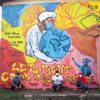
Human Rights Must Be at the Heart of the COVID-19 Recovery
On 10 December every year, we celebrate Human Rights Day, marking the anniversary of the adoption of the Universal Declaration of Human Rights. The Universal Declaration guarantees a spectrum of human rights that belong to each of us equally, and unite us as a global community and upholds our humanity.« Previous Page — Next Page »





 MONUSCO Peacekeepers and FARDC Soldiers Patrol Fataki Area. Credit: UN Photo/Jorkim Jotham Pituwa
Conflict, human rights violations, natural disasters, and famine have been at the forefront of concerns for humanitarian organizations. The escalation of humanitarian crises has led to over 239 million people in need of humanitarian assistance at the start of 2026, as estimated by OCHA’s Global Humanitarian Overview. The 2025 humanitarian appeal received only $12 billion, the lowest funding in over a decade, which has left 24 million fewer people reached in comparison to 2024. Conflict has remained the primary driver of crisis.
Humanitarian emergencies massively impact progress towards the Sustainable Development Goals (SDGs), adversely affecting economic development, inequality, education, planetary well-being, and poverty. Millions of people are faced with reduced access to essential services, including shelter, food, healthcare, and access to clean drinking water. UN Organizations such as UNHCR and the United Nations Children’s Fund (UNICEF) are committed to providing direct relief to affected communities when state governments cannot.
The United Nations 2024 Summit of the Future discussed measures that will be taken to reduce global inequality and promote peacekeeping efforts around the world. The recent UN Climate Change Conference (COP30) in Belém, Brazil, agreed to mobilize $1.3 trillion annually for climate action by 2035, operationalize the loss and damage fund, and triple adaptation finance. However, a fossil fuel transition commitment was not secured, despite climate change and the greenhouse effect being major contributors to humanitarian crises worldwide.
Countries across the world have also rallied to end humanitarian crises, as witnessed in conflicts such as Palestine and Ukraine. IPS is committed to providing relevant and in-depth reports of humanitarian emergencies around the world and their implications.

The Week with IPS

NEXT STOP - SDGs
Tracking global progress towards a sustainable world
Tracking global progress towards a sustainable world

