Languages
Friday, October 2, 2026



News and Views from the Global South
Inequality

A Future Horror and the Hope of the Present
This is an alert message: if nothing stops the wave of violence in Mexico, by the end of 2024 the country could exceed the figure of 150,000 missing persons.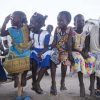
What Future for a World of 8 Billion?
What does a young girl from Juba, in South Sudan, an 8-year-old boy living in the slums of Mumbai, in India, a young mother from the south of Lima, in Peru, and an 83-year-old man enjoying retirement in the suburbs of Stockholm, in Sweden, have in common?
India & China Continue to Lead –as World Population Projected to Reach 8.0 Billion
India and China, two Asian nuclear powers who are also longstanding rivals embroiled in the geo-politics of the Indian Ocean region, have remained two of the world’s most populous nations accounting for over a billion people each. But as the world’s population reaches the 8.0 billion mark, come November, India is projected to surpass China.
A World of 8 Billion, Yes, But Only a Few Are Seen as Human Beings
Far-right Brazilian president, Jair Messias Bolsonaro, was quoted a year ago or so as saying to a small group of indogenous people that they “now look a bit more like humans.”
Myths Fuel Xenophobic Sentiment in South Africa
Around the world, from Syria to Libya, from Bangladesh to Ukraine, millions have become refugees in foreign lands due to war, famine, or political and economic instability in their countries.
The Rape of the Indian Ocean
The Story of the Yellow Fin Tuna
Over the last past several decades marine fish stocks worldwide have been under intense threat. There have been many high sounding declarations and agreements to reduce catch effort, to use more environmentally friendly fishing gear, to prevent illegal fishing and to impose “closed seasons” to allow stocks to recover.

Why We Need a Digital Safe Space for LGBTQ Youth – Thoughts from Asian Teens
Recently, I watched a documentary titled Why We Can’t See Disabled People [in Korea].
Climate Hypocrisy Ensures Global Warming
Rich country governments claim the high moral ground on climate action. But many deny their far greater responsibility for both historic and contemporary greenhouse gas (GHG) emissions, once acknowledged by the Kyoto Protocol. Climate injustice Worse, responsibility has not been matched by commensurate efforts, especially by the largest rich economies in the G7, which dominates the G20. Its continued control of international economic resources and policymaking blocks progress on climate justice.
Why Aren’t More Women Angry?
Why aren’t more women angry about their subordination, discrimination, and unequal treatment in the 21st century? Of course, some of the world’s women are angry, but they are comparatively few.
OECD’s Regressive World Corporate Income Tax Reform
After decades of rejecting international tax cooperation under multilateral auspices, rich countries have finally agreed. But, by insisting on their own terms, progressive corporate income tax remains distant. Tax avoidance and evasion by transnational corporations (TNCs) are facilitated by ‘tax havens’ – jurisdictions with very low ‘effective’ taxation rates. Intense competition among developing countries to attract foreign direct investment (FDI) makes things worse.
Slave Markets Open 24/7: Refugee Babies, Boys, Girls, Women, Men…
In addition to slave selling and buying deals in public squares, as reported time ago in ‘liberated’ Libya, a widespread exploitation of men, women, and children has been carried out for years at refugee camps worldwide.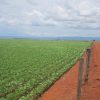
Brazil: Inequality Sharpened, Social Policies Dismantled, More Millions Pushed into Hunger
Right now, out of a total of 211.7 million Brazilians, 116.7 million are experiencing some level of food insecurity, 43.4 million do not have enough food, and 19 million were facing hunger, reveals a June 2022 report by the Brazilian Research Network of Food and Nutrition Sovereignty and Security (Rede PENSSAN).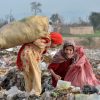
Upset with the Opulence of the Rich? But the World’s Children Are Paying the Bill
The excesses committed by rich people can be deadly–and in fact they are. Be it about food, energy or overall waste, such excesses have been depleting the world's natural resources and pushing both current and future generations towards the edge of a predictable abyss.
Corruption Kills
Nigeria’s accountant-general, the administrative head of the country’s treasury, has been arrested by the Economic and Financial Crimes Commission for allegedly stealing 80 billion naira ($134 million). This is a staggering theft in a country that has an estimated poverty rate of 95 million (48% of the population) and some of the worst health indices in the world.
Reclaiming Our Future
The Asia-Pacific region is at a crossroads today – to further breakdown or breakthrough to a greener, better, safer future. Since the Economic and Social Commission for Asia and the Pacific (ESCAP) was established in 1947, the region has made extraordinary progress, emerging as a pacesetter of global economic growth that has lifted millions out of poverty.
Technology for Tracing the Work of Child Labour Could Help End the Practice
Technology used to trace the origin and price of consumer goods to ensure farmers earn fair profits could easily be adapted as a tool to fight child labour Fair Trade living wage and income lead Isa Miralles told delegates at the 5th Global Conference on the Elimination of Child Labour.
From Child Laborer to Activist, Tara Banjara Asks World to Pledge to End the Scourge
Tara Banjara was four and a half years old when her parents put her to work on the roads, cleaning the garbage and rubble out of potholes to prepare for construction in Nemdi village, Rajasthan, India. She worked in the wind, cold, and rain with her mother, day in and day out, year in and year out. She would return home shattered, too exhausted to eat before falling asleep each night.
One Hundred Years On, Argentine State Acknowledges Indigenous Massacre in Trial
It’s a strange trial, with no defendants. The purpose is not to hand down a conviction, but to bring visibility to an atrocious event that occurred almost a hundred years ago in northern Argentina and was concealed by the State for decades with singular success: the massacre by security forces of hundreds of indigenous people who were protesting labor mistreatment and discrimination.
Inequality Tightens Its Grip on the Most Vulnerable
Please do not say you were not aware that the world produces enough food to feed all human beings on Earth, while nearly double the combined European Union’s population go to bed hungry… every single night.
Civil Society Responds — as Health-Care Facilities in Ukraine Come Under Attack
Alongside the devastation caused by bombs and bullets, the war in Ukraine has wrought another danger that can be as deadly as the violence itself: the disruption of access to health services for people who will not survive if cut off from health care.
Ukraine’s EU Membership Ambition
Before the war, Ukraine's dream to become part of the EU was exactly that – a dream. But the new political reality could make it come true. Russia’s invasion of Ukraine changed and to some extent even destroyed the familiar international political reality. Up until 24 February, Russia had been integrated into the global economy, had excellent growth prospects, and the construction of the Nord Stream 2 gas pipeline was almost finished.« Previous Page — Next Page »


This page includes independent IPS news coverage supported by the Norwegian Ministry of Foreign Affairs, to put the issue of inequality higher up the news agenda during the run-up to the 2015 MDG deadline and the process to forge a new development consensus
