Languages
Sunday, November 8, 2026



News and Views from the Global South
Development & Aid

Trade Liberalisation Kicked Away African Development Ladder
Africans have long been promised trade liberalisation would accelerate growth and structural transformation. Instead, it has cut its modest production capacities, industry and food security.
Amid Record Displaced Persons, Migrant Remittances Spike—New IOM Report
While there have been a record number of displaced people worldwide, according to a new report by the International Organization for Migration (IOM), migrant remittances are promoting human development.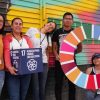
How do Taxes Drive the Sustainable Development Goals?
Tax revenue remains the most sustainable source of income for governments and plays a crucial role in financing the Sustainable Development Goals (SDGs). It diminishes the need for international assistance and contributes to the repayment of burdensome debt, ultimately strengthening a country’s ability to withstand external shocks.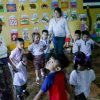
Working to Keep Náhuat, the Language of the Pipil People, from Vanishing in El Salvador
A group of children participating in an immersion program in Náhuat, the language of the Pipil people and the only remaining pre-Hispanic language in El Salvador, are the last hope that the language will not die out.
Civil Society Scores LGBTQI+ Rights Victory in Dominica
On 22 April, Dominica’s High Court struck down two sections of the country’s Sexual Offences Act that criminalised consensual same-sex relations, finding them unconstitutional. This made Dominica the sixth country in the Commonwealth Caribbean – and the fourth in the Eastern Caribbean – to decriminalise same-sex relations through the courts, and the first in 2024.
1.8 Million More Palestinians Doomed to Poverty if Gaza War Persists
Nearly seven months into the Gaza war, the UN warns that to rebuild and restore the buildings lost in this period, it would take several decades, and to revitalize Palestine’s economy, it would be a great undertaking. Meanwhile, the great losses in housing and public services and the economic stall only threaten to push even more Palestinians into poverty.
LDCs Need Concessional Grants, Not Loans, Say Experts
Olaide Bankole was born and raised in Nigeria, and he observed how climate change was evident in the country with temperature rises and rainfall variability and how drought, desertification, and sea level rises have been affecting its people. He is also aware of how rising sea levels threaten southern Nigerian cities like Lagos and coastal areas, increasing their vulnerability to flooding and waterborne diseases.
Media Freedom Declining Across Europe, With Implications for Rule of Law
A new report has warned media freedom in the EU is close to “breaking point” in many states amid rising authoritarianism across the continent.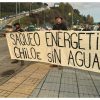
Rainy Chiloé, in Southern Chile, Faces Drinking Water Crisis
The drinking water supply in the southern island of Chiloé, one of Chile's rainiest areas, is threatened by damage to its peatlands, affected by sales of peat and by a series of electricity projects, especially wind farms.
We Should Aim to be at Peace with Nature, Says David Cooper of UN Convention on Biological Diversity
In a world faced with habitat loss and species extinction, climate change, and pollution, it’s crucial that countries develop their national action plans and create a society that lives in harmony with nature, says David Cooper, Acting Executive Secretary of the UN Convention on Biological Diversity (CBD), in an exclusive interview with IPS.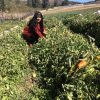
Drought and Unequal Water Rights Threaten Family Farms in Chile
Lack of water threatens the very existence of family farming in Chile, forcing farmers to adopt new techniques or to leave their land. The shortage is caused by a 15-year drought and exacerbated by the unequal distribution arising from the Water Code decreed in 1981 by the 1973-1990 dictatorship of General Augusto Pinochet, which turned water into a tradable commodity and gave its owners rights in perpetuity.
Transgender Health Rights Boosted by Hospitals’ ‘Separate Room’ Policy
Transgender people and civil society organizations have welcomed the decision of the chief minister in Khyber Pakhtunkhwa, Pakistan, to allocate separate rooms in hospitals for the transgender community so they can avail themselves of uninterrupted healthcare. “We demand that all provinces follow suit and announce facilities for more than 500,000 transgender people in the country,” Farzana Shah, president of the Khyber Pakhtunkhwa (KP) Transgender Association, told IPS.
Using Industrial Waste to Fight Pollution in Brazil
Biogas sounds like redemption, the conversion of the sinner. Its production involves extracting energy from filth, from the most disgusting environmental pollution, and at the same time avoiding the worsening of the global climate crisis.
Lao PDR Lawmakers Meet to Further ICPD25 Programme of Action
A recent workshop of lawmakers heard that targeted interventions would be necessary to meet the International Conference on Population and Development (ICPD), its Programme of Action (PoA), and Lao PDR's national commitments to ICPD25 at the Nairobi Summit 2019.
WHO Africa Advances African Science by Promoting Peer-Reviewed Research
The World Health Organization's African regional office and partners published over 25 peer-reviewed articles in scientific journals in 2023 as part of efforts to address the imbalance in global research and ensure that Africa was better represented in the production of health research academic literature, a new report shows.
Education Cannot Wait Interviews Amy Clarke, Co-Founder and Chief Impact Officer for Tribe Impact Capital LLP
Amy Clarke is Co-Founder and Chief Impact Officer of the multi award-winning Tribe Impact Capital, a dedicated impact wealth manager and B Corps, based in London. She has over 29 years of experience in sustainability, both leading in-house teams (Microsoft and Bank of America) and as a management consultant specialising in climate and sustainability (PwC and EY). Amy serves as a Trustee to B Lab UK and is also an Advisor to fellow B Corps, Greenheart Consulting and Black Seed Ventures. She sits on the Global Steering Group of the Global Ethical Finance Initiative (GEFI) and the Investment Committee of The Blue Cross (having previously served as a Trustee). Amy has both BSc and MSc degrees in environmental studies. In her spare time, she serves as Head of Catering and Entertainment for her three-legged rescue Staffordshire Bull Terrier.

Latin America’s Shifting Demographics Could Undercut Growth
Latin America’s workforce grew by nearly 50 percent in the two decades before the pandemic, helping boost economic growth. Now demographic trends are turning, and likely to weigh on growth in the coming years.
Cuban Family Harnesses Biogas and Promotes its Benefits
Just to obtain a good fertilizer it was worth building a biodigester, says Cuban farmer Alexis García, who proudly shows the vegetables in his family's garden, as well as the wide variety of fruit trees that have benefited from biol, the end product of biogas technology.
Climate Crisis in Mountains: Borderless Struggle for Frontline Communities
For the last three years, Sambhunath Guragain has been waking up every morning to a view he doesn't want to see: discarded agricultural land where he and his family used to grow food, including rice, but the flood in 2021 changed everything. “We don’t have any crops now, but we are farmers,” Guragain said in November 2021, while looking towards a quietly flowing Melamchi river. This was six months after the massive flash flood in Helambu-Melamchi in Sindhupalchowk district in Nepal. After three years, the situation hasn’t changed.
Niger’s Military Coup Triggers Child Marriages, Sex Work in Neighboring Countries
A group of young girls aged between 15 and 17 sit tight, following attentively a lesson being taught by a Mualim (Islamic teacher) in a makeshift madrassah (Qur’anic school) located in one of the impoverished townships of Benin’s economic capital, Cotonou. They arrived in Benin recently, fleeing poverty, hunger, climate change, and rising insecurity in their home country, Niger, in the aftermath of the military coup that toppled democratically-elected president Mohamed Bazoum.
AI Policy Can’t Ignore Climate Change: We Need Net Zero AI Emissions
Artificial intelligence provides amazing potential for advancement across fields, from medicine to agriculture to industry to the entertainment business, even as it generates significant concerns. AI can also improve the efficiency of energy production and use in ways that can reduce greenhouse gas emissions.« Previous Page — Next Page »





 2026 High-level Political Forum on Sustainable Development. Credit: UN Photo/Eskinder Debebe
In 2015, the United Nations and its Member States adopted the Sustainable Development Goals (SDGs) in an effort to make the world a more sustainable and peaceful place for future generations. Progress on the 17 SDGs has been uneven, and inequality persists across the globe. 10 years after adoption, the 2025 UN SDGs Report revealed that only 35% of the SDG targets are on track, with more than half moving too slowly, and 18% moving backwards from the 2015 baseline. Poverty remains one of the world’s most pressing issues, with hunger, violence, and inequality impeding the opportunities for all people to achieve success. In September 2024, the United Nations Summit of the Future introduced a new goal: to eradicate global poverty by 2030, ensure universal rights to basic services, and increase the overall standard of living in terms of industrialization, economic well-being, citizen health, and literacy. Furthermore, recent shifts in United States foreign aid policy – notably, major budget cuts to USAID and the termination of thousands of development programmes– have severely threatened vital lifelines of financial aid to impoverished communities around the world. Additionally, the United States’ withdrawal from the Paris Climate Agreement has undercut international efforts at sustainable development. With the upcoming 2030 deadline, the UN Secretary-General has called for urgent multilateralism across six priority areas: food systems, energy, digital connectivity, education, jobs and social protection, and climate and biodiversity. IPS sheds light on marginalized communities that struggle on a daily basis to survive and have their stories heard and respected.
Updated by Yilan Batista and Shuli Wong August 2026

The Week with IPS

NEXT STOP - SDGs
Tracking global progress towards a sustainable world
Tracking global progress towards a sustainable world
