Languages
Tuesday, November 10, 2026



News and Views from the Global South
Development & Aid

Russia’s LGBTQI ‘Propaganda’ Law Imperils HIV Prevention
A new law banning LGBTQI ‘propaganda’ in Russia will further stigmatise LGBTQI people in the country and could worsen what is already one of the world’s worst HIV/AIDS epidemics, critics have warned.
New Political Agreement Finally Tackles Venezuela’s Social Crisis
The social crisis and humanitarian emergency in Venezuela became international headline news again once the government and the opposition, bitter adversaries for two decades, agreed to direct three billion dollars in state funds held abroad to social programs.
COP15: Unsustainable Infrastructure Threatens Biodiversity
Created in 2016, the Mexican Caribbean Biosphere Reserve (MCBR) hosts 1900 species of animals and plants and contains half of the Mesoamerican Barrier Reef System, the second largest in the world after Australia's Great Barrier Reef.
The Poor, Squeezed by 10 Trillion Dollars in External Debts
The external debt of the world’s low and middle-income countries at the end of 2021 totalled 9 trillion US dollars, more than double the amount a decade ago. Such debt is expected to increase by an additional 1.1 trillion US dollars in 2023.
Education Cannot Wait Interviews Liesbet Steer, Executive Director of the Education Commission
Dr. Liesbet Steer is the Executive Director of the Education Commission, chaired by UN Special Envoy for Global Education and Chair of the ECW High-Level Steering Group, The Rt. Hon. Gordon Brown. Under Liesbet’s leadership, the Commission has been at the forefront of new thinking in education financing calling for more effective and “progressive” domestic spending, innovative international and private financing (through the International Finance Facility for Education (IFFEd), the Education Outcomes Fund and Greater Share) and better coordination of external funding (including through her leadership of the Global Education Forum and Save Our Future). [related_articles]

Europe’s Dash for Gas Presents Pitfalls for Africa
One of the knock-on effects of Moscow’s invasion of Ukraine is that European countries have embarked on a ‘dash for gas’ to find alternatives to Russian energy supplies.
Solar Energy Benefits Children and Indigenous People in Northern Brazil
Solar energy is booming in Roraima, a state in the far north of Brazil, to the benefit of indigenous people and children in its capital, Boa Vista, and helping to provide a stable energy supply to the entire populace, who suffer frequent electricity shortages and blackouts.
Experts Seek Appropriate Circular Solutions to Plastic Pollution
Experts agree that African economies need to develop innovative approaches to deal with plastic production, which is set to double in 20 years – adversely impacting rural communities.
Three Questions, #222MillionDreams; One Issue: Education and the ‘Triple-Nexus’ with UN Resident Coordinator & Humanitarian Coordinator DRC, Bruno Lemarquis
Q1: The Democratic Republic of the Congo (DRC) faces one of the most long-standing, complex protracted crisis on the globe. In such a context, how important is it for aid stakeholders to support the education sector among the multitude of urgent priorities in the country? Why must education be a leading priority?

Needed Global Financial Reforms Foregone yet Again
Calls for more government regulation and intervention are common during crises. But once the crises subside, pressures to reform quickly evaporate and the government is told to withdraw. New financial fads and opportunities are then touted, instead of long needed reforms.
Mexico’s Huge Challenge To Refine Marine Green Fuels
VERACRUZ, Mexico - By 2025, the state-owned Petroleos Mexicanos (Pemex) should comply with Mexican regulations to produce clean fuels, including marine ones, but there’s an obstacle: Mexico lacks a plan for the development of cleaner marine fuels.
Drought, Conflict and Forced Displacement Push Ethiopian Children Out of School
 A joint mission to Ethiopia by Education Cannot Wait (ECW), and Norway's International Development Minister has drawn attention to one of the world’s largest education crises that have left 3.6 million children out of school. The number of out-of-school children has spiked from 3.1 million to 3.6 million, according to UNICEF. However, ECW-funded schools provide children with ‘whole-of-child’ interventions, including school feeding, psychosocial support, teacher training, school materials, accelerated learning, gender transformative approaches, and the construction and rehabilitation of school facilities.

The Digital Divide: Africa the Least Connected with 60 percent of the Population Offline
The digital divide – between the world’s rich and poor nations —remains staggeringly wide. For over 2.7 billion people, many of them living in developing and least developed countries (LDCs), meaningful connectivity remains elusive, according to a UN report released during the 17th Internet Governance Forum in Addis Ababa, last month.
Dignity, Freedom and Justice
As we commemorate Human Rights Day, let us recall the opening preamble of the Universal Declaration of Human Rights of 1948: “Whereas recognition of the inherent dignity and of the equal and inalienable rights of all members of the human family is the foundation of freedom, justice and peace in the world… “
COP15: ‘Super Reefs’ Offer Hope for Ocean Recovery Ahead of Biodiversity Summit
Delegates from more than 190 countries are donning thick coats and winter boots to attend the long-delayed UN biodiversity summit in Montreal, Canada—the land of caribou, beluga whales and wolverines.
The Climate Crisis Disrupts the Education of 40 Million Children Every Year
The United Kingdom Foreign, Commonwealth and Development Office (FCDO) issued a ground-breaking Position Paper today that draws clear linkages between the climate crisis and global education crisis.
Energy Efficiency Is Law in Chile but Concrete Progress Is Slow in Coming
The Energy Efficiency Law began to gradually be implemented in Chile after the approval of its regulations, but more efforts and institutions are still lacking before it can produce results.
Climate Change Meets Conflict Pushing Millions of Children in Ethiopia Out of School
A silent catastrophe is unfolding in Ethiopia on the backdrop of years of inter-communal conflict and the most prolonged and severe drought in recent years. High inflation and food insecurity in the drought-ravaged country is among the worst in the world.
We Indigenous Peoples are Rights-Holders, not Stakeholders
After four failed rainy seasons, the land of the Maasai has withered. The worst drought in 40 years is a slow-motion storm of devastation in the Greater Horn of Africa, ruining the livestock, the communities, the Maasai way of life. Their cattle have been their greatest source of wealth and nutrition, but with grazing lands shriveled from the dry heat and their livestock emaciated, the entire region is in peril.
Europe and the Refugee Crisis: It’s all About Tackling Racism & Discrimination
In 2019, when the President-elect of the European Union (EU) Ursula von der Leyen had presented a list for her soon-to-be European Commission, and on that list was a portfolio called “Protecting the European way of life”, a lot of noise was made questioning what that meant. “Protection” was later changed to the “Promotion” of the European Way of Life. It’s been over three years since this very controversial, much debated and widely criticised portfolio as many continue to question what uniquely is the ‘European way of life’?
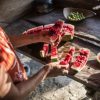
To Achieve Human Rights, Start with Food
This year’s Human Rights Day marks the 74th year since the United Nations adopted the Universal Declaration of Human Rights, an international document that enshrines the rights and freedoms of all people. The right to food became a legal obligation for countries to promote and protect as part of the economic, social and cultural rights in 1966.« Previous Page — Next Page »





 2026 High-level Political Forum on Sustainable Development. Credit: UN Photo/Eskinder Debebe
In 2015, the United Nations and its Member States adopted the Sustainable Development Goals (SDGs) in an effort to make the world a more sustainable and peaceful place for future generations. Progress on the 17 SDGs has been uneven, and inequality persists across the globe. 10 years after adoption, the 2025 UN SDGs Report revealed that only 35% of the SDG targets are on track, with more than half moving too slowly, and 18% moving backwards from the 2015 baseline. Poverty remains one of the world’s most pressing issues, with hunger, violence, and inequality impeding the opportunities for all people to achieve success. In September 2024, the United Nations Summit of the Future introduced a new goal: to eradicate global poverty by 2030, ensure universal rights to basic services, and increase the overall standard of living in terms of industrialization, economic well-being, citizen health, and literacy. Furthermore, recent shifts in United States foreign aid policy – notably, major budget cuts to USAID and the termination of thousands of development programmes– have severely threatened vital lifelines of financial aid to impoverished communities around the world. Additionally, the United States’ withdrawal from the Paris Climate Agreement has undercut international efforts at sustainable development. With the upcoming 2030 deadline, the UN Secretary-General has called for urgent multilateralism across six priority areas: food systems, energy, digital connectivity, education, jobs and social protection, and climate and biodiversity. IPS sheds light on marginalized communities that struggle on a daily basis to survive and have their stories heard and respected.
Updated by Yilan Batista and Shuli Wong August 2026

The Week with IPS

NEXT STOP - SDGs
Tracking global progress towards a sustainable world
Tracking global progress towards a sustainable world
