Languages
Wednesday, November 11, 2026



News and Views from the Global South
Development & Aid

SWIFT Dollar Decline
US-led sanctions are inadvertently undermining the dollar’s post-Second World War dominance. The growing number of countries threatened by US and allied actions is forcing victims and potential targets to respond pro-actively. SWIFT strengthened dollar The instant messaging system of the Society for Worldwide Interbank Financial Telecommunication (SWIFT) informs users, both payers and payees, of payments made. Thus, it enables the smooth and rapid transfer of funds across borders.
Brazil: Inequality Sharpened, Social Policies Dismantled, More Millions Pushed into Hunger
Right now, out of a total of 211.7 million Brazilians, 116.7 million are experiencing some level of food insecurity, 43.4 million do not have enough food, and 19 million were facing hunger, reveals a June 2022 report by the Brazilian Research Network of Food and Nutrition Sovereignty and Security (Rede PENSSAN).
Southern Winds in Magallanes Fuel Green Hydrogen in Chile
Patagonia’s strong winds are driving projects that will place Magallanes, in the extreme south of Chile, in a privileged position to produce and export green hydrogen and help the country move towards carbon neutrality.
How to Stop the ‘Hunger Pandemic’ During COVID-19
Johnny, living in the United States (US), goes to his school and gets free breakfast and lunch there. There may not be enough food for dinner at home. But he knows that he can get fed at school. Sadly, however, after the pandemic, schools were closed, which meant no breakfast and no lunch for him.
Should Sri Lanka Join the Ranks of the “Poorest of the World’s Poor”?
As one of the world’s foremost international humanitarian organizations, the United Nations has pledged to provide food and medicines to cash-strapped Sri Lanka --a country suffering from a major financial crisis. As of last week, a UN team, led by the Resident Coordinator in Colombo, Hanaa Singer-Hamdy has appealed to international donors for more than $47 million in “life-saving assistance” to 1.7 million people in a country with a population of over 22 million.
Why Biden Just Declared Heat Pumps and Solar Panels Essential to National Defense
Solar panels, heat pumps and hydrogen are all building blocks of a clean energy economy. But are they truly “essential to the national defense”?
At Half-time, the European Green Deal is Still Grounded
This month marks the mid-point of the much-heralded European Green Deal. Taking office at the end of 2019, the European Commission went into rhetoric overdrive. This was Europe’s ‘man on the moon’ moment, we were told. The Green Deal would herald an economic paradigm shift, and “reconcile the economy with our planet…to make it work for our people” the new President, Ursula von der Leyen, said.
Farmers in Senegal Adopt Farming as a Business to Beat Climate Change
Onions and rice are a conspicuous part of every meal in Senegal, including the famous Poulet Yassa. However, climate change makes it hard for smallholder farmers to grow enough staple food with extra to sell for income.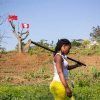
Land in South Africa Shall Be Shared Among Those Who Work It
In March 2022, United Nations (UN) Secretary-General António Guterres warned of a ‘hurricane of hunger’ due to the war in Ukraine. Forty-five developing countries, most of them on the African continent, he said, ‘import at least a third of their wheat from Ukraine or Russia, with 18 of those import[ing] at least 50 percent’. Russia and Ukraine export 33% of global barley stocks, 29% of wheat, 17% of corn, and nearly 80% of the world’s supply of sunflower oil. Farmers outside of Russia and Ukraine, trying to make up for the lack of exports, are now struggling with higher fuel prices also caused by the war. Fuel prices impact both the cost of chemical fertilisers and farmers’ ability to grow their own crops. Maximo Torero Cullen, chief economist at the UN’s Food and Agriculture Organisation, said that ‘one of every five calories people eat have crossed at least one international border, up more than 50 percent from 40 years ago’. This turbulence in the global food trade will certainly create a problem for nutrition and food intake, particularly amongst the poorest people on the planet.
African Solutions to African Problems: Reframing Science Innovation
Africa is plagued by many epidemics — from tuberculosis and HIV/AIDS to malaria and wild polio — but the continent has also worked for decades to fight these threats. The key to beating these deadly diseases is turning inward to existing expertise and finding locally driven solutions.
War & Peace 2.0: Ukraine Showing the World How to Fight Back
 It has been over 100 days since Russia first invaded Ukraine on 24 February 2022, turning the country into a slaughterhouse. The United Nations (UN) in this report says that, as of 1 June, 2022, more than 6.9 million refugees have left Ukraine and 2.1 million have returned, while eight million people are displaced inside Ukraine itself. War in Ukraine has caused the fastest growing refugee crisis since World War II.

The World’s Worst Food Crisis for Decades – and What to do About It
This is what happens when you starve. With no food, the body’s metabolism slows down to preserve energy for vital organs. Hungry and weak, people often become fatigued, irritable and confused. The immune system loses strength. As they starve, people—especially children—are likelier to fall sick or die from diseases they may have otherwise resisted. Cholera, respiratory infections, malaria, dengue, and diphtheria kill more people in famines than starvation itself.
Global Community Urged Not to Relent in Final Push to Eliminate Leprosy
When Yohei Sasakawa visited a remote village in Cameroon, he found 23 people living there.
Cities in Brazil Reap Floods after Hiding Their Rivers Underground
Acaba Mundo has fallen into oblivion, despite its apocalyptic name – which roughly translates as World’s End - and historical importance as an urban waterway. It is a typical victim of Brazil’s metropolises, which were turned into cemeteries of streams, with their flooded neighborhoods and filthy rivers.
Meaningful Dialogue Amplifies Youth Issues, Leads to Change
Young people are often the first to rebuild their communities. However, youths' diverse challenges cannot be addressed without meaningful dialogue, says Klaus Beck, Regional Director of UNFPA APRO ai.
Education Cannot Wait Interviews UNICEF Executive Director Catherine M. Russell
Catherine M. Russell became UNICEF’s eighth Executive Director on 1 February 2022. Ms. Russell brings to the role decades of experience in developing innovative policy that empowers underserved communities around the world, including high-impact programmes that protect women and girls, including in humanitarian crises. She has extensive experience building, elevating and managing diverse workforces and mobilizing resources and political support for a broad range of initiatives.

US Leads Sanctions Killing Millions to No End
Food crises, economic stagnation and price increases are worsening unevenly, almost everywhere, following the Ukraine war. Sanctions against Russia have especially hurt those relying on wheat and fertilizer imports. Unilateral sanctions illegal Unilateral sanctions – not approved by the UN Security Council – are illegal under international law. Besides contravening the UN Charter, unilateral sanctions inflict much human loss. Countless civilians – many far from target countries – are at risk, depriving them of much, even life itself.
Poor Families Clash over Water with Real Estate Consortium in El Salvador
Alex Leiva woke up at 4:00 a.m. to perform a key task for his family’s survival in the Salvadoran village where he lives: filling several barrels with the water that falls from the tap only at that early hour every other day.
The Great Fish Robbery
Now it comes to another ‘crime’ being stealthy committed as a consequence of the unrelenting business obsession for making more and more money.
Has the UN Transformed itself into a Vast Humanitarian Relief Organization?
The United Nations, which has failed to help resolve some of the world’s ongoing and longstanding civil wars and military conflicts—including Palestine, Afghanistan, Yemen, Western Sahara, Myanmar, Syria, and most recently, Ukraine—was rightfully challenged by Ukrainian President Volodymyr Zelenskyy during his riveting address to the Security Council last April.
Public Land Protection Cells in India: A New Hope for Our Commons
Common lands are natural resources that are used collectively by a community, such as forests, pastures, ponds, and ‘wastelands’. They act as a resource base for non-cash, non-market economies that provides fodder, fuelwood, water, oils, fish, medicinal herbs, and a wide variety of fruits and vegetables to the local communities.« Previous Page — Next Page »





 2026 High-level Political Forum on Sustainable Development. Credit: UN Photo/Eskinder Debebe
In 2015, the United Nations and its Member States adopted the Sustainable Development Goals (SDGs) in an effort to make the world a more sustainable and peaceful place for future generations. Progress on the 17 SDGs has been uneven, and inequality persists across the globe. 10 years after adoption, the 2025 UN SDGs Report revealed that only 35% of the SDG targets are on track, with more than half moving too slowly, and 18% moving backwards from the 2015 baseline. Poverty remains one of the world’s most pressing issues, with hunger, violence, and inequality impeding the opportunities for all people to achieve success. In September 2024, the United Nations Summit of the Future introduced a new goal: to eradicate global poverty by 2030, ensure universal rights to basic services, and increase the overall standard of living in terms of industrialization, economic well-being, citizen health, and literacy. Furthermore, recent shifts in United States foreign aid policy – notably, major budget cuts to USAID and the termination of thousands of development programmes– have severely threatened vital lifelines of financial aid to impoverished communities around the world. Additionally, the United States’ withdrawal from the Paris Climate Agreement has undercut international efforts at sustainable development. With the upcoming 2030 deadline, the UN Secretary-General has called for urgent multilateralism across six priority areas: food systems, energy, digital connectivity, education, jobs and social protection, and climate and biodiversity. IPS sheds light on marginalized communities that struggle on a daily basis to survive and have their stories heard and respected.
Updated by Yilan Batista and Shuli Wong August 2026

The Week with IPS

NEXT STOP - SDGs
Tracking global progress towards a sustainable world
Tracking global progress towards a sustainable world
