Languages
Wednesday, November 11, 2026



News and Views from the Global South
Development & Aid
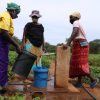
Groundwater at the Heart of the Water Security Equation
Groundwater is invisible and yet its impact is visible everywhere – this infinite resource provides almost half of all drinking water worldwide. About 40% of water for irrigated agriculture and about 1/3 of water required for industry is from groundwater resources. Despite these impressive facts, groundwater remains invisible and less prominent compared to surface water.
Eradicating Polio Would Eradicate So Much Tragedy
In the outskirts of Malawi’s capital, Lilongwe, just beyond where paved roads transition to dirt, an undiagnosed polio infection paralysed a three-year-old girl. From one day to the next, the child’s life was changed forever.
Stagflation Threat: Be Pragmatic, Not Dogmatic
“If your only tool is a hammer, every problem looks like a nail”. Still haunted by the clever preaching of monetarist guru Milton Friedman’s ghost, all too many monetary authorities address every inflationary threat or sign they see by raising interest rates.
Planet Earth into Planet Plastics
Planet Earth is increasingly being transformed into planet Plastics. Approximately 400,000,000 metric tons of plastics are produced worldwide annually. Those plastics amount to about 50 kilograms, or 110 pounds, every year for each of the 8 billion human inhabitants living on the unfolding planet Plastics.
Addressing Global Food Security with Optimism and Resilience
In an exclusive interview with IPS, Ambassador Cindy Hensley McCain, Permanent Representative of the US Mission to the food and agriculture organizations of the United Nations in Rome, Italy, shares her thoughts on food security, sustainable food systems, the impact of climate change on food production, conflicts and the ongoing crisis in Ukraine, and her plans while working with the Food Agricultural Organization of the United Nations (FAO), International Fund for Agricultural Development (IFAD) and World Food Programme (WFP) with Farhana Haque Rahman and Sania Farooqui.
Women Must be at the Centre of Africa’s Transformative Free Trade Area
Ambassador Mathu Joyini began her role as the Permanent Representative of South Africa to the United Nations in January 2021, becoming the first South African woman to hold the position. Representing the African States Group, she is the Chair of the Bureau for the 2022 Commission on the Status of Women (CSW). She has championed causes related to Africa's peace and security, human rights, women’s empowerment, among others.
Brutal War on Yemen: Dire Hunger Crisis Teetering on the Edge of Catastrophe
Yemen’s already dire hunger crisis is teetering on the edge of outright catastrophe, with 17.4 million people now in need of food assistance and a growing portion of the population coping with emergency levels of hunger, three UN agencies warned on 14 March 2022.
How Collective Action Can Move the Needle on Gender Equality
During this year’s sixty-sixth session of the Commission on the Status of Women (CSW66), we are eager to see the global community pivot towards more inclusive approaches to advocacy. It's imperative to put the spotlight on women’s rights and youth-led organizations in communities that are often left out of key discussions. By handing the mic over to advocates across all backgrounds and ages, we can shift to a model that enables all advocates to take a lead role in policy-making and ultimately translate promises and rhetoric into real impact and accountability.
The Rise in Food Insecurity Amid the COVID-19 Pandemic and Conflicts
The effects of COVID-19 over the past two years, in addition to the increase in wars and conflicts, climate change and economic crises, have aggravated global food insecurity, generating serious concerns for 2022.
Pandemic Pushes SDGs Further out of Reach of Asia and the Pacific
2022 marks the second anniversary of the COVID-19 pandemic, and while an end to the pandemic is in sight, it is far from over and the consequences will be felt for decades to come. At the same time, the 2030 Agenda for Sustainable Development is becoming increasingly distant. The region must use the 17 Sustainable Development Goals as a roadmap to a fairer recovery.
Ethanol Not Enough to Heal Sugarcane’s Environmental Legacy in Colombia
As a visitor drives across the plains of the department of Valle del Cauca in southwestern Colombia, green carpets dominate the view: sugarcane fields that have been here since the area got its name.
Education Cannot Wait Secures Future of Children in CAR Conflict Zones
Nine-year-old Marguerite Doumkel sits among other children in a classroom in Paoua, a sub-prefecture of Ouham Pende, in the Central African Republic (CAR).
Uganda Recognizes Pregnant Teens’ Right to Education, but Religion, Stigma Lock Out Most
When schools reopened in Uganda in January, Atim’s baby was 3 months old. The 17-year-old wished to go back to classes but she faced a dilemma—whether to disclose to her teachers that she was a lactating mother.
Youths Trailblazing Paths in Sexual and Reproductive Health Ahead of ICFP Family Planning Conference
Travelling in northern Nigeria, Peace Umanah noticed teenage girls with multiple children – they would be walking with one strapped to their back, holding another by hand and with a protruding belly.
Commission on the Status of Women: The Streets Have Already Spoken
The 66th session of the Commission on the Status of Women (CSW) was just launched. Due to the ongoing impacts of the COVID-19 pandemic, the main annual global forum on gender equality is once again taking place in a hybrid format – both at the UN’s New York headquarters, where government delegations will be meeting, and online, where most civil society activity will take place.
What This Year’s “No 1 Central Policy Document” Tells Us about Beijing’s Food Security and Rural Revitalisation Ambitions
The recently published “No 1 central policy document” (“No 1 document”), China’s national blueprint for rural policy, further demonstrates Beijing’s commitment to safeguarding food security and advancing rural revitalisation. The document’s release comes against an increasingly complicated geopolitical environment which, along with factors, such as disruptions to the global food chain supplies and worsening climate change impacts, have forced Beijing to rethink how its national goals can be achieved.
Over 60% of World Workers Not Recognised, Not Registered, Not Protected
More than 60 percent of the world’s adult labour force –or about 2 billion workers– work in the informal economy. “They are not recognised, registered, regulated or protected under labour legislation and social protection. The consequences can be severe, for individuals, families as well as economies.”
Lessons from Liberia for Scaling Poverty Reduction Globally
For the past three years, BRAC International has been piloting in Liberia an adaptation of its acclaimed Graduation approach, whose impact on reducing extreme poverty was first proven in Bangladesh. The success of the Liberia pilot, which I managed, provides not only further proof of impact but vital lessons that can enhance and accelerate scaling of the approach globally.
Refugees Recount Harrowing Escape from Besieged Ukraine
“I never, ever, believed that anything like this could happen,” says Valia*. “Not for a second.” Just two weeks ago, the English teacher says, she had been living a normal life in Kropyvnytskyi in central Ukraine with her 13-year-old son. But on February 24, she woke up to the news that Russia had invaded her country.
Ukraine Incursion, World Stagflation
Finger pointing in the blame game over Russia’s Ukraine incursion obscures the damage it is doing on many fronts. Meanwhile, billions struggle to cope with worsening living standards, exacerbated by the pandemic and more. Losing sight in the fog of war US Secretary of State Anthony Blinken insists, “the Russian people will suffer the consequences of their leaders’ choices”. Western leaders and media seem to believe their unprecedented “crushing sanctions” will have a “chilling effect” on Russia.
‘A Growing Number of Billionaires Is a Sign of Failure’
It is no secret that economic inequality has risen exponentially in the last few decades, both in India and globally. According to the World Inequality Report 2022, India is one of the most unequal countries in the world in terms of both income and wealth inequality. It is estimated that in 2021, the top 10 percent of Indians held 57 percent of the total national income while the bottom 50 percent’s share was just 13 percent.« Previous Page — Next Page »





 2026 High-level Political Forum on Sustainable Development. Credit: UN Photo/Eskinder Debebe
In 2015, the United Nations and its Member States adopted the Sustainable Development Goals (SDGs) in an effort to make the world a more sustainable and peaceful place for future generations. Progress on the 17 SDGs has been uneven, and inequality persists across the globe. 10 years after adoption, the 2025 UN SDGs Report revealed that only 35% of the SDG targets are on track, with more than half moving too slowly, and 18% moving backwards from the 2015 baseline. Poverty remains one of the world’s most pressing issues, with hunger, violence, and inequality impeding the opportunities for all people to achieve success. In September 2024, the United Nations Summit of the Future introduced a new goal: to eradicate global poverty by 2030, ensure universal rights to basic services, and increase the overall standard of living in terms of industrialization, economic well-being, citizen health, and literacy. Furthermore, recent shifts in United States foreign aid policy – notably, major budget cuts to USAID and the termination of thousands of development programmes– have severely threatened vital lifelines of financial aid to impoverished communities around the world. Additionally, the United States’ withdrawal from the Paris Climate Agreement has undercut international efforts at sustainable development. With the upcoming 2030 deadline, the UN Secretary-General has called for urgent multilateralism across six priority areas: food systems, energy, digital connectivity, education, jobs and social protection, and climate and biodiversity. IPS sheds light on marginalized communities that struggle on a daily basis to survive and have their stories heard and respected.
Updated by Yilan Batista and Shuli Wong August 2026

The Week with IPS

NEXT STOP - SDGs
Tracking global progress towards a sustainable world
Tracking global progress towards a sustainable world
