Languages
Thursday, November 12, 2026



News and Views from the Global South
Development & Aid

The Complex Energy Transition of Chile’s “Sacrifice Zones”
Standing on Punta Ventanilla, Carlos Vegas, 65, looks across at the industrial park which has been there most of his life. He looks at the impact of the 15 industries spread around the bay that connects the towns of Quintero and Puchuncaví, in central Chile.
Sacred Words
is all that you can't say.
Years gone by and still
words don't come easily,
like forgive me, forgive me.
Tracy Chapman
Transparency Offers Pathway to a More Sustainable Earth
Last week, the world marked Earth Day – an opportunity to put the spotlight on the pressing needs of our planet, in the face of ever-growing impacts by humanity, and galvanize action to change practices and behavior. Yet these issues were not, and cannot be, addressed in a single day. Resolve and action to protect the environment is a 365 days-a-year endeavor.
Q&A: Drawing Attention to the Crisis in the DRC’s Education Sector
Yasmine Sherif, Director of Education Cannot Wait (ECW), has sounded the alarm on the need for Central African Republic refugee children and youth to access quality education during her visit to a refugee site in the Democratic Republic of the Congo (DRC) from Apr. 20-23.
Addressing the Impact of COVID-19 on Infants and Young Children
Conventional wisdom is that the health of young children is not at great risk from COVID-19, but, in the Global South, the space constraints imposed on young children by the pandemic pose a significant risk to the stimulation on which brain development thrives. Early childhood development is further jeopardized by the pandemic’s impact on caregivers.
Youth Demand Action on Nature, Following IUCN’s First-Ever Global Youth Summit
Following almost two weeks of talks on issues such as climate change, innovation, marine conservation and social justice, thousands of young people from across the globe concluded the first-ever International Union for Conservation of Nature’s (IUCN) One Nature One Future Global Youth Summit with a list of demands for action on nature.
Pathogens, Public Health, & Political Will: Why Sustained Leadership is Critical
The occasion of World Malaria Day amidst a global pandemic warrants an examination of the intersection between our decades long battle against the world’s oldest known fever and the newest known pathogen fueling a global pandemic.
Education Cannot Wait Calls on World Leaders to Urgently Fund Education in the Democratic Republic of the Congo with US$45.3 Million
Education Cannot Wait (ECW) Director Yasmine Sherif today called on world leaders to urgently support the children and youth in desperate need of education support in the Democratic Republic of the Congo (DRC), affected by new emergencies and multiple protracted crisis.
One Year Later; No Justice for Victims of 2020 Mali Protests & Coup
It has been about a year since anti-government demonstrations and a coup in Mali, which saw 18 people, including a 12-year-old boy being killed. But there has been no justice for the families of those injured and killed by defence and security forces during last year's May to August protests.
On World Malaria Day, We Must Step Up Efforts to Combat Malaria
Despite its 229 million cases and 409,000 deaths in 2019, malaria is an overlooked epidemic. The emergence of COVID-19 has thrown health systems into disarray and forced countries to shift their focus from malaria to the pandemic response, threatening to reverse 20 years of malaria gains.
Press Freedom under Lockdown Across Two-Thirds of the Globe
Independent journalism is facing a growing crackdown one year into the COVID-19 pandemic as governments around the world restrict access to information and muzzle critical reporting, media and rights watchdogs have warned.
Disability in Goma. The Power of Staying Together Against Covid-19, War, and Stigma
 Sylvain Kakule Kadjibwami lost the use of his legs during one of those ambushes that bloodlessly bleed North Kivu. “When I was shot, I thought it was the end of my life, but when I shared it with other disabled people, I discovered that life is still possible,” he said. Now it is Covid-19 that risks destroying the dreams of Sylvain, a small trader from Goma, a city whose roads are volcanic rock-ridden screes where pick-ups trudge. Those who walk face the risk of falling at every step. However, for those who cannot, the same roads can become traps where it is not only war that kills but also a stigma fostering misery and disease.
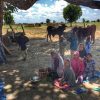
This Earth Day, a People’s Perspective is What is Most Needed
Today marks Earth Day and all around the globe, advocates and activists, concerned citizens and the like will gather to raise awareness about the climate crisis.
Agro-industry Surrounds Xingu Indigenous Territory in Brazil
Watatakalu Yawalapiti is 40 years old. She was born in the Amakapuku village, surrounded by a large preserved forest in the heart of Brazil. She spent part of her childhood on the white sands and clear waters of the Tuatuari river. At other times, she would sit in a circle listening to her great-grandfather telling stories, like the one about how the white man would arrive with a huge blade and cut down the trees as one shaves one's body hair.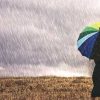
Earth Day 2021: Passing On a Cleaner World
Preserving the beauty and wonder of our natural world for future generations should certainly be a goal everyone can get behind. While progress is often stymied by polarizing debates, clean air and water should be a priority for everyone.
COVID-19 Locks Down Therapy Support for Zimbabwe’s Trafficking Survivors
Before Zimbabwe imposed lockdown measures last March as part of global efforts to curb the coronavirus pandemic, Grace Mashingaidze* would attend workshops in Harare arranged by a nongovernmental organisation assisting trafficked women who had safely made it back home.
Child Trafficking in South Asia Facilitated by Open Borders
The numbers are so staggering that is hardly imaginable striking a positive tone about the situation of child trafficking in Nepal and yet some positive developments are occurring here in a country that soon could be set to graduate from the group of least developing countries.
Another False Start in Africa Sold with Green Revolution Myths
Since the Alliance for a Green Revolution in Africa (AGRA) was launched in 2006, yields have barely risen, while rural poverty remains endemic, and would have increased more if not for out-migration.
Kenya’s Poor Need Different Lockdown Restrictions to Survive, Scientists Urge
After Joseph Mandu lost his job because of the country’s coronavirus lockdown, he would still wake every morning and leave his home in the City Carton slum in Kenya’s capital, Nairobi. But instead of heading to the restaurant he worked at as a pool-table attendant, he would walk around City Carton searching for odd jobs to earn an income so he could pay for the food his family needed to survive.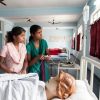
Challenges with Skill Development Programmes During the Pandemic
India’s evolving Technical and Vocational Education and Training ecosystem (TVET) faced many challenges during the COVID-19 pandemic. Because of the national lockdown, organisations had to remain shut for 7-8 months, until September 2020.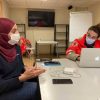
A Growing New Health Crisis Focusing on Emergency Rooms, Medical History & Vaccines
This year's World Health Day on 7 April was an opportunity for three entrepreneurs to share their insights and reflections on a rather complex year due to the health crisis and comment on their experiences developing impactful products and services in this sector.« Previous Page — Next Page »





 2026 High-level Political Forum on Sustainable Development. Credit: UN Photo/Eskinder Debebe
In 2015, the United Nations and its Member States adopted the Sustainable Development Goals (SDGs) in an effort to make the world a more sustainable and peaceful place for future generations. Progress on the 17 SDGs has been uneven, and inequality persists across the globe. 10 years after adoption, the 2025 UN SDGs Report revealed that only 35% of the SDG targets are on track, with more than half moving too slowly, and 18% moving backwards from the 2015 baseline. Poverty remains one of the world’s most pressing issues, with hunger, violence, and inequality impeding the opportunities for all people to achieve success. In September 2024, the United Nations Summit of the Future introduced a new goal: to eradicate global poverty by 2030, ensure universal rights to basic services, and increase the overall standard of living in terms of industrialization, economic well-being, citizen health, and literacy. Furthermore, recent shifts in United States foreign aid policy – notably, major budget cuts to USAID and the termination of thousands of development programmes– have severely threatened vital lifelines of financial aid to impoverished communities around the world. Additionally, the United States’ withdrawal from the Paris Climate Agreement has undercut international efforts at sustainable development. With the upcoming 2030 deadline, the UN Secretary-General has called for urgent multilateralism across six priority areas: food systems, energy, digital connectivity, education, jobs and social protection, and climate and biodiversity. IPS sheds light on marginalized communities that struggle on a daily basis to survive and have their stories heard and respected.
Updated by Yilan Batista and Shuli Wong August 2026

The Week with IPS

NEXT STOP - SDGs
Tracking global progress towards a sustainable world
Tracking global progress towards a sustainable world
