Languages
Sunday, November 22, 2026



News and Views from the Global South
Development & Aid
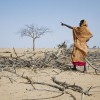
‘Little Boy’ Devouring African Food
There is a ‘Little Boy’ who has nothing to do with the atomic bomb that the United States dropped on the Japanese city of Hiroshima on 6 August 1945. This time it is about another ‘Little Boy’ who has been devastating the harvests in many regions, especially in Africa.
OPINION: Learning from History for Progress
The Chinese character for crisis combines the characters for ‘danger’ and ‘opportunity’. Our ability to improve the human condition depends critically on our ability to recognize and address dangers, but also to seize opportunities made possible by recognizing that crises offer rare opportunities to pursue extraordinary options not normally available.
Sri Lanka Braces for Extreme Heat
Sri Lanka is facing the heat from a scorching sun for the past one month. In recent times, the country has imposed power cuts after almost a decade. The main reason was the stoppage at a coal power plant, but engineers at the Ceylon Electricity Board (CEB) admit that the island’s hydro-power generation capacity is at such a critical low that without additional coal, diesel and renewable generation, the country’s full demand for power cannot be met.
Global Guidelines on Land Tenure Making Headway in Latin America
Voluntary guidelines on land tenure adopted by the international community to combat the growing concentration of land ownership and improve secure access to land have begun to make headway in Latin America, a region that is a leader in the fight against hunger and that is taking firm steps towards achieving food security.Debunking Stereotypes: Which Women Matter in the Fight Against Extremism?
Violent extremism is the topic du jour, as government officials are busy developing plans of action on “preventing or countering violent extremism” (P/CVE). In these plans there is dutiful reference to engaging “women”. The more progressive mention gender sensitivity.
Want to Feel Fit? Eat Falafel, Dahl, Cow Pea and…!
This is not a minor issue. Chickpea, faba bean, lentil, common bean, field pea, mung bean, black gram, pigeon pea, cowpea, and grass pea are the major pulse crops produced globally. And these especially play an important role in food and nutritional security and sustainable agricultural production systems in the drylands, which cover over 40 per cent of the world’s land area and are home to approximately 2.5 billion people.
Saving Beira
Mozambique’s second largest city, Beira, is heading for climate change-induced disaster. Cyclones, floods, storm surges and the rising sea level are threatening to annihilate this important Indian Ocean coastal city; a city which is strategic for landlocked countries like Zimbabwe and Zambia.
Temple Tantrums
Women comprise nearly half of India's 1.2 billion population, yet gender bias and patriarchal mindsets continue to plague them well into the 21st century. Even holy places -- temples and mosques -- it seems aren't free from discriminating against the fair sex.
Climate Change Dries Up Nicaragua
A three-year drought, added to massive deforestation in the past few decades, has dried up most of Nicaragua’s water sources and has led to an increasingly severe water supply crisis.War Zones Littered with More than Just Land Mines
Land mines are not the only type of explosive devices that families returning home after conflicts risk stumbling across, representatives from the UN’s Mine Action Service (UNMAS) told journalists here Monday.
Violence at Home
Amidst robust campaigning by liberal sections to activate the feminist lobby and strong criticism by clerics defending Islam’s endowment of women’s rights, there is a risk of overlooking the essence of what is a major human rights and public health issue — domestic violence.
Balancing Economic Potential of Marine and Social Life
When Africa’s oldest protected marine area, Tsitsikamma -- the largest in the world, incorporating 80 km of rocky coastline, bustling with marine life, much of it endangered -- was opened as a pilot for public fishing on December 15, 2015, there was a big outcry.
Papua New Guinea First to Finalize National Climate Plan Under Paris Agreement
On March 29, Papua New Guinea became the first country to formally submit the final version of its national climate action plan (called a “Nationally Determined Contribution,” or NDC) under the Paris Agreement. The small Pacific nation’s plan to transition to 100 percent renewable energy by 2030 is no longer just an “intended” nationally determined contribution (INDC) – it is now the country’s official climate plan.
Women Benefit From Simple Economic Ventures
Angelina Chiziane starts her day by getting her husband ready for work in a small village in the southern province of Gaza, Mozambique, some 216 kilometers away from the capital, Maputo.
Heavy Rains Once Again Scatter the Poor in Asunción
Néstor Colman, 69, remembers the river overflowing its banks nine times in Bañado Sur, the poor neighourhood in the Paraguayan capital where he was born and has lived all his life. “A record,” he jokes.
International Community Falls Short on Syrian Resettlement
“We cannot respond to refugee crises by closing doors and building fences,” said UN High Commissioner For Refugees (UNHCR) Filippo Grandi in his opening address to a high-level event in Geneva. By the end of the meeting, however, the international community remained reluctant to welcome refugees.
Benefits of Backpack Biogas
Billions of dollars of aid has been pumped into Africa. Yet effective change too often remains an elusive outcome, leading to a vicious cycle: more needs, more aid but still little change. How to resolve this seemingly intractable dilemma?
Thaw with United States Will Put Cuba’s Agroecology to the Test
The United States has indicated a clear interest in buying organic produce from Cuba as soon as that is made possible by the ongoing normalisation of ties between the two countries. But farmers and others involved in the agroecological sector warn that when the day arrives, they might not be ready.Streamlining opportunities to migrate
In Bangladesh, remittances from people living and working abroad added up to nearly Tk. 1.2 trillion last year—more than four times the nearly Tk. 250 billion that foreign aid agencies spent in the country.
Opinion: World Bank Reinvents Tainted Aid Program for Ethiopia
I was taught that responsibility means admitting your mistakes and being accountable when you make a mistake. I still believe this to be true for individuals and institutions. So when a powerful group like the World Bank makes a mistake, I expect it to be accountable for its wrong-doings, and to do everything possible to make sure those mistakes don’t happen again.HUMANISTANBUL: World Humanitarian Summit
Despite worldwide shock and indignation, it looks like little Aylan Kurdi's tragic death last summer changed little. This is a sad – but brutal – comment on our collective humanity, if such a thing still exists.« Previous Page — Next Page »


 2026 High-level Political Forum on Sustainable Development. Credit: UN Photo/Eskinder Debebe
In 2015, the United Nations and its Member States adopted the Sustainable Development Goals (SDGs) in an effort to make the world a more sustainable and peaceful place for future generations. Progress on the 17 SDGs has been uneven, and inequality persists across the globe. 10 years after adoption, the 2025 UN SDGs Report revealed that only 35% of the SDG targets are on track, with more than half moving too slowly, and 18% moving backwards from the 2015 baseline. Poverty remains one of the world’s most pressing issues, with hunger, violence, and inequality impeding the opportunities for all people to achieve success. In September 2024, the United Nations Summit of the Future introduced a new goal: to eradicate global poverty by 2030, ensure universal rights to basic services, and increase the overall standard of living in terms of industrialization, economic well-being, citizen health, and literacy. Furthermore, recent shifts in United States foreign aid policy – notably, major budget cuts to USAID and the termination of thousands of development programmes– have severely threatened vital lifelines of financial aid to impoverished communities around the world. Additionally, the United States’ withdrawal from the Paris Climate Agreement has undercut international efforts at sustainable development. With the upcoming 2030 deadline, the UN Secretary-General has called for urgent multilateralism across six priority areas: food systems, energy, digital connectivity, education, jobs and social protection, and climate and biodiversity. IPS sheds light on marginalized communities that struggle on a daily basis to survive and have their stories heard and respected.
Updated by Yilan Batista and Shuli Wong August 2026

The Week with IPS

NEXT STOP - SDGs
Tracking global progress towards a sustainable world
Tracking global progress towards a sustainable world
