Languages
Monday, November 9, 2026



News and Views from the Global South
Population
NICARAGUA: Young People Exiled by Poverty
If they could, about 60 percent of Nicaraguans under 30 would go to live abroad, according to studies on migration, which find that the country's chronic poverty is the main reason for wanting to migrate.BULGARIA: Migrants Denied Even Medicine
Hasun Albaadzh, an asylum-seeker from Syria, died Oct. 6 at the Busmantsi detention centre on the outskirts of Bulgarian capital Sofia. He had been held at Busmantsi for 34 months - considerably more than the maximum legal period of detention - and had been denied proper medical care.
WATER-ZIMBABWE : New Wells Protect Environment, Build Peace
Twenty years ago, Isaac Chidavaenzi would worry when his neighbours set up vegetable gardens on river banks, trying to get closer to water sources. The number of gardens on the rivers' banks has now decreased, but Chidavaenzi is even more worried.GUATEMALA: Only 10 Agents to Fight Human Trafficking Nationwide
In spite of a new law against human trafficking in effect since March, little has been done in Guatemala to fight the trafficking of children, and child sex tourism has begun to flourish, experts warn.EL SALVADOR: An Indigenous Language That Refuses to Die
"Yek shiajfikan" reads a sign hanging above the gate of the "Dr. Mario Calvo Marroquín" elementary school in the Salvadoran town of Izalco, welcoming pupils in Nawat, the language that was spoken by the area’s native communities.
SWITZERLAND: Undocumented Migrants Run Their Own School
Switzerland is a tough place for asylum-seekers and undocumented migrants. In Zurich, they have been running a remarkable campaign for the past year, challenging the canton's asylum policy. Now, they have opened their own school.YEMEN: Children Flee Fighting
As the conflict between government forces and Houthi fighters grinds on in the mountains of Saada in northern Yemen, thousands of Yemeni civilians, many of them children, are being forced from their homes by the fighting.
Q&A: Invest in Young People in Latin America
To fight inequality, Latin American countries must double the financial commitment they made at the 1994 International Conference on Population and Development in Cairo, Marcela Suazo, the regional director for the United Nations Population Fund (UNFPA), told IPS.GERMANY: Muslims Targeted Again
Immigrants and foreigners were again targeted through the election campaign last month by right-wing politicians looking to win votes through racist statements.ENVIRONMENT: India Warms Up to Copenhagen
With the clock ticking away on the United Nations Framework for Climate Change Committee (UNFCCC) summit in Copenhagen in December, the fractiousness between the developed and the developing nations on who ought to do more to control climate change is getting increasingly strident.MEXICO: Black Minority Invisible in Bicentennial Plans
Mexico has big plans for celebrating its 200th anniversary of independence from Spain next year. But Mexicans of African descent are as invisible in those plans as they are in everyday life.RIGHTS-AUSTRIA: Thousands of Migrants Take to Hunger Strikes
Human rights activists in Austria are calling for an overhaul of a detention system for migrants and asylum seekers they claim breaches human rights, following the death of a hunger-striking migrant in police cells.
PHILIPPINES: Ban on Abortion Prevails
Sitting in an apartment in central Manila, 70-year-old Lydia (her second name has been withheld to protect her identity) speaks in hushed tones. A manghihilot, or traditional midwife, she is wary when talking about her experiences of abortion, an often-taboo subject in the Philippines.EUROPE: Failing Both Governments and Migrants
The police have cracked down Tuesday on makeshift shelters that migrants moved into after the immigration camp at Calais in France was razed to the ground a week back. The migrants, mostly Afghans, are now homeless again - and in search of new shelter.POLITICS-EAST TIMOR: ‘The Quality of Women Is Very Important’
For more than seven years, the men and women of East Timor have been working to rebuild their nation after a destructive 24-year occupation by the Indonesian army.SOUTH ASIA: Disunity Hovers over a Region Battling Climate Change
As the Copenhagen Conference on climate change draws nearer, South Asia, which appears poised for severe threats from the impacts of climate change, faces a stiff challenge on two fronts.ASIA: Region Lags Behind in Reducing Maternal Mortality Rates
In landlocked Laos, pregnancy brings with it the spectre of death. South-east Asia’s poorest country has recorded over 700 women dying every year due to complications during childbirth.GUATEMALA: Malnutrition Killing Children Again
The deaths of 25 children from severe malnutrition this year in Guatemala, mainly in the eastern province of Jalapa, shows that the specter of hunger is still haunting the country, aggravated by the global economic crisis and drought.RIGHTS-ITALY: Trafficking From Nigeria Rises Sharply
An alarming rise has been recorded in the number of Nigerian girls trafficked to Italy.
RIGHTS-PAKISTAN: ‘The Problem Is We All Work in Silos’
As secretary-general of the International Conference on Population and Development (ICPD) in September 1994, Nafis Sadik had described this groundbreaking event as a "quantum leap" in reinforcing commitments to addressing infant and maternal mortality, education and reproductive health and family planning.PAKISTAN: Female Journalist Pursues Sexual Harassment Case
When is a telephone call considered sexual harassment?« Previous Page — Next Page »





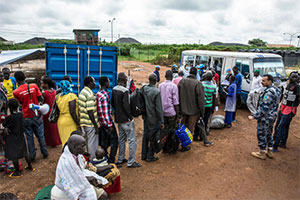 One Thousand Internally Displaced Persons (IDPs) Relocated from Tomping Camp in South Sudan. Credit: UN Photo/Isaac Billy
It took hundreds of thousands of years for the world’s human population to cross one billion in 1804. Approximately 200 years later, the population has multiplied sevenfold. In 2023, the global population crossed 8 billion, and is expected to reach 9 billion before 2050. With the planet more crowded than ever, it is essential to keep track of population trends, urbanization, migration, and reproduction across the world.
Life expectancy has seen significant strides in the past century, largely due to economic development and increased standards of living. On the contrary, trends in global fertility are shifting, with certain regions in Africa and Asia reporting higher rates, while parts of Europe and North America report stagnant or lower rates. This is in part due to differences in sexual and reproductive healthcare, as well as societal and economic conditions around the world. For example, child marriage is prevalent in certain societies, where childbearing is also considered a familial duty. Meanwhile, stagnating economies frequently experience lower marriage and childbearing rates.
The increase in migration and urban development around the world is also linked to global population trends. By 2050, it is expected that approximately 66 percent of all people will live in cities. Furthermore, global crises such as warfare and natural disasters also prompt transnational migration. Transnational migration is linked to a variety of socioeconomic issues in both host and receiving countries: migrants often leave developing countries with less access to educational and economic opportunities and arrive in developed countries where they are frequently the targets of ethnic, racial, and cultural discrimination, and economic exploitation. Recent crises in Europe and the United States demonstrate the importance of advocating for migrants worldwide. As migrants from the Global South are increasingly stripped of their legal and civic rights in unlawful deportations, or targeted in acts of identity-based violence, it is essential to keep track of population trends and protect the human rights of migrant populations. Climate-related disasters are now a major driver of displacement, with nearly half of all new internal displacements in 2025 being disaster-related.
IPS is devoted to covering issues surrounding population trends, migration, and reproduction through its compelling articles, which use both statistics and human stories to provide readers with robust and informative viewpoints.

The Week with IPS

NEXT STOP - SDGs
Tracking global progress towards a sustainable world
Tracking global progress towards a sustainable world
