Languages
Tuesday, November 10, 2026



News and Views from the Global South
Poverty & SDGs
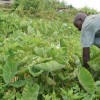
Improving Rural Livelihoods Boost Agrarian Economies
For two decades, Dickson Kamau only grew maize on his 0.5 hectare (ha) of land earning himself the nickname Kamau wa mbembe or Kamau who owns maize in his native Kikuyu language.
Rural Costa Rican Families Flourish in the Shade
Before they got involved in farming, Luis Diego Murillo and Xinia Solano paid their bills and put food on their table with Luis’s salary as a foreman on construction sites, an unstable job that kept him on the move.
Are We Entering Into a Long Term Stagnation?
Larry Summers, Clinton’s minister of treasury, has made few friends in life. At that time, he was instrumental in eliminating the Glass Stegall Banking Law, which since 1933 separated the bank’s customer deposits from the financial activities of the Stock Exchange, releasing a flood of money which created the present monster financial system.
Clean Water, Sanitation & Hygiene For All by 2030
Last year we watched with cautious optimism as UN chief Ban Ki-moon welcomed the new Sustainable Development Goals, and called upon the world to meet them.
Outsourcing Jobs, Insourcing Labour & Increasing Profits
For decades “outsourcing” jobs from wealthy developed countries to low-wage developing countries has been a major strategy of many corporations, industries and businesses to increase profits by reducing labor costs and operating expenses.
‘Worse Than World War I’
When the leaders of 28 European states enjoy again this week their exclusive flights, luxurious suites and official limousines, to meet for a new summit in Brussels to adopt a final decision on their proposed plan of using refugees as bargaining chips, 20.000 Syrians will most probably be still starving in the Idomeni camp in Greece, in a situation that has been described as “worse than World War I.”Fighting Poverty
When it comes to the biggest challenges facing Bangladesh, surely poverty is one of the most crucial. And there is still much work to be done. Despite cutting the rate of extreme poverty from 34 percent in 2000 to just 13 percent today, 20 million Bangladeshis still live in conditions considered to be ultra poor. Living on less than Tk. 43 per day can be immensely difficult, and for some, it can create a trap that's almost impossible to escape.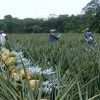
Post COP21: Costa Rica’s Innovation Must Become the Global Norm
The Paris agreement means countries and corporations will be compelled to act much more quickly on making agricultural commodity production more sustainable. Companies must look beyond their supply chains. Farmers need support to overcome barriers such as: struggle with ineffective farming practices, lack of investment and fluctuating commodity prices.
Can Europe Survive – Back to a Better Yesterday?
The last formal act of European disintegration was the last negotiation between 28 European leaders and the Prime Minister of Turkey. The deal, against all international treaties, is a total capitulation to European values. Europe will give Turkey 6 billion dollars, and in exchange Turkey will keep refugees from coming to Europe. Or better, will screen everybody, and send to Europe only the Syrians who are eligible for political asylum.
Clean Clothes – Fashion Free of Slave Labour in Argentina
In Argentina, there are now 20 brand names that guarantee that their garments are produced by workers in decent working conditions, thanks to the Clean Clothes network, aimed at eradicating slave labour in the garment industry, which illegally employs some 30,000 people in sweatshops around the country.
Enriching Education in Bangladesh
About a year ago, seven year-old Afroza Khatun dropped out of school as her mother could not continue supervising her homework. The interruption in her grade II lessons was soon noticed by a teacher of an information education centre known as ENRICH, a state-funded programme which aims at supporting children who drop out to continue their education from the primary level (up to grade II).UN Says it Shattered Glass Ceilings Creating a Carpet of Shards
In the 1960s, when gender discrimination was widespread at the United Nations, there was a story doing the rounds of a woman candidate who had applied for a mid-level professional job in the UN Secretariat.
Rural Community Fights a Second Dam and a New Expropriation of Land
In 1976, the construction of a hydroelectric dam destroyed farmland in the rural municipality of Chicoasén in southern Mexico. Forty years later, part of the local population is fighting a second dam, which would deprive them of more land.
“Take My Iraqis and Give Me Some Syrians” – Europe to Turkey
In a yet another violation of international laws and their own human values, 28 European countries have just agreed with Turkey to open a new “bazaar” of refugees, this time using the old barter system. i.e. Iraqis and Afghans in exchange of Syrians.
Women “Water Friends” Script a Success Story
Prema Bai, 58, bends her head and pushes hard her wheelchair on the village road. In the early afternoon, the village of Mamna appears almost deserted although it is home to 742 families and is located in Uttar Pradesh - India’s largest and most populated state. Thanks to a severe drought, every man and woman under 50 has fled Mamna in recent weeks, leaving behind the elderly and women with very young children. “They thought we were like cattle, a burden in this hard time because we only eat but yield no returns,” says Bai whose two sons and their wives also migrated to Agra -- a city 255 km away -- to work in a brick kiln.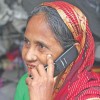
Linking Rural Development with SDGs
The 2030 agenda for sustainable development undoubtedly proposes an exciting vision, and promises a future of peace and prosperity; but these goals will not be easy to achieve unless we develop effective global partnerships and learn from the outcomes of Millennium Development Goals (MDG). We need to investigate both the successes and failures of MDGs, set our focus on result-oriented development, and encourage government and their development partners to think about the linkages between plan, policy, delivery and monitoring in resource mobilisation and management.
Every Day Is a Good Day to Hear More Women in the Media
On International Women’s Day newspapers and radio shows are filled with women’s voices. Yet too often the media’s attention is fleeting. These are the best of times, but without a doubt also the worst of times, for journalism and journalists – especially women in the media.
African Staple Plantains at Risk of Same Diseases as Bananas
Anna Gamusi, has been growing ‘matooke’ - plantains - for over 20 years. She originally learnt how to grow them in her home village of Busolwe in Eastern Uganda, but says that they are no longer grown there.
Public Primary Boarding Schools in Pastoral Communities
Jonathan Tipapa is a nine year-old boy whose daily journey to and from school exposes him to many dangers that have seen him come close to dropping out of school -- like many of his friends who can be seen running after cows even on school days. He attends Enkutoto primary school in the expansive Narok South Constituency in the Rift Valley region, approximately 70 miles from the capital Nairobi.
The Empowerment of Women Will Be Central to Realising Sustainable Global Development
“Planet 50-50 by 2030: Step It Up for Gender Equality” – the theme of this year’s International Women’s Day serves as a timely reminder that, despite incremental progress of recent years and the ambition of the new global development agenda, we must redouble efforts to achieve a world underpinned by gender equality. All women must be empowered to realise their full and equal rights. But what does it actually mean to step it up for gender equality?
Border Restrictions Violate 1951 Refugee Convention
When the United Nations commemorated “Zero Discrimination Day” on March 1, there was an implicit commitment by the 193 member states to abhor all forms of discrimination – including against women, minorities, indigenous people, gays and lesbians and those suffering from AIDS.« Previous Page — Next Page »





 Romani people in Cairo, Egypt, forage through trash. Credit: UN Photo/Armineh Johannes
In 2015, the United Nations adopted the Sustainable Development Goals (SDGs) in an effort to promote “peace and prosperity for people and the planet.” To achieve that goal, it is essential to provide equal opportunities and access to basic services to all people. The 2025 UN SDG Report found that 35% of the 169 SDG targets are on track or making moderate progress, while 18% have reversed compared to the 2025 baseline. One in ten people still live in extreme poverty, one in eleven experience food insecurity, and over 1.1 billion people live in slums without access to clean water and sanitation. It is imperative to acknowledge the societal, technological, economic, and political issues that sustain poverty in countries around the world. Eradicating poverty will require significant frameworks in policy and governance on a national and international scale to ensure that all people will have equal access to basic services and economic opportunities by 2030. Furthermore, a dramatic reduction of United States foreign aid in 2025, including the termination of 83% of USAID programmes, threatens to erode years of fragile development gains.
Throughout the world, violent conflict and natural disasters also contribute to extreme poverty. The complete destruction of infrastructure and blockage of aid has significantly impoverished Palestine since October 7th. The destructive impact of Hurricane Maria in Puerto Rico left $91 billion in damage. An inadequate US government response also revealed significant and enduring questions within the issue of mitigating poverty: how do we rebuild infrastructure after its destruction? How do we restimulate economic development and bring in financial aid after disasters? Similar questions have been raised in the realm of regional cooperation, as devastating floods have wrecked hundreds of thousands of homes across multiple Southeast Asian nations in the past few years. Furthermore, the COVID-19 pandemic has greatly exacerbated the global poverty crisis, particularly in developing countries, setting back the United Nations goal of eradicating poverty by 2030.
IPS is committed to providing comprehensive features that focus on the persisting environmental, sociopolitical, and systemic issues that sustain poverty, and the steps taken worldwide towards poverty eradication.

The Week with IPS

NEXT STOP - SDGs
Tracking global progress towards a sustainable world
Tracking global progress towards a sustainable world

