Languages
Friday, November 6, 2026



News and Views from the Global South
Poverty & SDGs

Displaced by the Desert: An expanding Sahara leaves Broken Families and Violence in its Wake
Abdoulaye Maiga proudly displays an album showing photos of him and his family during happier times when they all lived together in their home in northern Mali. Today, these memories seem distant and painful.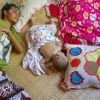
Tuberculosis Infections Declining, But Not Fast Enough Among Poor, Marginalised: UN Health Agency
A staggering 1.5 million people died from tuberculosis (TB) last year, the UN health agency said on Thursday, in an appeal for far greater funding and political support to eradicate the curable and preventable disease.
Governments, Donors and Investors Must Put Their Money Where Their Mouths are on Gender and Climate Change
Climate change has a disproportionate impact on women and girls. This is clear when it comes to water, for instance. The Global Commission on Adaptation Report launched at the United Nations General Assembly last week states that the number of people who may lack sufficient water, at least one month per year, will soar from 3.6 billion today to more than 5 billion by 2050.
Beaten and Tortured for a Ransom, Lured by the Promise of a Livelihood
After his father passed away two years ago, the burden of caring for a six-member family rested on the shoulders of the now 19-year-old Farhad Hossain. He had no clue how he would support his family and pay for the education of his four younger siblings.The Future of Asia-Pacific’s Cities
(ESCAP news) -- The Seventh Asia-Pacific Urban Forum (APUF-7) opened today with a strong call for cities to take the lead and embrace a “can do” spirit in driving sustainable development commitments across the region.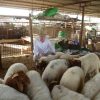
Global Challenges for the ‘NextGen’
Success has many parents – so the saying goes. In the case of the massive successes of international agricultural research, no one person can claim parentage. There are heroes along the way such as Norman Borlaug and his early cereal breeding, and the team that eliminated the cattle disease Rinderpest from the world – smallpox is the only other disease that has been totally eradicated. Another is the founder of The Crawford Fund, Derek Tribe, who was also instrumental in the creation of what is now the International Livestock Research Institute (ILRI), which I chair. However, it would be more correct to highlight the thousands of scientists who have contributed to the world’s greatest feat of feeding an extra three billion people when pundits said it was impossible.
A Major Step Forward in Reducing Food Loss and Waste is Critical to Achieve the SDGs
A new FAO report launched today by the UN Food and Agriculture Organization provides insights into how much food is lost - as well as where and why - at different stages of the food supply chain, calls for informed decisions for an effective reduction and offers new ways to measure progress.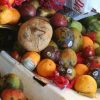
Stop the Waste: UN Food Agencies Call for Action to Reduce Global Hunger
With one-third of food produced for human consumption lost or wasted, and millions still going hungry, the UN’s food-related agencies are shining a spotlight on the issue: on Monday, the Food and Agriculture Organization (FAO) published its annual State of Food and Agriculture report with findings that could lead to a reduction in food loss and waste, and, earlier in October, the World Food Programme (WFP) launched its awareness-raising #StopTheWaste campaign.
Free Trade is Dead
In recent years, global trade and trade policy have become central socio-political issues. The planned EU-US trade agreement TTIP triggered an unprecedented storm of indignation and resistance.
Rural Poverty Is Still a Scar on the Soul of Colombia, but a New Program Supporting Agri-Entrepreneurship Can Help Heal the Wounds
Rural poverty and inequality continue inflicting large swaths of population in Colombia, especially in rural areas. This situation, endemic since at least the beginning of the twentieth century, was at the root of the 50-year long conflict that shattered the country, leaving 220,000 deaths and 5.7 million displaced persons, and devastating a significant part of the rural areas, where government services and infrastructure vanished.
For Some in Kashmir Marriage Equates to Sexual Slavery
Haseena Akhtar was only 13 when an agent told her parents that they could earn a good amount of money by letting her marry a Kashmiri man. The man was, however, three times older than Akhtar, the agent said.
Abortion Remains an Unresolved Issue: ICPD25 Meeting next Month
Currently, the topic of abortion as human rights leaves the world bustling. When the state of Alabama1 in the United States enacted a very strict ban on abortion, it shocked the world. This prompted so-called conservative movements, led by female business owners, to make a full-scale advertisement in the New York Times claiming abortion is a human right2 ; hence the global debate between pro-life and pro-choice.
The Most Important Meeting You’ve Never Heard Of — & the Grand Challenge on Inequality
Last month 195 world leaders once again met in New York for big speeches and grand events. But on inequality, when all is said and done, more has been said than done.
Global Climate Change Investment Heavily Tilted Towards Mitigation and Low on Adaptation
Good news: the graph depicting climate investments has been steadily increasing. Climbing from the 2012 figure of $360 billion in climate investments across the world to close to $600 billion currently.
Afghan War Deadly for Children Despite Peace Process: UN
The United Nations has warned that the past four years were among the deadliest for children in Afghanistan since the United States-led invasion of 2001, with nearly 13,000 youngsters killed and injured in that period.
Can We Feed the World and Ensure No One Goes Hungry?
Enough food is produced today to feed everyone on the planet, but hunger is on the rise in some parts of the world, and some 821 million people are considered to be “chronically undernourished”. What steps are being taken to ensure that everyone, worldwide, receives sufficient food?
Human Trafficking – It Came Disguised as the Opportunity of a Lifetime
Six years ago Mary Njambi* received news of a once-in-a-lifetime job opportunity far away from her poverty-stricken village situated in the heart of Kiambu County, Central Kenya. She was 20 years old, a single mother and out of work.
Salvaging the SDGs: New Thinking to Spur Action Takes Shape
For the first time since a new development agenda was adopted in 2015 to make the world a better place for everyone, government leaders assembled at the United Nations in late September to take stock of progress. The verdict of this summit was not good.
Wall Street can Free the World’s 40 Million Modern-Day Slaves
Financiers in Wall Street, the City of London and other banking centres should play a bigger role in freeing the millions of people who endure slave-like working conditions globally, according to a new study.
Medical Centres Cover Every Village in Tibet
 Tibetan medicine is one of the world's oldest known traditional medicines, originally developed during the pre-Buddhist era in the kingdom known as Shang Shung. IPS correspondent Crystal Oderson visited one of the major Tibetan health facilities in Lhasa.... and got a glimpse of the age old tradition.

Investments to Cushion African Countries against Climate Shocks Not Enough
African Development Bank (AfDB) President Akinwumi Adesina unveiled millions of dollars of new pledges at the United Nations this week amid growing fears of climate change ravaging the continent and derailing anti-poverty targets.« Previous Page — Next Page »





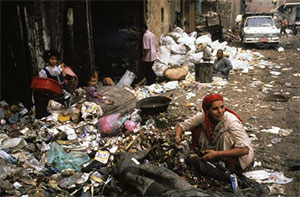 Romani people in Cairo, Egypt, forage through trash. Credit: UN Photo/Armineh Johannes
In 2015, the United Nations adopted the Sustainable Development Goals (SDGs) in an effort to promote “peace and prosperity for people and the planet.” To achieve that goal, it is essential to provide equal opportunities and access to basic services to all people. The 2025 UN SDG Report found that 35% of the 169 SDG targets are on track or making moderate progress, while 18% have reversed compared to the 2025 baseline. One in ten people still live in extreme poverty, one in eleven experience food insecurity, and over 1.1 billion people live in slums without access to clean water and sanitation. It is imperative to acknowledge the societal, technological, economic, and political issues that sustain poverty in countries around the world. Eradicating poverty will require significant frameworks in policy and governance on a national and international scale to ensure that all people will have equal access to basic services and economic opportunities by 2030. Furthermore, a dramatic reduction of United States foreign aid in 2025, including the termination of 83% of USAID programmes, threatens to erode years of fragile development gains.
Throughout the world, violent conflict and natural disasters also contribute to extreme poverty. The complete destruction of infrastructure and blockage of aid has significantly impoverished Palestine since October 7th. The destructive impact of Hurricane Maria in Puerto Rico left $91 billion in damage. An inadequate US government response also revealed significant and enduring questions within the issue of mitigating poverty: how do we rebuild infrastructure after its destruction? How do we restimulate economic development and bring in financial aid after disasters? Similar questions have been raised in the realm of regional cooperation, as devastating floods have wrecked hundreds of thousands of homes across multiple Southeast Asian nations in the past few years. Furthermore, the COVID-19 pandemic has greatly exacerbated the global poverty crisis, particularly in developing countries, setting back the United Nations goal of eradicating poverty by 2030.
IPS is committed to providing comprehensive features that focus on the persisting environmental, sociopolitical, and systemic issues that sustain poverty, and the steps taken worldwide towards poverty eradication.

The Week with IPS

NEXT STOP - SDGs
Tracking global progress towards a sustainable world
Tracking global progress towards a sustainable world

