


Korchi a village of 3,256 people, most of whom are small and marginal farmers belonging to Gondi and Kawar indigenous communities, lies about 750 kilometres east of Mumbai, India. Here, women like Jam Bai, a 53-year-old indigenous farmer, have been leading a ground movement for years to own land.
Languages
Friday, November 6, 2026


News and Views from the Global South
Poverty & SDGs

Promoting Women’s Safety in Latin America
Every year, over 12,000 women are killed in Latin America. The region is plagued by extremely high levels of violence, and a vacuum of state power persists. Public face of this violence is caused by paramilitary, guerrilla, gangs and armed groups.
Towards a Sustainable Future: Case of China’s Economic Transformation
The Asia-Pacific region is at a crossroads. The traditional export-oriented, manufacturing-driven growth is facing headwinds from sluggish external demand and rising protectionist trade measures.
To Uplift a Woman is to Uplift a Village
Khadija Zuberi, 23, from Ruaha Mbuyuni village in Tanzania’s central highlands, is a single mother to her four-year-old son, Hashim.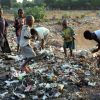
The World Bank Needs to Understand Poverty and What it Actually Costs a Family to Live on
The World Bank claims poverty is decreasing around the world but UN research shows it depends on what you measure. If we are serious about reducing poverty, we need to start by properly identifying it.
Boom or Bust -Education Will Determine Africa’s Transformation
August 12, marks International Youth Day, and the theme for this year is ‘making education more relevant, equitable and inclusive’, is particularly apt for Africa. Consider this. Every 24 hours around 35,000 African youth are looking for work.
Extreme Weather Events are Just the Tip of Rapidly Melting Icebergs
First August. It is the middle of summer in the northern hemisphere. We are witnessing not only record global warming but global political tensions are also heating up.
A Rural Sanitation Model That Works
Research and experience across more than two decades in rural Odisha, India, show that an effective rural sanitation model requires both financial assistance and an integrated water supply.
Businesses Crucial to the Success of SDGs
We all know that the UN Sustainable Development Goals are ambitious and will take huge collaborative and international effort to achieve. Government action alone is not enough. So how can the private sector actively contribute – and what can be done to ramp up the participation of businesses around the world?
Bangladesh and the fight to end torture
On June 26, the world comme-morated the International Day in Support of Victims of Torture—an opportunity to uphold the dignity of life, access to justice, and freedom from torture, which is a right of all people, to be enjoyed without discrimination, regardless of their civil, cultural, economic, political or social position or status.
Using Renewable Energy and the Circular Economy to Fight Poverty in Argentina
On the outer edges of Buenos Aires proper, where the paved streets end and the narrow alleyways of one of Argentina’s largest shantytowns begin, visitors can find the En Haccore soup kitchen.
Women, Power, & Changing Face of Political Representation in Latin America & the Caribbean
Gender inequality is about power asymmetries. In the late 1970s, Robert Putnam reflected on the status of women in policy decisions in his comparative study on political elites. Quoting Elizabeth Vallance, he concluded that, “where power is, women aren’t.”.
How Widespread is Human Trafficking in the US?
The United States is no exception to the practice of modern day slavery—a crime for which it is rarely held accountable at the United Nations.
Nigeria Finally Throws its Weight Behind African Continental Free Trade Area
On 7 July 2019, Nigeria finally threw its weight behind the African Continental Free Trade Area (AfCFTA) when President Muhammadu Buhari signed the treaty at a summit of African heads of state in Niamey. In normal circumstances, that shouldn’t have been big news.
As SDGs Falter, the UN Turns to the Rich and Famous
The Sustainable Development Goals (SDGs) are in trouble. United Nations officials are concerned and say so publicly. Secretary-General António Guterres joined in raising an alarm in mid-July when he introduced the most recent official UN report.
Switzerland announces support to UN Resident Coordinator function in Kenya to advance UN Reforms and contribution to national development priorities
The Government of Switzerland is pleased to announce support for the ongoing UN reforms implementation in Kenya through a two-year cost-sharing arrangement that will strengthen the capacity of the Resident Coordinator’s Office, with focus on coordination of the integrated cross-border initiative and the SDG Partnership Platform, expanding partnerships and diversifying financial modalities for realising the SDGs.
Malnutrition in Humanitarian Settings
As the rain hammers down, Aparo Dorin sits on the damp floor of her one-room hut in zone 12, block 5A, of the Palabek refugee camp in northern Uganda.
How Best to Tackle Inequality in the 21st Century? Start with Climate Change
Do you prefer to hear good news or bad news first? I will begin by giving you the (unsurprisingly) bad news. Today’s world is an unequal place. Standards of living vary massively both between and within countries.
It Takes Listening to Children to End Violence
We see many challenges that affect children around the world. Child marriage, corporal punishment, voting ages, air pollution, teachers going on strike…
Will a Global Fund Help Deliver UN’s Development Agenda?
The United Nations, which has been tracking both the successes and failures of its highly-ambitious Agenda for Sustainable Development, has warned that “progress has been slow” in many of the 17 Goals after four years of implementation.
US Leads Donor Funding to Fight HIV/AIDS Amidst Overall Decline
Since 2010, donor funding to fight HIV/AIDS in low-and middle-income countries has dropped significantly, according to a new report released here.« Previous Page — Next Page »





 Romani people in Cairo, Egypt, forage through trash. Credit: UN Photo/Armineh Johannes
In 2015, the United Nations adopted the Sustainable Development Goals (SDGs) in an effort to promote “peace and prosperity for people and the planet.” To achieve that goal, it is essential to provide equal opportunities and access to basic services to all people. The 2025 UN SDG Report found that 35% of the 169 SDG targets are on track or making moderate progress, while 18% have reversed compared to the 2025 baseline. One in ten people still live in extreme poverty, one in eleven experience food insecurity, and over 1.1 billion people live in slums without access to clean water and sanitation. It is imperative to acknowledge the societal, technological, economic, and political issues that sustain poverty in countries around the world. Eradicating poverty will require significant frameworks in policy and governance on a national and international scale to ensure that all people will have equal access to basic services and economic opportunities by 2030. Furthermore, a dramatic reduction of United States foreign aid in 2025, including the termination of 83% of USAID programmes, threatens to erode years of fragile development gains.
Throughout the world, violent conflict and natural disasters also contribute to extreme poverty. The complete destruction of infrastructure and blockage of aid has significantly impoverished Palestine since October 7th. The destructive impact of Hurricane Maria in Puerto Rico left $91 billion in damage. An inadequate US government response also revealed significant and enduring questions within the issue of mitigating poverty: how do we rebuild infrastructure after its destruction? How do we restimulate economic development and bring in financial aid after disasters? Similar questions have been raised in the realm of regional cooperation, as devastating floods have wrecked hundreds of thousands of homes across multiple Southeast Asian nations in the past few years. Furthermore, the COVID-19 pandemic has greatly exacerbated the global poverty crisis, particularly in developing countries, setting back the United Nations goal of eradicating poverty by 2030.
IPS is committed to providing comprehensive features that focus on the persisting environmental, sociopolitical, and systemic issues that sustain poverty, and the steps taken worldwide towards poverty eradication.

The Week with IPS

NEXT STOP - SDGs
Tracking global progress towards a sustainable world
Tracking global progress towards a sustainable world

