Languages
Monday, November 9, 2026



News and Views from the Global South
Sustainable Development Goals

Generation and Self-Consumption, the Path to Clean Energy in Argentina
With large projects held back by the economic crisis and lack of infrastructure, Argentina seems to be looking at an alternative path towards a more sustainable energy mix involving small renewable energy projects, promoted by environmentally aware industries, businesses and private users.
Biodiversity Agreement Historic But Difficult to Implement
The pillar coral (Dendrogyra cylindrus), which takes its name from its shape, is found throughout the Caribbean Sea, but its population has declined by more than 80 percent since 1990. As a result, the International Union for Conservation of Nature (IUCN) has listed it as "critically endangered" due to the effects of the human-induced climate crisis.
Tracking the Impact of Science on Biodiversity Conservation
Billy Offland (21), a British sustainability student, went on a two-year 'World Conservation Journey' to bring attention to the biodiversity crisis as the world seeks a deal to protect nature.
COP15: Unsustainable Infrastructure Threatens Biodiversity
Created in 2016, the Mexican Caribbean Biosphere Reserve (MCBR) hosts 1900 species of animals and plants and contains half of the Mesoamerican Barrier Reef System, the second largest in the world after Australia's Great Barrier Reef.
Solar Energy Benefits Children and Indigenous People in Northern Brazil
Solar energy is booming in Roraima, a state in the far north of Brazil, to the benefit of indigenous people and children in its capital, Boa Vista, and helping to provide a stable energy supply to the entire populace, who suffer frequent electricity shortages and blackouts.
Experts Seek Appropriate Circular Solutions to Plastic Pollution
Experts agree that African economies need to develop innovative approaches to deal with plastic production, which is set to double in 20 years – adversely impacting rural communities.
Dignity, Freedom and Justice
As we commemorate Human Rights Day, let us recall the opening preamble of the Universal Declaration of Human Rights of 1948: “Whereas recognition of the inherent dignity and of the equal and inalienable rights of all members of the human family is the foundation of freedom, justice and peace in the world… “
Can Asia and the Pacific Get on Track to Net Zero?
The recent climate talks in Egypt have left us with a sobering reality: The window for maintaining global warming to 1.5 degrees is closing fast and what is on the table currently is insufficient to avert some of the worst potential effects of climate change. The Nationally Determined Contribution targets of Asian and Pacific countries will result in a 16 per cent increase in greenhouse gas emissions by 2030 from the 2010 levels.
AGRA Gets Make-Up, Not Make-Over
Despite its dismal record, the Gates Foundation-sponsored Alliance for a Green Revolution in Africa (AGRA) announced a new five-year strategy in September after rebranding itself by dropping ‘Green Revolution’ from its name.
For this Caribbean Island, Ozone Protection is a Year-Round Mission
For countries across the globe, September 16th is a day to reflect on progress in protecting the ozone layer. The United Nations designated day for the preservation of the ozone layer is marked by speeches, and educational and social media campaigns.
Launch of EBRD Climate Adaptation Action Plan at COP27
As it moves to increase its climate adaptation finance, the European Bank for Reconstruction and Development (EBRD) has launched the EBRD Climate Adaptation Action Plan (CAAP) at COP27, the global climate summit taking place in Sharm el-Sheikh, Egypt.
COP27: Cyclone Nearly Washed Away All My Dreams, says Vanuatu Youth Activist
The only thing Taren Chilia remembers about Cyclone Pam was that it flattened his school in Vanuatu, washing away books, equipment, and – well, almost his dreams too.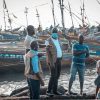
Why COP27 Matters to Sierra Leone
Sierra Leone is among the 10 percent of countries in the world that are most vulnerable to the adverse consequences of climate change, and presently one of the least able to cope with the effects.
COP27: Climate Justice: Where do the Religiously Marginalised Fit in?
Climate change reductionism – assuming the causes and the redress for those suffering the worst impacts of extreme weather lies with climate change alone - undermines the rights of religiously marginalised persons, but broadening whose rights are being advocated for in climate change can offer redress.
Education Cannot Wait Interviews Theirworld President Justin van Fleet
Justin van Fleet, Ph.D, is President of Theirworld and Executive Director of the Global Business Coalition for Education. Justin previously served as the Director of the International Commission on Financing Global Education Opportunity and Chief of Staff to the United Nations Special Envoy for Global Education and prior to that as a Fellow at the Brookings Institution’s Center for Universal Education.
Energy: Why Africa Must Be Part of Nuclear Energy Appetite
The search for energy diversification has taken a more frantic pace amidst the global energy transition debate.
COP27: Religious Multilateralism: An Endangered Species in the Age of Triple Planetary Crises
In this year’s COP 27 two-weeklong summit in Egypt, which concludes November 18, a rough count indicates there will be 40 different sessions organised by, for, and about, religious engagements in/on climate change and related issues. This is likely the highest number of events by and around religious actors, organised at a COP event.
COP27: Bolsonaro’s Defeat is a Triumph for Climate Change Advocates
The electoral defeat of Brazil’s Jair Bolsonaro is a triumph for everyone who is concerned about the peril of climate change. Bolsonaro’s well-deserved defeat could help save the Amazon rainforest, which has been ravaged under his criminal rule, and the process of reversing the looming climate change catastrophe can begin
Africa: Will COP27 Deliver or be a Climate Forum of Empty Promises?
Africa is counting on COP27 to deliver it from climate change. But will it?
Pacific Islands: Climate Finance Action a Priority at COP27
Today, the window of opportunity for scaled-up global climate action to prevent disastrous global warming and build resilience in the most vulnerable nations is closing fast. And a major impediment to reducing emissions and accelerating climate adaptation is both lack of financial investment and major bureaucratic hurdles to accessing those funds that are available.
Solar Power Brings Water to Families in Former War Zones in El Salvador
The need for potable water led several rural settlements in El Salvador, at the end of the 12-year civil war in 1992, to rebuild what was destroyed and to innovate with technologies that at the time seemed unattainable, but which now benefit hundreds of families.« Previous Page — Next Page »





The Week with IPS

NEXT STOP - SDGs
Tracking global progress towards a sustainable world
Tracking global progress towards a sustainable world
