Languages
Thursday, September 24, 2026



News and Views from the Global South
Cooperatives
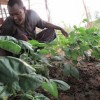
KENYA: Relief Food Sourced from Local Farmers
Mourid Abdi Dolal and Wilson Rotich are both small-scale farmers who grow staple crops. But while one sells his produce at the local village market, the other farms to feed the growing number of refugees in Kenya.ARGENTINA: Worker Cooperatives Reduce “Hard-Core” Unemployment
During the social and economic collapse of 2002-2003, the Argentine state encouraged the formation of workers' cooperatives, which helped mitigate the worst effects of the crisis, reduced hard-core unemployment, and now as independent, democratic, worker-controlled organisations are providing services to the public and private sectors.AFRICA-DEVELOPMENT: Governments Need to Reach Out to Rural Women
Governments, especially in Africa, need to have strong accountability measures in place in order to effectively reach women in rural areas through gender responsive budgeting.SENEGAL: Fish Farming Breathes New Life Into Rural Economy
July signals the start of three months of intense activity for residents of the seven villages around the small dam at Sébi Ponty. The dam was stocked with tilapia in 2006, and aquaculture is proving to be a vital economic activity for youth in the area.CENTRAL AMERICA: Fair Trade Taking Root
"We started out with 10 organisations and now we have 22 cooperatives with more than 19,000 members who grow and export crops with an environmental, social and economic focus," says an enthusiastic Marvin López, with the Guatemalan network of small-scale fair trade farmers (CGCJ).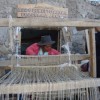
PERU: Indigenous Women Weave New Community Ties
Fuchsia, green and turquoise yarn shuttles swiftly across the wooden loom Dora Huancahuari has learned to use. Together with other craftswomen, she has started a small weaving business which is helping to rebuild their lives in this remote, poverty-stricken Andean community torn by Peru's history of armed conflict.CUBA: Microcredit Knocks on Door…Softly
A microcredit system could begin operating in Cuba as part of reforms adopted by the government of Raúl Castro to modernise the country's socialist economic system.BOLIVIA: Women Fight Superstition, Machismo in Mining Cooperatives
Hundreds of women belonging to mining cooperatives in Bolivia are striving for the right to mine seams of tin and silver in the country's western highlands, where an age old superstition maintains that the presence of women "scares away" the minerals.MALAWI: Village Hands Join to Save Forest for Juice
Seventy kilometres outside Malawi's commercial capital, Blantyre, a profitable cooperative enterprise is providing villagers jobs and preserving forests.ZIMBABWE: Beating the Housing Blues
Every month Cynthia Dube and the nine other women from her co-operative make sure they sell enough clothes and appliances to put 100 dollars each in a joint savings. When they have enough money, they will buy each member a plot of land. And eventually they will help each other build their own homes.
CHILE: HidroAysen Dam Project is Dividing Communities
The area that will be flooded to build the HidroAysén project's five dams represents barely 0.05 percent of the Chilean region of Aysén. But it is made up precisely of the valleys where the majority of the population lives, according to local residents.
NIGERIA: Women Giving Each Other a Hand Up
In an open space near her home in Makoko, a crowded suburb of the sprawling city of Lagos, Latifat Agboola sits in the midst of bags of charcoal, attending to her customers. Some of them call her "the charcoal woman with the dirty job, but she sees herself as a businesswoman on the rise.
ZAMBIA: Making the Most of Limited Capital
Proponents of microfinance often portray it as the empowering extension of credit to vulnerable but diligently self-employed poor people - often women - who support each other to improve their livelihoods as well as repay their loans. The image is true, to some extent, but in many parts of Africa, microfinance institutions have somewhat sharper teeth.
ZAMBIA: Microfinance Beyond the Reach of the Poor
According to the World Bank, less than eight percent of Zambian adults have bank accounts. For the millions who make their living in the informal economy, this prevents them from earning interest on any savings they have or securing credit needed to expand small businesses beyond mere survival.U.N. to Launch International Year of Cooperatives
When the United Nations commemorates the International Year of Cooperatives (IYC) in 2012, the world body will recognise the contributions made by cooperatives to socioeconomic development, including poverty reduction, employment generation and social integration.
MEDIA: Uniting in the Face Of “Unnatural” Disasters
"In my opinion, there is no such thing as a natural disaster," says Sylvia Richardson, a volunteer broadcaster, mother of two, assistant librarian, and the new vice president of the North American region of the World Association of Community Radio Broadcasters (AMARC).
ENVIRONMENT: Endosulfan Ban Highlights Need for Alternatives
The upsurge in the use of the toxic pesticide endosulfan, targeted for prohibition by the international community, illustrates one of the dilemmas of intensive agriculture in Argentina and Latin America in general.« Previous Page


The Week with IPS

NEXT STOP - SDGs
Tracking global progress towards a sustainable world
Tracking global progress towards a sustainable world
