Languages
Sunday, November 15, 2026



News and Views from the Global South
Labour
RIGHTS: Glimmer of Hope for Detained Pakistani Fishermen
Mai Asi has never stopped mourning for her two fishermen sons. They have been held behind bars in India for poaching in the waters of neighbouring Pakistan—a crime for which they were sentenced to two years’ imprisonment.DEVELOPMENT: Tsunami Brings Sea Change in Coastal Lives
Tragic as it was, the Asian tsunami wrought a sea change in the lives of survivors in the sleepy coastal hamlets of southern Tamil Nadu state, where some 8,000 people are known to have died.Q&A: ‘Children Need to Adjust to the Economic Crisis’
During the Asian financial crisis in 1997, Yaowapa Donsay was laid off from the Thai garments factory she was working in. Subsequently, she organised a group of jobless women workers – and that marked her transformation into a labour activist.CAMBODIA: Financial Crisis Forces More Teenage Girls into Labour
Until the global financial crisis hit, a journey out of poverty for women in rural Cambodia was assured by the vibrant garment sector that had taken root in the country’s capital. Tens of thousands of women in their twenties poured into Phnom Penh to secure jobs in the hundreds of export-oriented factories.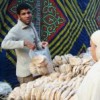
EGYPT: Cheap Bread Frees Women to Work
At a small bakery in Cairo's Boulaq district, dozens of hands thrust through a barred window waving coins and small banknotes. The clerk inside deftly takes the money and deals loaves of round flatbread into plastic bags.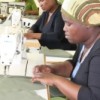
SOUTH AFRICA: Hard Lessons for Small Business on the West Coast
The sound of sewing machines fills the room with a low, continuous hum. A handful of women sit behind the machines, their heads bent in concentration on their work.
JAPAN: Careers On Hold For Most Women
Tomoko Ando and her husband divorced because she refused to quit her job as a lawyer and start a family. The shortage of daycare centres has created a dilemma for women like Ando who want to continue working, but also start a family.PHILIPPINES: Belt-tightening by Migrant Workers Unfelt at Home
The global financial crisis may have dealt a severe blow to Filipino migrant workers, thousands of whom lost their jobs and fell into debt. But public schoolteacher Melinda Mendoza does not see this impact at all -- at least not within the four walls of her classroom.ARGENTINA: “Myth” of Egalitarian Society Fading Away for Young People
A study on young people and human development in South America's Mercosur trade bloc indicates that while in Brazil, the country's longstanding social inequality is the focus of at least somewhat successful efforts to combat it, in Argentina the vision of an equitable society is fading away.US: Reconsidering War on Drugs
As the war on drugs moves closer to home and a new administration presents new ideas, policymakers in Washington are taking notice of 30 years' worth of ineffectual drug policy and beginning to think about different ways of addressing the northward flow of narcotics.US: Soldiers Forced to Go AWOL for PTSD Care
With a military health care system over-stretched by two ongoing wars in Afghanistan and Iraq, more soldiers are deciding to go absent without leave (AWOL) in order to find treatment for post-traumatic stress disorder (PTSD).
CLIMATE CHANGE: From Dirty Fuels to Clean Technology
Tomorrow’s polluters are today’s emerging economies. To develop without retracing the polluting steps of the West, requires green technology, an expensive option for Africa.
UGANDA: Mob Justice Increases as Court Backlogs Escalate
Sam Kubo had gone to lease out his 600 hectares of land in Kayunga district. But instead he went to his death.PARAGUAY: Migrants Mainly Young Undocumented Guarani-Speakers
Freddy Garcete, a 50-year-old painter who works in the construction industry, travelled to Spain in search of better wages two years ago, becoming one of the 500,000 Paraguayans forced to seek work abroad because of the conditions at home.
AUSTRALIA: Children, Youth Feel the Heat of the Financial Crisis
Once a week lunch order from the school canteen was something Emily and Damien’s children looked forward to, but since the global financial crisis began last year, little treats and outings are an absolute ‘No’.
PERU: Women Workers Forced into Informal Economy
In Peru, 51 percent of all jobs are generated by the informal economy, a sector that has a female face, as more than 60 percent of the women workers in the country are forced into informality, with only 15 percent having health coverage and a mere four percent enjoying retirement benefits.
JAPAN: Aging Population Needs More than Short-Term Solutions
Sachiko Yamada has been hoping to spend her retirement years traveling and living the good life. Today she devotes her time to taking care of her 90-year- old mother five days a week, leaving her with two days off while her mother goes to a care centre for the elderly.
MEDIA-LATIN AMERICA: Women Deserve Better Press
"The press will change when they cease to report exclusively from a masculine point of view," Peru's deputy Minister for Women, Norma Añaños, told participants at an international seminar for journalists on "Women at Work, Women as Leaders", held in the Peruvian capital.
CUBA: Sponge Farms – New Source of Bounty from the Sea
The ocean punishes Carahatas every time a hurricane tears through the region. The sea combines with the flow of a nearby river, and floods the houses with water a metre and a half deep, or more. Nevertheless, the residents of this Cuban town are deeply attached to the sea.LABOUR-MEXICO: Manufacturing Poverty for Women
A group of workers in Honduras managed to prevent the closure of an assembly plant manufacturing sportswear for the U.S.-based sports apparel maker Russell Athletic, thereby saving 1,200 jobs.
RIGHTS-LAOS: Lapses with Labour – Part 2
"Most workers have limited knowledge, ultimately you don't know how many hidden killers are in your workplace. The boss knows, but he won't tell you," Wang Fengping, an engineer who was once employed by Hong Kong-based Gold Peak batteries at their factory in Guongdong, China.« Previous Page — Next Page »


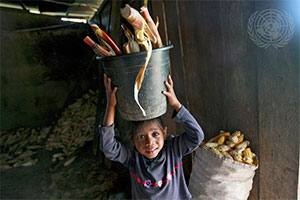 Timorese Girl with Fresh-Picked Corn. Credit: UN Photo/Martine Perret
A global common denominator is the need for a decent job. The economic realities of each country determine just how difficult it is to find one. Despite the labour movement's achievements, serious challenges persist: gender discrimination, child labour, worker migration, the digital divide and AI automation, evaporating pensions, unsafe workplaces, corporate pressure against union organising, negative impacts of trade agreements, and the precariousness of informal employment. The 2025 UN SDG Report identifies jobs and social protections as one of the six priority areas requiring urgent action, with progress either stalled or reversing in many developing nations.
In recent years, the fight to protect labour equality has taken on new dimensions with the rise of Environmental, Social and Governance standards. With the Social aspect aiming to promote equality and human rights, ESG principles have strengthened labour advocacy within corporate and governmental regulatory landscapes. In particular, ESG has become much more institutionalized in emerging economies such as Brazil and China. IPS follows the world’s workers as they confront these challenges - their setbacks and their successes.

The Week with IPS

NEXT STOP - SDGs
Tracking global progress towards a sustainable world
Tracking global progress towards a sustainable world
