Languages
Tuesday, November 17, 2026



News and Views from the Global South
Economy & Trade

Reflections for a New Year
In a world shaken by so many problems, it is difficult to look at 2020 and not make some kind of holistic analysis. While enormous progress has been made on many fronts, it is clear that the tide has turned, and we are now entering – or have already entered – a new low point in the history of humankind..
2020 Is the Decade of Action & It Has to Be a Sprint
Happy New Year, Kenya. 2020 marks a decade of action towards the realization of the Sustainable Development Goals by 2030. Peace and development are inextricably linked, with each making the achievement of the other far more likely. This puts the conflict-prevention and development work of the UN at the heart of the agenda in East Africa, but in a multi-agency and programme environment, making meaningful progress is challenging.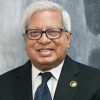
A Tribute to Sir Fazle Hasan Abed (1936 – 2019)
“When I think about Bangladesh, I think about everybody. Not everybody is enjoying Rabindranath and the great literature and culture that Bangladesh has. But I think everybody has got the right to have this experience”, deeply felt by late Sir Fazle Hasan Abed, founder of BRAC (Building Resources Across Communities), a unique, integrated development organization that many have hailed as the most effective anti-poverty organization in the world; who passed away December 20, 2019at the age of 83.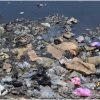
Plastic: The Largest Predator in Our Oceans
Plastic pollution is currently the largest global threat to marine life. Each year, 10-20 million tonnes of plastic ends up in our oceans, killing approximately 100,000 marine mammals and over a million seabirds.
More Women in Tech Will Lead to Peaceful Gender Equal World
It will take around 100 years for the world to reach gander parity according to the Global Gender Gap Report 2020 just published by World Economic Forum.
Food Security Is Priority of Russian Sustainable Development Assistance
Food security holds a special place among Russia’s priorities in its efforts to achieve sustainable development globally. We believe that this task, which is reflected in Sustainable Development Goal 1, requires a comprehensive and multidimensional approach.
Q&A: Initiative Starts Mental Health Sessions for Bangladeshi Garment Workers
Nearly seven years ago, garment workers in Bangladesh were victims of one of the gravest man-made disasters in history -- a factory collapse that left more than 1,100 workers dead, and rendered thousands with injuries -- in many cases lifelong ones. For many of the workers from Rana Plaza, the trauma remains real even to this day.
Carbon Markets Can Provide a Crucial Part of the Solution to the Climate Crisis
One of the main discussions at the COP25 climate change talks was Article 6, which is designed to provide financial support to emerging economies and developing countries to help them reduce emissions by using global carbon markets. Carbon pricing is an essential piece of the puzzle to curb emissions. Without a value on carbon, there is less incentive to make positive changes, especially in the private sector. The most efficient way to carry this forward is to allow trading of carbon both nationally and internationally, which will ensure the lowest cost of mitigation for participants globally.
Arab Region’s Largest Youth Gathering Focuses on New Tech
On late Monday morning, a motley group of more than a thousand youth gathered in a hall in Sharm el-Sheikh, Egypt, to listen to Sophia — a humanoid robot capable of displaying humanlike expressions and interacting with people. Yahya Elghobashy, a computer science engineering student from Cairo, sat excitedly in the audience. A few meters away from him, also in the audience, was Abdel Fattah el-Sisi — the President of Egypt.
Lithium and Clean Energy in Argentina: Development or Mirage?
The intense white brightness of the salt flats interrupts the arid monotony of the Puna in northwest Argentina, resembling postcards from the moon. Beneath its surface are concealed the world's largest reserves of lithium, the key mineral in the transition to clean energy, the mining of which has triggered controversy.
Billionaires’ Existential Threats to Humanity?
The social utility of billionaires’ existence has come under increased scrutiny, especially during the Democratic Party primaries for the 2020 US Presidential election. Leading newspapers, such as The New York Times, published opinion pieces arguing to abolish billionaires and reflecting on why billionaires engage in illegal insider trading.
Address Malnutrition, Not Just Food Security
Malnutrition remains a formidable challenge in most societies, with less than a tenth of countries in the world not experiencing at least one major malnutrition problem. In relatively more food secure countries, where almost everyone has enough to eat, and few live in fear of a sudden loss of access to food, micronutrient deficiencies and diet-related non-communicable diseases (NCDs) often still loom large.
2019 – A Devastating Year in Review
By any measure this has been a devastating year: fires across the Amazon, the Arctic and beyond; floods and drought in Africa; rising temperatures, carbon emissions and sea levels; accelerating loss of species, and mass forced migrations of people.
Industrial Energy Efficiency is a Climate Solution
At a time when the world is battling unprecedented drought, bushfires, rising sea levels and water shortages, reducing energy use across industry is one powerful way to fight climate change in the immediate term.
Haiti’s Cry for Help as Climate Change is Compared to an Act of Violence against the Island Nation
Haiti’s Environment Minister Joseph Jouthe has compared the climate emergency to a violent act and appealed to the international community for help to fight climate change.
Taking Bangladesh to Zero-Leprosy, One New Case at a Time
Sandhya Mandal has never felt so vindicated. For the past four years, the 36-year-old community health worker from Meherpur – a rural district bordering India – has been traveling 50 km every day along dusty roads on an old motorbike, searching for leprosy patients who needed urgent treatment. But in her community, instead of compliments, neighbours and relatives raised questions about her work and her character. “They ask why I come home so late and what is this ‘work’ that I really do. Some even imply that I might be doing something like prostitution,” Mandal tells IPS.
Building Momentum to Hold Companies to Account
Millions of adults and children around the world suffer abuses as workers who obtain raw materials, toil on farms, and make products for the global market. They are at the bottom of global supply chains, for everything from everyday goods like vegetables and seafood to luxury items like jewelry and designer clothing that end up on store shelves worldwide.
Accelerating SDG Progress in Asia – Pacific
“The 2030 Agenda is coming to life”, declared the Secretary General at the opening of the first SDG Summit, a quadrennial event for the follow up and review of the 2030 Agenda for Sustainable Development. As leaders from Asia – Pacific took the floor, they highlighted country progress of SDG implementation and reaffirmed commitment to achieve the 2030 Agenda. Statements reflected different approaches across the region. Yet all converged on one priority: accelerated actions and transformative pathways.
Why Is Growth Slowing in China?
China’s gross domestic product (GDP) grew by 14%. Since then, its growth rate has declined by more than half to 6.6% in 2018. The five-year moving average growth rate is at its lowest since reforms began in 1978, although annual growth briefly fell lower during 1989, the year of the Tian An Men incident.
South-South Cooperation Offers Solutions to Urgent Climate Challenges
Climate change is the defining challenge of our time, and developing countries are recognized as hotspots for climatic risks. Through solidarity, peer-to-peer learning and collective self-reliance, developing countries are collaborating among themselves to address the threat.
Social Summit Demands Stronger Commitments in Climate Talks
As the COP25 deliberations enter the decisive final week, representatives of environmental and social organisations gathered in a parallel summit are pressing the governments to adopt stronger commitments in the face of a worsening climate emergency.« Previous Page — Next Page »


 UN Commission on International Trade Law Holds Colloquium on Harmonizing Law in Age of Digital Trade and Finance. Credit: UN Photo/Manuel Elías
Trade has historically been a geopolitical tool that can both be used to propel development as well as entrench inequalities. In various nations in East Asia and Latin America, increased trade, as often seen in export booms, has allowed them to achieve influential standings within the global economy. On the other hand, many low-income countries in Sub-Saharan Africa, Asia, and Latin America struggle to maintain a robust trade performance, and oftentimes are subjugated to exploitative trade dynamics through intense extraction of their natural resources. In recent decades, international trade has reached a new era as emerging economies across the world are rising in economic preeminence. Stable international trade is crucial to world peace as global interconnectedness facilitates reliable diplomacy. Nevertheless, significant challenges are on the rise. Notably, a major wave of United States tariff escalations in January 2025 lifted US import taxes to their highest level since the 1930s, changing market dynamics and forcing renegotiations with global trading partners.These articles are aimed at informing readers about the complexities of trade and its varying effects on development, with a special focus on the consequences of the global economic crisis, the potential of fair trade and the gender implications of trade policies.
Updated by Yilan Batista and Shuli Wong August 2026

The Week with IPS

NEXT STOP - SDGs
Tracking global progress towards a sustainable world
Tracking global progress towards a sustainable world
