Languages
Saturday, November 28, 2026



News and Views from the Global South
Economy & Trade

CONGO: Beninois Fishing Community Evicted
The Autonomous Port of Pointe-Noire has evicted 8,000 residents of a fishing village to make way for expanded facilities. The move is a blow to the community's livelihoods, as well as closing down the market that supplied the city's poor with affordable protein.
Recycling for Hope and Dignity on Paraguay’s Streets
"I go out with my cart and collect plastic bottles, cardboard, paper, plastic bags; that is my work," said Laura Cardozo, proud member of a recycling group that works the Paraguayan capital's streets.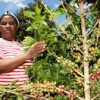
KENYA: A Brand New Constitution, But Can Women Enjoy Land Rights?
Mary Kimani wishes her husband were still alive. Holding her one-year-old son in one hand and a hoe in the other, she recounts with bitterness how she and her children lost their livelihood to her husband’s family.
ETHIOPIA: First Carbon Finance Spreads Green Over Highland
It has been decades since the people of the Humbo Woreda have been self-sufficient in food. A Clean Development Mechanism project - Ethiopia's first - is restoring the environment and sustaining livelihoods along with it.BRAZIL: Family Farming Matters in South-South Cooperation
Cooperation between countries of the developing South took another step forward with the recent signing of international agreements in Brazil aimed at stimulating public policies to support small farmers.Caribbean Gets Wired with Help from EU, World Bank
When Caribbean leaders gather for their annual summit in July 2011, they expect to finally have a draft information and communication technology (ICT) for development strategy that technocrats have been putting together over the past three years.
ECONOMY-ZIMBABWE: Consumers May be Happy But Workers Aren’t
South African retail giant Pick-‘n-Pay increased its stake from 25 to 49 percent in TM Supermarkets – Zimbabwe’s largest grocer – in October in a deal worth about 13 million dollars. But, while the champagne corks pop in the boardroom, employees are not upbeat.Despite Setbacks, Africa Seen as Key Player in Future
As the international community commemorated Africa Industrialisation Day last week, United Nations officials expressed mixed emotions about a beleaguered continent plagued by a rash of political, economic and military crises.TAIWAN: Debate Far from Over On Decriminalisation of Sex Trade
The Taiwanese government’s plans to partially decriminalise the sex trade has revived deep divisions within society, including between advocacy groups who stress the need for equal treatment and ‘autonomy’ for sex workers and those worried about the impact of such a move on human trafficking and child prostitution.
Brazil’s Capitalist Invasion Builds Socialism ‘a la Venezuela’
Bridges, railroads, petrochemicals, steel mills, electricity, aqueducts, agriculture, meat-processing plants, ship building and even cable cars: Brazil's powerful entrepreneurial arm is reaching towards the Caribbean, via Venezuela, where the Hugo Chávez government is working to build what it calls "21st century socialism."Lisbon Armed to the Teeth for NATO Summit
Helicopter gunships patrolling the skies, missile launcher ships in the Tagus estuary, police with heavy machineguns and armoured cars deployed on the main streets of the Portuguese capital have created a warlike ambience in the city hosting the North Atlantic Treaty Organisation (NATO) Summit.“Perfect Storm” Spurred 2007-08 Food Crisis, Study Says
Rising food prices have not yet reached crisis levels but they are expected to remain very volatile for about the next decade, researchers said Thursday.Overspeeding China Must Slow Down
Rosy figures tempt China to postpone much-needed reform, says a renowned Chinese economist. "Much growth is non-productive, with enormous speculation widening the gap between rich and poor."
EGYPT: Soaring Food Prices Squeeze Poor
Prices for most basic food commodities in Egypt have finally returned to earth - more or less - after soaring to unprecedented levels over the summer. But steadily rising food costs in recent years, along with the government's seeming disinclination to take effective steps to regulate the market, continue to be the source of mounting public anger.
Lebanon Pressured to Improve Palestinians’ Lot
Abu Yussif doesn't want to talk about his work any more. "It's not going to help and nothing will change anyway," he says. The tall, white-haired Palestinian has just returned from work and relaxes in his little garden in the refugee camp Bourj ash-Shamali near the southern Lebanese city of Tyre.
World’s Poorest Nations See a Glimmer of Hope
When the U.N. General Assembly recognised a special category of member states ranked as Least Developed Countries (LDCs) back in 1971, there were only 25 which qualified for the dubious distinction of being the "poorest of the world's poor".
RIGHTS-ZIMBABWE: “Sanctions Are Hurting the Right People”
The word "sanctions" was among the first five words mentioned to the new European Union (EU) ambassador to Zimbabwe Aldo Dell Ariccia when he first arrived and met with government officials in Zimbabwe a few months ago.Funding Cuts on Horizon for Global Health, AIDS
Over the past several years, the number of people needing treatment for HIV/AIDS has risen, but so has the amount of funding for the treatment and prevention of the disease. The United States has been at the forefront of that funding, but with the new emphasis in Washington on reducing government spending that may be about to change.
AGRICULTURE: U.S. and EU Subsidies Still Out of Bounds
The United States’ policy to double agricultural exports shows that its government "has learnt nothing" from the last food crisis, a problem reflected in the dramatic increase in that country’s trade-distorting farm subsidies between 2007 and 2008.INDIA: Now the ‘Mother of All Scams’
As India is rocked by a series of billion-dollar scams, the question on everybody's mind is whether the perpetrators will go scot-free in what has been described as a low-risk, high-gain activity in this country.ECONOMY: East Timor Extends a Hand to Troubled Portugal
With the announcement that his country is ready to buy Portuguese debt, the president of East Timor, José Ramos-Horta, set a precedent in international economic relations that was universally praised in political and financial circles in this southern European country.« Previous Page — Next Page »


 UN Commission on International Trade Law Holds Colloquium on Harmonizing Law in Age of Digital Trade and Finance. Credit: UN Photo/Manuel Elías
Trade has historically been a geopolitical tool that can both be used to propel development as well as entrench inequalities. In various nations in East Asia and Latin America, increased trade, as often seen in export booms, has allowed them to achieve influential standings within the global economy. On the other hand, many low-income countries in Sub-Saharan Africa, Asia, and Latin America struggle to maintain a robust trade performance, and oftentimes are subjugated to exploitative trade dynamics through intense extraction of their natural resources. In recent decades, international trade has reached a new era as emerging economies across the world are rising in economic preeminence. Stable international trade is crucial to world peace as global interconnectedness facilitates reliable diplomacy. Nevertheless, significant challenges are on the rise. Notably, a major wave of United States tariff escalations in January 2025 lifted US import taxes to their highest level since the 1930s, changing market dynamics and forcing renegotiations with global trading partners.These articles are aimed at informing readers about the complexities of trade and its varying effects on development, with a special focus on the consequences of the global economic crisis, the potential of fair trade and the gender implications of trade policies.
Updated by Yilan Batista and Shuli Wong August 2026

The Week with IPS

NEXT STOP - SDGs
Tracking global progress towards a sustainable world
