Languages
Sunday, November 29, 2026



News and Views from the Global South
Economy & Trade
HEALTH: Uganda Authority Finding Less Counterfeit Drugs
Uganda’s National Drug Authority (NDA) says the failure rate among samples of medicines tested at their laboratories has fallen by 15 percent from the early 2000s. This serves as a possible indication of a drop in the availability of counterfeit medicines in the East African country.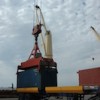
TRADE-NAMIBIA: EU Backs Off on EPA
European Union (EU) Trade Commissioner Karel de Gucht has appeased leading European civil society organisations about the negotiations for a Southern African economic partnership agreement (EPA), promising "not to put undue pressure" on countries.JAPAN: Rising Wages Won’t Scare Investors Away from China
Common business wisdom would have it that rising wages are bad news for foreign investors, but analysts here say that workers’ clamour for higher pay in Japanese factories in China will not send them packing from that country anytime soon.PERU: Adios, Doe Run
Peruvian President Alan García confirmed Wednesday that the permit of the U.S. mining and metallurgical company Doe Run to operate a major smelter complex was being cancelled because the firm missed the deadline for proving that it had the necessary financing to restart operations and complete an environmental cleanup.
IRAN: Poll Finds Dwindling Support for Govt
A recent poll conducted by a credible Iranian university centre concerning the post-election events of 2009 has found that 56 percent of participants believe President Mahmoud Ahmadinejad's popularity has declined over the past year, while just 22 percent believe it has increased.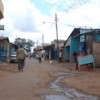
TRADE: Malawi Stands Firm on Conditions for Signing EPA
The Malawian government has again stood firm in the face of calls by the European Union (EU) to sign an economic partnership agreement (EPA) -- even after top-level EU officials visited the southern Africa to convince it to put pen to paper.Ecuador Requires Oil Firms to Renegotiate Contracts
A new law gives private oil companies in Ecuador four to six months to renegotiate new service contracts.
MIGRATION-PORTUGAL: On the Football Pitch, Everyone Is Equal
Football functions on so many levels. It can be big business, moving astronomical quantities of cash, with obscene salaries for owners, coaches and star players. And it can be a widely played sport, found in every park, street or vacant lot. And it can be the common ground for multicultural coexistence.
Familiar Pledges on Child and Maternal Health in Africa
During the three-day summit of African Union heads of state, roughly 37,000 children and 2,000 women died across Africa, mostly from preventable causes, says a civil society coalition for child and maternal health. The coalition welcomed African leaders' pledge to make more resources available.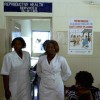
SIERRA LEONE: Defining New Role for Traditional Birth Attendants
Posseh Sesay will never be able to bear children again following a tragic birthing experience at the hands of her village traditional birth attendant (TBA).Brazilian Immigrants Weather Crisis in Spain
Unlike so many immigrants who have come to Spain in search of jobs and a better standard of living, 39-year-old Flávio José Carvalho da Silva moved to this northeastern Spanish city from his home country of Brazil because he fell in love with a local woman.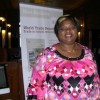
AFRICA: “Free Trade in Natural Resources Bad for Development”
While some believe that restrictions on natural resource exports should be done away with, this could cause an increase in such exports that would be detrimental to the environment and bad for development.VENEZUELA: Chronic Oil Leaks Sully Lake Maracaibo, Livelihoods
Dark oil slicks are spreading from the middle of Venezuela's Lake Maracaibo towards the shores -- the wetlands, mangroves, beaches and docks. Oil is permeating fishing nets, coating the garbage dumped into the water, killing off wildlife and driving away residents and tourists.POLITICS-CUBA: Left Speechless
The anniversary of the attack on the Moncada barracks, commemorating Revolution Day, one of the most important dates on Cuba's calendar, found the country caught up in speculation that Fidel Castro might appear on the platform, and raised fresh expectations about changes promised four years ago.
KENYA: Jury Still Out on Traditional Birth Attendants
The government of Kenya has been encouraging women to deliver in hospital. Home deliveries by traditional birth attendants are considered to be a major contributor to maternal deaths.ZIMBABWE: ‘Free’ Maternal Health Care Too Costly For Most
As African Union heads of state consider child and maternal health at the 2010 summit in Kampala, Uganda, the perennial question of user fees has reared its head in Zimbabwe. Fees for services are opening a growing gap between policy and implementation in maternal health care in the Southern African country.
MALAWI: Government Money-Saving Measure Costs Traders Dearly
The Malawian government’s new cost-cutting prohibition on the hosting of conferences, training sessions and workshops on the shores of Lake Malawi has hit small-scale merchants who ply their trade on the roadsides and beaches of the fresh-water lake.ECONOMY: Latin America Grows Despite Global Uncertainties
More fixed capital investment to improve competition, greater added value to exported goods and services, and tax reforms to finance social policies are some of the challenges Latin America and the Caribbean face in the uncertain global economic panorama.JAPAN: Critics Want Law on Foreign Trainees Scrapped, not Revised
The Japanese government may have revised the country’s laws in response to complaints that its system of hiring foreign trainees at lower wages is exploitative, but calls remain for the latter to be scrapped altogether.
US: Women Fight More Than Fire in the FDNY
Leaning back in a squeaking plastic chair, one leg crossed over the other, the lieutenant is at once relaxed and commanding. She smiles often, absent- mindedly running her hands through short brown hair before speaking. Her words are thoughtful, her manner candid.HEALTH: Kenyans’ Right to Affordable Drugs in Hands of Court
Kenya’s Constitutional Court is due to set a date on Jul 22 for a hearing on the application against the Anti-Counterfeit Act of 2008, of which clauses pertaining to medicines have been suspended pending the court’s decision on whether the law violates the right to health and life.« Previous Page — Next Page »


 UN Commission on International Trade Law Holds Colloquium on Harmonizing Law in Age of Digital Trade and Finance. Credit: UN Photo/Manuel Elías
Trade has historically been a geopolitical tool that can both be used to propel development as well as entrench inequalities. In various nations in East Asia and Latin America, increased trade, as often seen in export booms, has allowed them to achieve influential standings within the global economy. On the other hand, many low-income countries in Sub-Saharan Africa, Asia, and Latin America struggle to maintain a robust trade performance, and oftentimes are subjugated to exploitative trade dynamics through intense extraction of their natural resources. In recent decades, international trade has reached a new era as emerging economies across the world are rising in economic preeminence. Stable international trade is crucial to world peace as global interconnectedness facilitates reliable diplomacy. Nevertheless, significant challenges are on the rise. Notably, a major wave of United States tariff escalations in January 2025 lifted US import taxes to their highest level since the 1930s, changing market dynamics and forcing renegotiations with global trading partners.These articles are aimed at informing readers about the complexities of trade and its varying effects on development, with a special focus on the consequences of the global economic crisis, the potential of fair trade and the gender implications of trade policies.
Updated by Yilan Batista and Shuli Wong August 2026

The Week with IPS

NEXT STOP - SDGs
Tracking global progress towards a sustainable world
