Languages
Sunday, November 29, 2026



News and Views from the Global South
Economy & Trade
Pentagon Faces Battle in Effort to Reverse Military Contracting
Pentagon chief Robert Gates has called for a cutback of 15 billion dollars in wasteful military spending on contractors as well as government bureaucracy, or risk not being able to pay for its current force.GUATEMALA: Foreign Adoptions Are Back – Along with the Doubts
The reopening of international adoptions in Guatemala in June might not only mean the chance of a better life for many children, but may also spell a return to corruption, fraud and the theft of babies, human rights groups warn.ARGENTINA: Adding More Coal to the Fire
Bucking recommendations to build up renewable energy sources, Argentina is forging ahead with a plan that will increase its dependence on coal, regarded as the most polluting fossil fuel.Q&A: “Concern About Anti-Counterfeit Campaign Is Alarmist”
Civil society criticism that the anti-counterfeit policy drive in East Africa could result in the blocking of legitimate and affordable generic medicines is merely aimed at raising fear among the region’s inhabitants.ENVIRONMENT: Australia Backflips on Climate Action
Australian Prime Minister Kevin Rudd’s Labor Party has made much of its plans to tackle climate change even before it came to power with victory in the country’s 2007 election.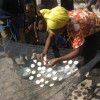
BIODIVERSITY: Odds Stacked Against San Harvesters of Devil’s Claw
Nguni Diyasen gently loosens the earth with a hoe and then widens the hole with her bare hands. Fifty centimetres down she uncovers the light brown root of a devil's claw. Used to treat arthritis and rheumatism, the plant also constitutes her only income.MEXICO: Oil Spill Fuels Debate on Environmental Safety
The spreading oil spill in the Gulf of Mexico has highlighted the urgent need for stricter environmental rules and standards for deep sea oil rigs.U.S. Business Groups Fault Rush to Sanctions on Iran
The U.S. Congress is moving forward with a bill to sanction companies that do business in Iran despite the White House's efforts to build international support for U.N. sanctions against the Islamic Republic.Brazil Exports Technology While Farmers at Home Do Without
Brazil has become an agricultural power in recent decades as a result of know-how that is now an important export item and part of its international cooperation programme. But the technology developed does not reach the vast majority of farmers within the country itself.Portugal Looking More Like Greece
Portugal is caught in the crossfire between credit rating agencies and international financial speculators who see this country as offering an excellent opportunity to turn a quick profit.
Q&A: Anti-Counterfeit Policy Will Provide “Proper” Generics
The anti-counterfeit draft policy and law that the East African Community (EAC) is currently considering will ensure access to "proper" generic medicines and not fakes, EAC secretary general Juma Mwapachu says in defence of a policy which is criticised as blocking affordable and legitimate generic medicines.ENVIRONMENT: Small Islands Urge Action at UN Oceans Meet
Faced with rising sea levels, dying coral reefs and decreasing fish stocks, small island developing states (SIDS) are feeling the effects of ocean decline, and they want wealthier countries to do more to ensure the survival of the world’s seas and other waterways.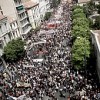
ECONOMY-GREECE: Convulsions Follow EU Shock Therapy
The firebombing of a bank by demonstrators protesting against severe austerity measures, which killed two women and a man, appears to Greeks as a sign of social deterioration arising from their country’s financial crisis.
PARAGUAY: Football – Dream for Kids, Moneyspinner for Adults
From passion for football, to football as a profession: many parents in Paraguay are hoping this sport will provide a career for their sons, who flood into football schools with the burden of their dreams -- and their parents' demands -- to become sports idols.UGANDA: New Version of Anti-Counterfeiting Bill Still Problematic
The Ugandan government’s controversial Anti-Counterfeiting Bill has been amended after civil society organisations campaigned against provisions in the bill that may restrict access to generic medicines, which form the bulk of medicines used in the East African country.POLITICS: East Timor-Australia Urged to Dialogue Over Gas Fields
The prickly issue of where to pipe and process gas from the Timor Sea between Australia and East Timor must be resolved through open dialogue, say members of civil society in East Timor.LATIN AMERICA: Foreign Investment on the Rise, But Still “Low-Quality”
Foreign direct investment (FDI) flows to Latin America and the Caribbean, which fell 42 percent in 2009 due to the global economic crisis, will grow 40 to 50 percent this year, says a new report released by ECLAC Wednesday.U.S. House Clears Haiti Trade Bill
The U.S. House of Representatives Wednesday approved a major trade bill designed to boost U.S. and other investment in Haiti's textile and apparel industry following January's devastating earthquake in which at least 200,000 people are believed to have been killed.
Greater Support Needed For Botswana’s Women Farmers
On the outskirts of Botswana’s capital, Gaborone, Charity Molefhi is learning the ropes of the horticulture industry.BOLIVIA: Morales Faces First Workers Protests
Strikes and demonstrations against the Bolivian government's wage policy have marked the end of a honeymoon period between workers and leftwing President Evo Morales.
PAKISTAN: New Wage Hike a Mere Palliative, Say Labour Advocates
Imran Ali, 23, has no reason to complain. His monthly take home pay of 8,600 Pakistan rupees (about 102 U.S. dollars) as a government employee allows him to augment his family’s meagre income.« Previous Page — Next Page »


 UN Commission on International Trade Law Holds Colloquium on Harmonizing Law in Age of Digital Trade and Finance. Credit: UN Photo/Manuel Elías
Trade has historically been a geopolitical tool that can both be used to propel development as well as entrench inequalities. In various nations in East Asia and Latin America, increased trade, as often seen in export booms, has allowed them to achieve influential standings within the global economy. On the other hand, many low-income countries in Sub-Saharan Africa, Asia, and Latin America struggle to maintain a robust trade performance, and oftentimes are subjugated to exploitative trade dynamics through intense extraction of their natural resources. In recent decades, international trade has reached a new era as emerging economies across the world are rising in economic preeminence. Stable international trade is crucial to world peace as global interconnectedness facilitates reliable diplomacy. Nevertheless, significant challenges are on the rise. Notably, a major wave of United States tariff escalations in January 2025 lifted US import taxes to their highest level since the 1930s, changing market dynamics and forcing renegotiations with global trading partners.These articles are aimed at informing readers about the complexities of trade and its varying effects on development, with a special focus on the consequences of the global economic crisis, the potential of fair trade and the gender implications of trade policies.
Updated by Yilan Batista and Shuli Wong August 2026

The Week with IPS

NEXT STOP - SDGs
Tracking global progress towards a sustainable world
