Languages
Thursday, October 22, 2026



News and Views from the Global South
Trade & Investment

Developing countries left out of global tax decisions
Over one hundred developing countries continue to be left out of global tax cooperation negotiations despite leaks such as the Panama papers showing the high cost of tax avoidance.A Cash-Strapped Nation on a Splurging Spree
In our student days there was a commonly used Sinhala phrase – “clean suit empty pocket”. That succinctly conveyed the image of a well-clad individual without a cent on his person.
Matrix of Biometrics
Biometrics is the science of using physical (and behavioural) features for identification purposes. The most ubiquitous biometrics we encounter is 'the face'. Every individual has a distinct face, which is used by others to identify/ recognise him or her. Human beings also start recognising voices from the age of three months. Handwriting recognition is part of behavioural biometrics. The most versatile and reliable biometric data possibly comes from human genes.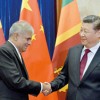
No Free Chinese Takeaway but Chinese Takeover on the Menu
There is no such thing as a free Chinese takeaway; and, if the visiting Lankan high powered delegation led by Prime Minister Ranil Wickremesinghe fancied otherwise, the Chinese hosts made pretty certain the guests got the message crystal clear when the fortune cookie, opened after the diplomatic feast of niceties was over, revealed the thumping bill of fare.
Maquilas Help Drive Industrialisation in Paraguay
“There were cases of people who stopped coming to work after receiving their first wages and then came back a few days later to ask if there was more work,” because they were used to casual work in the informal economy, said Ivonne Ginard.
Plugging Asia’s Infrastructure Gap
Investors have an appetite for Southeast Asia's infrastructure projects, but poor structuring of deals keep them at bay.
Timor-Leste Brings Maritime Dispute with Australia to United Nations
Timor-Leste which won independence from Indonesia in 1999 is now engaged in a new struggle with Australia over rights to oil and gas reserves in the Timor Sea.
Panama and Pajama Games
Offshore accounts are nothing new. Their semi-legal and unethical status is well known. Corporate and crony capitalism produce outrageous inequality and concentrations of economic and political power. The wealthy and powerful of the world have secretly stashed away in excess of $20tr in offshore and other tax havens. Moreover, the vast majority of such activity is criminal, illegal or politically unacceptable. Even the inimitable Donald Rumsfeld might agree all this is a “known known.”
What the Panama Papers Mean for Global Development
The financial secrecy and tax evasion revealed by the Panama Papers has an extraordinary human cost in developing countries and threatens the realisation of the UN’s ambitious Sustainable Development Goals.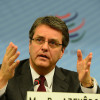
Opinion: Africa, the Need for Greater Integration
There is a misconception, by some, that the World Trade Organization (WTO) is a barrier to regional integration. It is one of a number of misconceptions that do not match up with the facts like the perception that the WTO is a rich man's club. Today the WTO has 162 members and rising at all stages of development. 43 of those members are African countries and rising. The organization now covers around 98% of world trade. It is a truly global organization, one where everybody has an equal say. And it is an organization which supports regional integration in Africa. Indeed, I would say that the need for better integration across the continent is indisputable.
Interoceanic Canal Bogged Down in Nicaragua
Nearly three years after Nicaragua granted a 50-year concession to the Chinese consortium HKND to build and operate an interoceanic canal, the megaproject has stalled, partly due to a severe drought that threatens the rivers and lake that will form part of the canal.Linking Economies Through Transportation Infrastructure
More than six kilometres of water separate the southwest region from the rest of Bangladesh. The longstanding Padma Bridge project holds potential to span that gap both physically and economically, linking the region with Dhaka, Chittagong, and the rest of the country to the east.
OPINION: Indian Economy: Fading Promise or Gearing for Growth
It was in 2001 that the Chief Economist of Goldman Sachs, Jim O’Neill, coined the acronym, BRICs, to denote the special category of large emerging economies, which he predicted were destined to transform the structure of the global economy, through sustained growth in the twenty first century. According to him, the BRICs, namely, Brazil, Russia, India and China, which at the turn of the century accounted for 25% of global Gross domestic product (GDP), could double their share to 50%.
Thaw with United States Will Put Cuba’s Agroecology to the Test
The United States has indicated a clear interest in buying organic produce from Cuba as soon as that is made possible by the ongoing normalisation of ties between the two countries. But farmers and others involved in the agroecological sector warn that when the day arrives, they might not be ready.
Need for an Urgent Revision to Bond Contracts and a Debt Workout Mechanism
Argentina signed an agreement in principle on 29 February 2016 with four “super holdout” hedge funds including NML Capital Ltd, Aurelius Capital, Davidson Kempner and Bracebridge Capital. Buenos Aires would pay them a total of about 4.65 billion dollars, amounting to 75 percent of the principal and interest of all their claims of Argentina’s bonds that were defaulted on during the 2001 debt crisis. This deal would allow the return of Argentina to the international capital market after more than 15 years of exclusion.
Why Poverty Won’t Go Away
In an email interview, Dr Geof Wood shares with Amitava Kar of The Daily Star why poverty and inequality persist despite all the fuss. Emeritus Professor of International Development at the University of Bath, Dr Wood is an internationally renowned development anthropologist and author of several books and numerous journal articles, with a regional focus on South Asia. On March 9, he presented a seminar titled “The Security of Agency: Towards a Sociology of Poverty” at Bangladesh Institute of Development Studies (BIDS). Here is a condensed version of the interview.
Agroindustry Provides Jobs, Better Living Standards in Paraguay
“I worked in many companies, in construction, fertilisers, chemicals, but none of them were as good as this one,” said Dario Cardozo, who works in the Angostura Agroindustrial Complex (CAIASA) grain reception facility.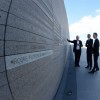
Argentina, the United States’ New South American Ally
After a decade of bilateral tension, the presidents of Argentina, Mauricio Macri, and the United States, Barack Obama, resumed the friendship between the two countries, which could lead to a free trade treaty and a “universal” alliance.
Soy Fuels Industrialisation in Paraguay
A soybean processing plant, Angostura Agroindustrial Complex SA (CAIASA), that does not use fossil fuels and generates practically no waste products from soy reflects Paraguay’s growing industrialization.How Smart Solutions to Tax Reform Can Help Develop Infrastructure
Bangladesh's public sector faces serious challenges. Poor infrastructure is one of the main factors that hold back economic growth. Government-funded health clinics struggle to provide the population with quality, specialised services. And beyond primary school, quality public education opportunities are extremely limited. These are just a handful of the challenges, and they are partly due to a stark fact: the country has one of the lowest tax-to-GDP ratios in the world.
Argentina’s ‘Shale Capital’ Suffers from Slowdown
The dizzying growth of Añelo, a town in southwest Argentina, driven by the production of shale oil and gas in the Vaca Muerta geological reserve, has slowed down due to the plunge in global oil prices, which has put a curb on local development and is threatening investment and employment.« Previous Page — Next Page »





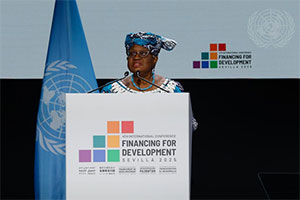 Opening of 4th International Conference on Financing for Development. Credit: UN Photo/Mariscal
International trade and investment are crucial elements of the world economy. While they can be powerful stimulators of development, they can also lead to global imbalances and dynamics of exploitation. In 2025, international trade entered a period of immense disruption, driven in part by a new wave of United States tariffs that reshaped global supply chains and investment flows. The increase in the US tariff rate, the highest since the 1930s, has forced bilateral renegotiations with global trading partners. Furthermore, the debt crisis in developing nations has accelerated while Official Development Assistance (ODA) has substantially dropped 7.3% in 2024.
In the 21st century, advancements in economic diversification in formerly colonized nations have propelled them into more central roles in the global economy. For example, both China and Mexico were able to develop their manufacturing sector and channel this development into booming export flows, thus advancing into the position of emerging economies. Foreign investment also plays an essential role in providing capital for developing countries, although they are oftentimes accompanied by social and environmental exploitation. For example, rising Chinese investments in natural resources in Latin America have often been met with tension as these investment projects fail to properly mitigate environmental risks and protect workers’ rights. In a more multifaceted vein, Sino-African relations have led to infrastructure development in Sub-Saharan Africa while also heightening the region’s economic dependency on China. IPS reports on global news in trade and investment, while shining a light on the nuanced nature of these endeavors.

The Week with IPS

NEXT STOP - SDGs
Tracking global progress towards a sustainable world
Tracking global progress towards a sustainable world
