
Tuesday, October 20, 2026



News and Views from the Global South
Combating Desertification and Drought

Antigua Faces Climate Risks with Ambitious Renewables Target
Ruth Spencer is a pioneer in the field of solar energy. She promotes renewable technologies to communities throughout her homeland of Antigua and Barbuda, playing a small but important part in helping the country achieve its goal of a 20-percent reduction in the use of fossil fuels by 2020.
New Global Declaration “Insufficient” to Tackle Deforestation
Heads of state, civil society groups and the leaders of some of the world’s largest companies this week urged their peers to sign on to a landmark new global agreement aimed at halting deforestation by 2030, even as others are warning the accord is too lax.
OPINION: A Roadmap to Living – and Thriving – in Harmony with Nature
In Nagoya, Japan, in 2010, the international community made a commitment to future generations by adopting the Strategic Plan for Biodiversity 2011–2020 and 20 Aichi Biodiversity Targets.
Outgunned by Rich Polluters, Africa to Bring United Front to Climate Talks
As climate change interest groups raise their voices across Africa to call for action at the COP20 climate meeting in December and the crucial COP21 in Paris in 2015, many worry that the continent may never have fair representation at the talks.
Climate-Smart Agriculture is Corporate Green-Washing, Warn NGOs
On the sidelines of the U.N.'s heavily hyped Climate Summit, the newly-launched Global Alliance for Climate-Smart Agriculture announced plans to protect some 500 million farmers worldwide from climate change and "help achieve sustainable and equitable increases in agricultural productivity and incomes."
Climate Change an “Existential Threat” for the Caribbean
When it comes to climate change, Prime Minister Ralph Gonsalves doesn’t mince words: he will tell you that it is a matter of life and death for Small Island Developing States (SIDS).
Will Governments Keep Their Promises on the Human Right to Water?
It was a dramatic moment at the United Nations when it voted in 2010 to affirm water and sanitation as a human right.
New Fund to Build on “Unprecedented Convergence” Around Land Rights
Starting next year, a new grant-making initiative will aim to fill what organisers say has been a longstanding gap in international coordination and funding around the recognition of community land rights.
Latin America at a Climate Crossroads
World leaders gathered at the Climate Change Summit during the United Nations General Assembly on Sep. 23 will have a crucial opportunity to mobilise political will and advance solutions to climate change.
Will the Upcoming Climate Summit Be Another Talkathon?
As the United Nations hosts a Climate Summit Sep. 23, the lingering question is whether the meeting of world leaders will wind up as another talk fest.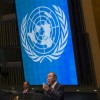
OPINION: A Climate Summit to Spark Action
On Sep. 23, I have invited world leaders from government, business, finance and civil society to a Climate Summit in New York so they can show the world how they will advance action on climate change and move towards a meaningful universal new agreement next year at the December climate negotiations in Paris.
U.N. Climate Summit: Staged Parade or Reality Show?
The much-ballyhooed one-day Climate Summit next week is being hyped as one of the major political-environmental events at the United Nations this year.
Majority of Consumer Products May Be Tainted by Illegal Deforestation
At least half of global deforestation is taking place illegally and in support of commercial agriculture, new analysis released Thursday finds – particularly to supply overseas markets.
Large Dams “Highly Correlated” with Poor Water Quality
Large-scale dams are likely having a detrimental impact on water quality and biodiversity around the world, according to a new study that tracks and correlates data from thousands of projects.
Climate Policy Goes Hand-in-Hand with Water Policy
Concerned that climate change could lead to an intensification of the global hydrological cycle, Caribbean stakeholders are working to ensure it is included in the region's plans for Integrated Water Resources Management (IWRM).
OPINION: Boosting Resilience in the Caribbean Countries
Having lived and worked for more than a decade in four Caribbean countries, I have witnessed firsthand how Small Island Developing States (SIDS) are extremely vulnerable to challenges ranging from debt and unemployment to climate change and sea level rise.
When Land Restoration Works Hand in Hand with Poverty Eradication
Tugging at the root of a thorny shrub known as ‘juliflora’, which now dots the village of Chirmiyala in the Medak District of southern India’s Telangana state, a 28-year-old farmer named Ailamma Arutta tells IPS, “This is a curse that destroyed my land.”
Recurrent Cholera Outbreak in Far North Cameroon Highlights Development Gaps
Under a scorching sun, with temperatures soaring to over 40 degrees Celsius, Lara Adama’s family is forced to dig for water from a dried-out river bed in Dumai, in northern Cameroon.
Island States to Rally Donors at Samoa Meet
Amid accelerating climate change and other challenges, a major international conference in the South Pacific island nation of Samoa next month represents a key chance for Small Island Developing States (SIDS) in the Caribbean to turn the tide.
U.S. Waives Sanctions on Myanmar Timber
Civil society groups are split over a decision by the U.S. government to waive sanctions on Myanmar’s timber sector for one year.
Will Climate Change Lead to Conflict or Cooperation?
The headline of every article about the relationship between climate change and conflict should be “It’s complicated,” according to Clionadh Raleigh.« Previous Page — Next Page »





Today, some two billion people depend on ecosystems in dryland areas, with 90 percent of them living in developing countries. But the pace of arable land degradation is accelerating – now estimated at 35 times the historical rate -- impacting biodiversity, availability of clean water and food security, as well as exposing vulnerable communities to the harsh impacts of climate change. As the only legally binding international agreement linking environment and development to sustainable land management, the United Nations Convention to Combat Desertification (UNCCD) works to improve the living conditions of people in the drylands. IPS looks at local solutions being implemented around the world, from restoring soil productivity and mitigating the effects of drought, to projects that empower communities to manage their dryland resources more effectively.

The Week with IPS

Tracking global progress towards a sustainable world
