
Wednesday, November 11, 2026



News and Views from the Global South
Climate Change

How Safe Drinking Water in Rural Vanuatu Will Save Women Time While Aiding in Economic Development
Access to safe water for drinking and an adequate supply of water for other purposes is challenging in the rural areas of Vanuatu. A new project, that uses solar water pumping technology, will save time and energy for rural women whose task it is to collect and make water more accessible to their communities.
Mixed Signals as Guyana Develops its Green Economy Strategy
Guyana is forging ahead with plans to exploit vast offshore reserves of oil and gas, even while speaking eloquently of its leadership in transitioning to a green economy at a recent political party congress addressed by the country's president.
Poverty-Stricken Communities in Ghana are Restoring Once-Barren Land
In the scorching Upper East Region of Ghana, the dry seasons are long and for kilometres around there is nothing but barren, dry earth. Here, in some areas, it is not uncommon for half the female population to migrate to the country’s south in search of work, often taking their young children with them.
SLIDESHOW: Planet Earth, The Only Home We Have
 Climate change is on us. Parts of the planet are burning up. Heatwaves across the northern hemisphere have dried vegetation and withered crops. Forests are ablaze in North America, Europe and Asia – even as far north as the Arctic Circle. The polar ice caps are melting and sea levels are rising. Massive storms and floods have devastated communities. Deserts continue relentlessly to encroach. And the extraordinarily hot spells this summer followed on from the extraordinarily cold spells of last winter. In 2018, extreme weather is the order of the day.
When Salt Water Intrusion is Not Just a Threat But a Reality for Guyanese Farmers
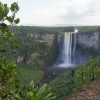
Mikesh Ram would watch his rice crops begin to rot during the dry season in Guyana, because salt water from the nearby Atlantic Ocean was displacing freshwater from the Mahaica River he and other farmers used to flood their rice paddies.
New Agreement with China: Opportunity to Save Mozambique’s Forests
Mozambique’s forests are disappearing at an alarming rate, with most of the destruction caused by excessive logging, corruption and weak laws.
Indigenous Peoples Least Responsible for the Climate Crisis
Indigenous peoples, who comprise less than five percent of the world’s population, have the world’s smallest carbon footprint, and are the least responsible for our climate crisis. Yet because their livelihoods and wellbeing are intimately bound with intact ecosystems, indigenous peoples disproportionately face the brunt of climate change, which is fast becoming a leading driver of human displacement.
States Must Act Now to Protect Indigenous Peoples During Migration
States around the world must take effective action to guarantee the human rights of indigenous peoples, says a group of UN experts. In a joint statement marking International day of the World’s Indigenous Peoples, the experts say it is crucial that the rights of indigenous peoples are realised when they migrate or are displaced from their lands:
Why the Flooding in Grenada is a Clear Reminder of its Vulnerability to Climate Change
Grenada is still tallying the damage after heavy rainfall last week resulted in “wide and extensive” flooding that once again highlights the vulnerability of Small Island Developing States (SIDS) to climate change.
VIDEO: Climate Change Could Have Devastating Consequences for Saint Lucia
 The Caribbean island nation of Saint Lucia is home to more than 2,000 native species — of which nearly 200 species occur nowhere else in the world. Though less than 616 square kilometres in area, the island is exceptionally rich in animals and plants.

Amidst Rising Heat Waves, UN says Cooling is a Human Right, not a Luxury
The rising heat waves in the world’s middle income and poorer nations are threatening the health and prosperity of about 1.1 billion people, including 470 million in rural areas without access to safe food and medicines, and 630 million in hotter, poor urban slums, with little or no cooling to protect them, according to the latest figures released by the United Nations.
As It Recovers, Argentina’s Beef Production Faces Environmental Impact Questions
Beef is one of the symbols historically identified with Argentina. After lean years, production and exports are growing, as is the debate on the environmental impact of cattle, which is on the radar of environmentalists and actors in the agricultural value chain.
Land Degradation: A Triple Threat in Africa
Sustainability, stability, and security—the three overlapping issues are an increasing concern among many especially in Africa where land degradation is displacing citizens and livelihoods.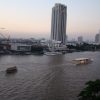
Is Thailand Making Progress Towards Reaching its Climate Change Mitigation Goals?
As preparations are underway for an important formal discussion between countries committed to the Paris Agreement; Thailand, Southeast Asia’s second-largest economy, has been determining its progress towards reducing greenhouse gas (GHG) emissions by 20 to 25 percent by 2030. But experts have warned against merely emphasising policies to affect real changes.
Caribbean Builds Resilience Through Enhanced Data Collection
By the end of September 2018, the Caribbean Community Climate Change Centre (CCCCC) would have installed the last of five new data buoys in the Eastern Caribbean, extending the regional Coral Reef Early Warning System (CREWS) network as it continues to build resilience to climate change in the Caribbean.
Q&A: Indonesia Takes Steps to Reduce Emissions – But It’s Not Enough
The South Asian nation of Indonesia is the world’s fifth-largest emitter of greenhouses gases (GHG) and is ranked as the world’s second-largest plastic polluter of oceans, just behind China. So when the country committed in the Paris Agreement to limit the rise in average global temperatures to below 2°C by unconditionally reducing its emissions by 29 percent with using its own finances and by 41 percent with international funding, many felt the goals too ambitious.
Building the Caribbean’s Climate Resilience to Ensure Basic Survival
In 2004, when the Category 4 hurricane Ivan hit the tiny island nation of Grenada and its 151 mph winds stalled overhead for 15 hours–it devastated the country. But not before pummelling Barbados and other islands, killing at least 15 people.
Limiting Global Temperature Rise to 1.5 Degrees
In the run-up to the negotiations under the United Nations Framework Convention on Climate Change (UNFCCC) in its 21st Conference of Parties (COP21) in December 2015, one of the most politically contentious issues was whether the limit of the long-term global temperature rise should be kept at 2 degrees centigrade or changed to 1.5 degrees.
Humanitarian Situation Worsens as Over 800,000 Displaced People Face Cold and Heavy Rains in Ethiopia
Over 800,000 internally displaced persons are living without adequate shelter and safe sanitation in Ethiopia, resulting in a worsening humanitarian situation further exacerbated by cold, wet weather brought on by the rainy season.
Q&A: Raising the Profile on the Largest Environmental Issue of Our Time
Land degradation caused by human activities is occurring at an alarming rate across the world, and the cost will be steep if no action is taken.
Forests and Marine Resources Continue to Shrink
Deforestation and unsustainable farming are depriving the planet of forests, while destructive practices in fishing are limiting the chance to sustainably manage our oceans.« Previous Page — Next Page »





As unsustainable human consumption and production systems are driving changes in average temperatures and weather patterns, "abnormal" is increasingly becoming the norm. So far, a lack of financing has been standing in the way of a comprehensive global plan for climate adaptation, and a global financial crisis has contributed to an increasing reliance on public-private partnerships. Our Climate Change page provides you with the latest news about international and local efforts to address what's frequently been called "the challenge of our time", the forces behind the climate change and the impact it has on the world's most vulnerable populations. Along the way, we bring you stories on growing citizen awareness, new scientific data, and emerging climate policies towards sustainable development.

The Week with IPS

Tracking global progress towards a sustainable world

