
Friday, November 13, 2026



News and Views from the Global South
Environment
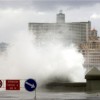
Feminine Creativity in the Face of Natural Disasters in Cuba
Blanca Lima raises all her appliances above flood level, puts boxes of clothes on top of wardrobes, and fills the shelves she installed near the ceiling with all kinds of objects. In less than an hour, she is ready to evacuate her home in case of a flood in the Cuban capital.
‘Eating’ Water Latest and Rising Threat to a Thirsty World
Paradoxically, the water we "eat" is likely to become one of the growing new dangers to millions of the world’s thirsty, hungering for this finite natural resource.
Philippines Floods Prompt Climate Action
This year’s floods, one of the worst in Philippine history, destroyed a staggering 57 million dollars worth of crops, pushing this climate vulnerable country to implement disaster risk reduction measures.Ecobreves – LATIN AMERICA: Network Against Short-Lived Climate Pollutants
Environmental organizations in Mexico, Chile, Argentina, Brazil and Paraguay and a group of scientists have created a network against short- lived climate pollutants, such as black carbon, methane, tropospheric ozone and hydrofluorocarbons.Ecobreves – BRAZIL: Environmental Awareness Growing
The percentage of Brazilians who believe that the country has no environmental problems fell from 47 percent in 1992 to 11 percent in 2012.Ecobreves – HONDURAS: Weather Disturbances Foster Dengue
Health authorities in Honduras have attributed the upsurge in dengue to weather variations, such as unusually high daytime temperatures and heavy rain at night, in addition to the accumulation of garbage in different neighborhoods.Ecobreves – ARGENTINA : Immediate Ban on Endosulfan Demanded
An environmental organization in Argentina is calling for an immediate ban on the import, manufacture and sale of endosulfan, a highly toxic insecticide that the country plans to eliminate in July 2013.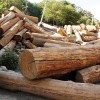
Whose Timber is it Anyway?
With Pakistan’s last major stands of deodar (cedar) threatened by a ‘timber mafia’, the local people in the Chitral district of Khyber Pakhtunkhwa province are resorting to direct action to stop the denudation of their picturesque alpine homeland.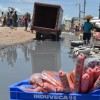
Marketing in the Mud Along the Dominican Border
Getting around on market day along the muddy border between the Dominican Republic and Haiti is almost impossible for those unfamiliar with the art of dodging the trucks, motorcycles and bicycles swerving amidst the messy piles of products scattered all over, and weaving among the hundreds of people coming and going between the two countries.
“The Truth is That All Problems Have Solutions” – Even Climate Change in Ethiopia
Eight years ago Kenbesh Mengesha earned an uncertain income collecting firewood from local government forests and selling them to her fellow slum-dwellers in Addis Ababa, Ethiopia. She would earn on average about 50 cents a day, if she was lucky.
Brazil Perfects Monitoring of Amazon Carbon Emissions
A new system to calculate the amount of greenhouse gases generated by deforestation in Brazil’s Amazon jungle region has come at a good time for assessing the effects of the reform of the country’s forest code.
Activists Protest Shell’s Arctic Oil-Drilling Plans
By mid-September, the Royal Dutch Shell Oil (Shell) group hopes to begin exploratory oil drilling in the Arctic Ocean off the coast of northern Alaska, provided it can secure federal permission from the U.S. government and overcome other logistical obstacles. But a prominent environmental group warns that drilling will do "irreparable damage" to the area.
Activists Alarmed at Release of Dorothy Stang’s Murderer
The release from prison of the Brazilian rancher found guilty of ordering the 2005 murder of U.S.-born rainforest activist and nun Dorothy Stang has alarmed human rights defenders, who warn that it could set a dangerous precedent in other cases involving land disputes and the rights of poor farmers.
Riding Towards Sustainable Development, on Bamboo
In Ghana, a country burgeoning with traffic congestion, increasing economic growth, and a stark urban-rural divide, making frames of bicycles out of bamboo could be the key to promoting sustainable development. It also makes stronger, longer-lasting bikes.
Argentine Locals Want Power Transformers Out of Neighborhoods
Scientific uncertainty about the health impacts of electromagnetic fields is fueling worries among people in the Argentine capital who are demanding that energy power transformers be located far from their neighborhoods.
Study Links Kidney Disease in Sri Lanka’s Farm Belt to Agrochemicals
A new report links the high prevalence of chronic kidney disease in Sri Lanka’s main agricultural production regions with the presence of heavy metals in the water, caused by fertiliser and pesticide use.
Beating the Weather With Sustainable Crops
Narrow, cobblestoned lanes separate the rows of mud houses with cool interiors and mud-smoothened patios, some with goats tethered to the wooden posts. This is Tajpura village, deep in this water-stressed, drought-prone region of northern India.As Green Climate Fund Finally Meets, Funding Remains Uncertain
Five months behind schedule, the board of the newest and largest international financing mechanism aimed at dealing with the effects of climate change, the Green Climate Fund, is finally slated to meet this week, just ahead of a late-summer deadline.
“The Trend in the Western World is the Dissolution of Cities”
An area where people only go to sleep is the antithesis of a city, says Spanish urban planner Jordi Borja in this interview.Ecobreves – VENEZUELA: Women Entrepreneurs Learn to Recycle
Some 200 women in eastern Caracas will benefit from a program that will provide them with training in recycling and the manufacture and sale of clothing, bags, ornaments, cards and various crafts.Ecobreves – CHILE: Pascua Lama Announcement Criticized
Chilean environmentalists have criticized an announcement by the Canadian mining company Barrick Gold that it will postpone the execution of the Pascua Lima binational mining project by one year and increase initial investment by three billion dollars.« Previous Page — Next Page »


Through our global network of local writers, we are continuing our award-winning coverage of global and local environmental challenges, with a focus on the people for whom the ecosphere matters in a direct way: rural dwellers who have little means to protect themselves against adverse conditions; communities that need to switch to sustainable development in order to survive; poor women and children, who are the most vulnerable in natural disasters. Sponsored by the United Nations Environment Program (UNEP), the United Nations Development Program (UNDP) and The World Bank (WB), IPS also maintains the award-winning Tierramérica, a specialised information service on environment and development.

The Week with IPS

Tracking global progress towards a sustainable world


