
Friday, November 20, 2026



News and Views from the Global South
Environment
Salmon Industry Won't Give Up
The unregulated farming of exotic salmon species in Chile generated a chain reaction that has cast a cloud over this industry -- but now salmon operations are attempting to turn things around.
Extreme Weather Focuses Attention on Cancún Climate Conference
The world's climate is undergoing serious disturbances as talks aimed at a global pact to fight global warming have been cast adrift, warn experts
An Ocean of Crustaceans
Fish represent just 12 percent of all ocean species, according to the Census of Marine Life, to be published in October.Ecobreves – MEXICO: A Boost to Oil-Producing Crops
The Mexican government's plan to promote oil-producing crops like canola is being challenged by experts.Ecobreves – BRAZIL: Bacteria Inventory of the Atlantic Forest
A study by the Oswaldo Cruz Foundation produced the Collection of Bacteria from the Atlantic Forest, Brazil's most deforested ecosystem. The collection marks the beginning of a project to record all of the forest's biodiversity.Ecobreves – ARGENTINA: National Park Expropriated
An Argentine environmental group is challenging a decision by the central province of San Luis, which in late July expropriated a protected area to turn it over to an indigenous community.
PERU: Transparency a Challenge for Mining and Oil
Peru is the only Latin American country that has made steps towards joining the international Extractive Industries Transparency Initiative (EITI), but has a difficult stretch ahead as it tries to overcome industry resistance to reporting profits and the government's own obstacles.
WORLD: Cooking Up a Climate Deal
Another round of negotiations towards a global treaty on climate change concluded in Bonn on Aug. 6, with activists calling on parties to rediscover a spirit of compromise and make offers rather than demands.AFRICA: Bring Water Into Climate Change Negotiations
Longer periods of drought, decreased river flow, higher rainfall variability and lower soil moisture content: water is at the heart of the impacts of climate change. Yet the precious commodity scarcely features in climate negotiations.
Wanted: Pied Piper for Swazi Village Under Siege
When good rains finally fell, Catherine Mngomezulu was so hopeful that this year she would reap a bumper harvest. Then the rats appeared.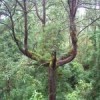
MEXICO: Conservation Gaining Ground on Private Lands
The Mexican government is promoting the notion of private lands dedicated to sustainable use, a tool created in 1997 in this country with great biodiversity, but experts say there are still many shortcomings in the plan.
CLIMATE CHANGE: Native People Demand Autonomy Over Territory
In the view of governments, international bodies and some sectors of civil society participating in negotiations towards new global rules on cutting greenhouse gas emissions, the REDD programme is the last chance to save tropical rainforests.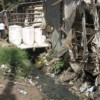
AFRICA: Lack of City Planning to Hurt More Citizens
Thousands of Kenyan urban dwellers, rich and poor, live in fear that their homes or building investments could soon be demolished as the country struggles to keep up with the rapid urbanisation of cities.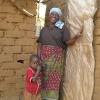
MALAWI: Urban Dwellers Adopting Dry Sanitation
Diarrhoea causes more deaths than malaria and AIDS combined, yet while funding to fight the latter two have risen sharply, the same cannot be said of resources available for hygiene, sanitation and clean drinking water.COSTA RICA: Working Towards Carbon Neutrality
With the elimination of certain taxes and the implementation of several green initiatives, Costa Rica is pressing forward in its aim to promote sustainable energy generation with a view to achieving "carbon neutrality" by 2021, the year this country will celebrate two centuries of independence.CLIMATE CHANGE: Cancun May Deliver Little
Little hope has emerged from a meeting here of any binding international regulations to reduce greenhouse gases at the next UN conference on climate change scheduled for November and December in Cancun, Mexico.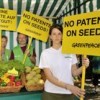
When Agrochemical Corporations Invented Nature
A civil society protest against a British agrochemical company that claims it has invented a particular sort of broccoli has again focused attention on the question who owns natural biodiversity, especially vegetables, seeds, and many forms of meat and animal food products.Transport Workers Fear Job Losses from Climate Change Action
Transport workers are concerned that measures to mitigate climate change, like greenhouse gas emissions reduction, may put their jobs at risk, while experts are urging a transformation of the predominant transport model worldwide.
Q&A: “Incomprehensible” Absence of Women in Global Environment Policy
There is a vacuum in the various texts that currently regulate global policy against climate change: specific mention of the effects of global warming on women and of the role women can play in protecting the environment.
Q&A: “The World Needs a New Social Contract”
"We have to start thinking about a new social contract on a planetary scale, but also within each country," says Argentine activist and scholar Adolfo Pérez Esquivel.
MEXICO: Poisonous Pesticides on the Doorstep
"People want to get rid of the factory. It has to go. There's already been an accident," a taxi driver said on the drive to the pesticide plant belonging to the Agricultura Nacional company in this southern Mexican city.« Previous Page — Next Page »


Through our global network of local writers, we are continuing our award-winning coverage of global and local environmental challenges, with a focus on the people for whom the ecosphere matters in a direct way: rural dwellers who have little means to protect themselves against adverse conditions; communities that need to switch to sustainable development in order to survive; poor women and children, who are the most vulnerable in natural disasters. Sponsored by the United Nations Environment Program (UNEP), the United Nations Development Program (UNDP) and The World Bank (WB), IPS also maintains the award-winning Tierramérica, a specialised information service on environment and development.

The Week with IPS

Tracking global progress towards a sustainable world


