
Wednesday, October 21, 2026



News and Views from the Global South
Environment

Chilean Fisherwomen Seek Visibility and Escape from Vulnerability
The number of organisations that bring together fisherwomen who seek to be recognised as workers, make their harsh reality visible and escape the vulnerability in which they live is growing in Chile.
How Women Volunteers Are Shaping India’s Water Future
“Daily squabbles at the lone water point in Bhubaneswar’s slums, where hundreds of households depended on this single non-potable water source, have now receded into the past,” says Aparna Khuntia, a member of a large cohort of water volunteers who have played an important enabling role in ensuring households in the eastern India city now have their own on-premises potable running tap water available all 24 hours.
Partnering for Progress: Maldives’ Sustainable Ocean Initiatives
The ocean is our lifeline, covering 70 percent of the earth’s surface, it is the source of half of the oxygen we breathe, and it absorbs 26 percent of the carbon dioxide we produce. It is home to millions of marine species, contains 97 percent of all of the water on our planet and offers humankind immense resources.
Cambodia’s Young Environmental Activists Pay a Heavy Price
It’s risky to try to protect the environment in authoritarian Cambodia. Ten young activists from the Mother Nature environmental group have recently been given long jail sentences. Two were sentenced to eight years on charges of plotting and insulting the king. Another seven were sentenced to six years for plotting, while one, a Spanish national banned from entering Cambodia, was sentenced in absentia.
The Price Women Pay for Climate Change
Global warming, widely believed to be a universal crisis, will actually impact girls and women far more than boys and men. It is already known that we live in a patriarchal world, one in which men are afforded far greater opportunities for success while women generally hold less societal power and have access to fewer resources. This especially pertains to developing countries in which agriculture related work, usually delegated to females, depends on a variety of environmental factors and subsequently, significantly hurts their livelihoods.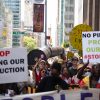
Sportwashing Allegations at Africa’s Top Football Tournament
Following the recent Africa Cup of Nations (AFCON) tournament in Ivory Coast, a continent-wide campaign has emerged on social media challenging the tournament's main sponsor, TotalEnergies, over its involvement in the East African Crude Oil Pipeline (EACOP).
SUMMIT OF THE FUTURE: ‘The UN Secretary-General Underestimated the Difficulty of Reaching Consensus’
CIVICUS discusses the upcoming Summit of the Future with Renzo Pomi, who represents Amnesty International at the United Nations (UN) in New York.

Life or Energy: The Hydroelectric Dilemma in Amazonian Brazil
The decade-and-a-half-long battle for life in the so-called Volta Grande (Big Bend) of the Xingu river, a stretch of the river dewatered by the Belo Monte hydroelectric power plant in the Brazilian Amazon, has a possible solution, albeit a partial one.
UN: Extreme Heat a Global Issue With an Unequal Impact
“The world must rise to the challenge of rising temperatures," says the UN Secretary-General as he launches a call to action on extreme heat and its impact on society and the environment.
Belém Improving to Host 2025 Climate Summit in Brazil
Hotels and other amenities may be lacking for participants at the 30th Conference of the Parties on Climate Change (COP30), in this northern Brazilian city in late 2025, but the bottom line is they will have a unique experience in the Amazon.
More Poverty for the Poor
Many low-income countries (LICs) continue to slip further behind the rest of the world. Meanwhile, people in extreme poverty have been increasing again after decades of decline.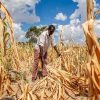
Southern African Drought: Extreme Hardship, Hopefully Only in the Short Term
Heading into the traditional dry period of winter in southern Africa, there was significant consternation due to the drastically below average rainfall the region has been experiencing since January 2024.
Silenced: Women’s Many Layered Struggles for Climate Justice in Nepal
A group aligned with the mayor of Chhayanath Rara Municipality in the Mugu district of Nepal’s Karnali Province physically attacked Aishwarya Malla for simply asking for a budgetary review of the local government. “As a deputy mayor, I have the right to know where the budget is allocated, but the mayor’s team attacked me,” Malla said. “They did it only because I’m a woman, but they forget I’m also an elected representative with a responsibility to serve people, especially women and marginalized sections of our society.”
The International Seabed Authority Must Change Course Amid Series of Scandals
The International Seabed Authority (ISA) has enormous importance as responsible for the fate of the largest, and most untouched, biome on the Planet. Ahead of elections for its leadership, governments cannot ignore that its current Secretary-General has become the subject of both media investigations and criticism from other parts of the UN.
Are Sustainable Cities a Pipe Dream?
Cities, once thought to be modern utopias that foster innovation, inclusivity, and commerce, actually ended up being hubs for environmental degradation. Although the concept of urban living is inextricable from humanity, there are proposed ways to make them less environmentally taxing. One such solution is the idea of a sustainable city, otherwise known as a metropolis that effectively consumes fossil fuels and disposes of emissions with regards to the longevity of the planet as well as the economic wellbeing of its citizens. Cities can also be considered sustainable so long as they curb the consequences of consumption through means such as recycling or using healthier energy sources. Although this sounds like a simple path forward in Earth’s journey of decarbonizing, we must take a plethora of issues into consideration, such as transportation, housing, manufacturing, trade, and comfort.
How Climate-Smart Strategies Revitalized Tanzania’s Livestock Sector
As the sun sets, its golden hues piece through the dusty haze, creating a dazzling display when a herd of livestock lazily roams on the arid landscape as they return home from grazing. Dressed in shiny red robes, the youthful Maasai pastoralists routinely whistle as they steer cattle, goats and sheep to maintain a unified path.
The UK’s Chance for Change
The political tide has turned in the UK – and civil society will be hoping for an end to government hostility. The 4 July general election ended 14 years of rule by the right-wing Conservative party. The centre-left Labour party has returned to power, winning 411 out of 650 parliamentary seats.
How Vote Reflects Farmers’ View on India’s BJP’s Agrarian Policy Amid Climate Change
On June 4, Ram Das, a 65-year-old farmer from India’s northern state of Haryana, was anxiously waiting for the results of the country’s general elections. It was early morning when he left his home and, along with his fellow villagers, congregated near a tea stall that had a transistor set playing the election results.
Warming Asian Glaciers: Regional Strategy for Riskscape
Scientific assessments reveal that the Third Pole (TP), encompassing the vast glaciated mountain systems of Asia, is warming at an alarming rate of over 0.3 ºC per decade, surpassing the global average.
HLPF 2024: Protecting Civic Space Critical for SDGs Success
Each year the international community comes together at the UN’s headquarters in New York to take stock of progress on sustainable development. This year’s High-Level Political Forum (HLPF) is being held between 8 and 18 July. Representatives from 36 countries, as per the UN HLPF website, will showcase their achievements on commitments outlined in the 2030 Agenda for Sustainable Development, presenting their Voluntary National Reviews (VNRs).
Is Artificial Intelligence The Way Forward or Backward?
Contrary to popular belief, artificial intelligence has been a cornerstone of technological progress for much longer than the past few years. Computer scientist Alan Turing brought forth the concept of computers solving complex human problems with his invention of the Turing Machine in 1936. This machine provided solutions to a seemingly infinite number of problems, yet the technological limitations of the early 1900s proved that this number was indeed very finite. Flash forward to the 2020s, artificial intelligence has become a widespread practice, impacting different fields such as music, art, science, forensics, finance, agriculture, and many others. Although artificial intelligence has been hailed as the future of human progress, it also poses a risk to this future due to its significant carbon footprint.« Previous Page — Next Page »





Through our global network of local writers, we are continuing our award-winning coverage of global and local environmental challenges, with a focus on the people for whom the ecosphere matters in a direct way: rural dwellers who have little means to protect themselves against adverse conditions; communities that need to switch to sustainable development in order to survive; poor women and children, who are the most vulnerable in natural disasters. Sponsored by the United Nations Environment Program (UNEP), the United Nations Development Program (UNDP) and The World Bank (WB), IPS also maintains the award-winning Tierramérica, a specialised information service on environment and development.

The Week with IPS

Tracking global progress towards a sustainable world


