Languages
Sunday, July 26, 2026



News and Views from the Global South
Water & Sanitation

Climate Change to Determine Economic Growth
The Monetary Board of Sri Lanka’s Central Bank, tasked with keeping the island’s economy on an even keel, does not only keep tabs on exchange rates, gold prices and inflation – it also has an eye on a less obvious indicator of economic stability: water levels in the country’s main reservoirs.
FAO Highlights Inseparable Links Between Food and Water
Since food and water are so closely interlinked, there is a lingering fear based on the assumption, if there is no water, there will be no food.

OP-ED: Social Protection Can Help Overcome Poverty and Hunger
The growing consensus, momentum and commitment to eradicate world hunger may seem overly ambitious in view of the slow progress in reducing the number of hungry people in the world in recent decades.
Small Ponds Bring Bumper Harvests
“I would never have believed it possible to get a bumper rice harvest during the drought season,” 43-year-old Mohammad Shajahan Ali, a farmer hailing from the village of Magtapur in Bangladesh’s northern Chapainawabganj district, told IPS.
Small Farmers Buffeted by Climate Change
The U.N. Food and Agriculture Organisation (FAO) has long warned that a quarter of the world’s farmland is “highly degraded".
EUROPE: Floods Are Here to Stay
Record floods in Central and Eastern Europe have highlighted some of the challenges of climate change for the continent, as well as the floods' potential to spur populist politics.
Climate Change Threatens Water and Food Security in Antigua
With their islands devoid of rivers or streams, farmers in Antigua and Barbuda have been building dams and ponds for centuries, harvesting rainwater to irrigate their crops and provide drinking water for their livestock.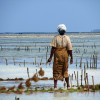
Zanzibar’s Encroaching Ocean Means Less Water
Khadija Komboani’s nearest well is filled with salt water thanks to the rising sea around Tanzania’s Indian Ocean island of Zanzibar.
Q&A: U.N. Looks to High Seas to Alleviate Food Crisis
The Food and Agriculture Organisation (FAO) is convinced there is sufficient global capacity to produce enough food to adequately feed the world's seven billion people.
Making a Business Out of Water Rationing
For 61-year-old Sarah Chikwanha from water-starved Chitungwiza, a town about 25 kilometres outside Harare, Zimbabwe, there is no choice. She must buy her water from illegal water traders, whose businesses have sprung up across the country.
The Future of the Pacific Ocean Hangs in the Balance
The immense scale of the Pacific Ocean, at 165 million square kilometres, inspires awe and fascination, but for those who inhabit the 22 Pacific island countries and territories, it is the very source of life. Without it, livelihoods and economies would collapse, hunger and ill-health would become endemic and human survival would be threatened.
French Town Makes Environment Everyone’s Business
Christina E. is a mother of three who lives in an apartment building in an upscale neighbourhood in Paris. As someone who prepares meals daily, she wishes she had a place besides her household garbage bin where she could put biodegradable waste.
Ecuador’s Fragile Páramo Ecosystem Threatened by Climate Change
The “páramos” or high plateaus of Ecuador, a crucial source of water, are showing signs of extreme fragility and a troubling loss of capacity to conserve this vital resource and sustain the survival of numerous species found nowhere else on earth.
Water Debt and Leaks Plague City Residents
Nokuzola Bulana has a problem with leaks. The water that drips from the pipes of the toilet outside her home in Khayelitsha, a large semi-informal township on the fringes of Cape Town, South Africa goes to waste and drives up her water bill.
New Effort Targets the Leading Killers of Children
PATH, a Seattle-based global health development organisation, is aiming to save two million lives by 2015 by jointly tackling diarrhea and pneumonia, the leading killers of children globally.
Fresh Water “More Precious Than Gold” in Bangladesh
Fahima Begum rises each morning at dawn and walks two kilometres to a small pond, the nearest source of fresh water. On her way she passes the rusty old hand-pumped tube well that used to supply water to her village in Bangladesh’s arid Barind region until the water table here dropped out of reach.
Water Flows Again in the Valley
Staring out at his golden wheat field with satisfaction, 50-year old Alamgir Akbar says with a sigh of relief: "We've had a good crop this season.”
U.S. Strategy on Water, Development a “Major Advance”
U.S. officials Tuesday formally unveiled the government’s first comprehensive strategy aimed at integrating water into all U.S. development funding and programmes, a step long urged by advocates and development experts.
Stressed Ecosystems Leaving Humanity High and Dry
Everyone knows water is life. Far too few understand the role of trees, plants and other living things in ensuring we have clean, fresh water.
Caribbean Farming Gets Its Roots Wet
As Caribbean communities grapple with the entwined challenges of climate change and food security, modern technologies offer hope that the region's stagnating agricultural sector can be made more profitable.
Pioneering Italian Town Leads Europe in Waste Recycling
Capannori, a rural town in the Italian province of Lucca, in Tuscany, boasts a proud history. Six years ago, it became a trendsetter and leader, not just in Italy but throughout all of Europe, as the continent's first Zero Waste town.« Previous Page — Next Page »


The Week with IPS

NEXT STOP - SDGs
Tracking global progress towards a sustainable world
Tracking global progress towards a sustainable world
