Languages
Wednesday, November 11, 2026



News and Views from the Global South
Featured
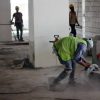
Getting India’s Construction Workers Their Entitlements
Basant Lal Chaudhary migrated from his village of 1,200 people in Madhya Pradesh, to a city of 90,000 people in Jammu and Kashmir in 2016. He last worked as a construction worker, before the COVID-19 lockdown forced him out of employment.“I used to earn a daily wage of INR 350. That was my only source of income,” he shares. During the lockdown, he along with others who worked with him, are finding it difficult to make the ends meet.”I don’t know whether I will be able to find work here anytime soon.”
Keeping Education within the Grasp of Refugee Children
“Not being able to go to school is not something I’d wish on any child in this world,” said 21-year-old Nujeen Mustafa, a young advocate for refugees who fled the Syrian war with her sister. Mustafa, who now lives in Germany, is also the United Nations Human Rights Council (UNHCR) high profile supporter.
Debt Hawks Detract from Urgently Needed Fiscal Recovery Efforts
Developing country debt has continued to grow rapidly since the 2008-2009 global financial crisis (GFC). Warnings against debt have been reiterated by familiar prophets of debt doom such as new World Bank chief economist, Carmen Reinhart, once dubbed the ‘godmother of austerity’.
Youth Rural-Urban Migration Hurts Malawi’s Agriculture
As households in Chiradzulu District in Southern Malawi start preparing their farms for the next maize growing season, Frederick Yohane, 24, is a busy young man.
Impending Food Crisis in Lebanon will Largely Affect Migrant Workers
Migrant workers and refugees in Lebanon will “inevitably” suffer the most as food insecurity threatens the nation following last week’s blast.
To Stay Ahead of the Next Insect Outbreak, Harness Available Data Intelligence
Recently, the UK contributed £17 million to support the Food and Agriculture Organization of the United Nations (FAO) to continue their efforts to combat the desert locust surge in East Africa and improve early warning and forecasting systems.
Reform of the United Nations Organization
The US detains essential keys to the political and economic stability of the planet. The last four years have been challenging for Americans, their allies, and the rest of the world.
Understanding the Benefits of local Wetland Encourages Eswatini Community to Save it
Sibonisiwe Hlanze, from Lawuba in Eswatini’s Shiselweni Region, lights up as she shows off her sleeping mat which she made from what she described as “the highest quality indigenous fibre”.
Where Do We Come From? What Are We? Where Are We Going?
COVID-19 has become a scourge affecting all levels of human society – morals, behaviour, human interaction, economy and politics. The pandemic has wrecked havoc on our way of being and its impact will remain huge and all-encompassing. It is not only affecting our globally shared existence, it is also changing what has been called ”the little life”, i.e. our own way of thinking and being, our personal life situation and the one of those close to us; people we love and depend upon – our friends and family.
Building Resilience in Pacific Education
School as we all know it hasn’t changed that much in over a century. However, in the face of new threats to health and wellbeing, the future of those familiar structures that bring teachers and students together is starting to be questioned.
Warming Temperatures & Decades of Oil Spills Cause Irreversible Damage to the Persian Gulf
The Persian Gulf is one of the most strategic waterways in the world and is also one of the most polluted. According to estimates by experts, pollution levels in the Persian Gulf are 47 times higher than the world’s average and are steadily increasing.
Anger and Sadness in Beirut
Eliane Eid, IPS correspondent in Beirut spoke to a cross section of people who shared their views and fears with her. On the third day of the deadly explosion, amidst an outpouring of anger from the Lebanese people, Angelina, 18, speaks about her lost home in the Mar Mikhael area. Josette, 27, talks about her experience of the explosion while she was on the road and Charbel, 28, shares his thoughts about being a volunteer at this critical time. They are all numb and speak calmly of how their lives were turned upside down, with this tragedy affecting thousands of people.
COVID-19 – Some 23.8 Million More Children Will Drop out of School
Countries with low human development are facing the brunt of school lockdowns, with more than 85 percent of their students effectively out of school by the second quarter of 2020, according to a United Nations policy brief on the impact of COVID-19 on education.
Multilateral Bank Intermediation Must Help Developing Countries’ Recovery
International Monetary Fund (IMF) Managing Director Kristalina Georgieva has warned that developing countries would need more than the earlier estimated US$2.5 trillion to provide relief to affected families and businesses and expedite economic recovery.
Empowering Women in a Digitally Equipped, yet Challenging World: A Story of Engagement
A girl has many roles. She can be a daughter, a mother, a friend, a wife or a sister. But her first and foremost introduction is a person, a human and a voice. No matter what remote or accessible part she may belong to, her story is unique and belongs only to her own. And if a thought-provoking, positive platform echo her voice, it can achieve wonders.
75 Years after the Bomb, Hiroshima Still Chooses ‘Reconciliation and Hope’
In a video message delivered to a Peace Memorial Ceremony in Japan on Thursday, UN Secretary-General António Guterres has paid tribute to the victims of the atomic bombing of Hiroshima, which devastated the city in 1945.
Will There Also Be a Post-Journalism?
Every era brings its own buzzwords or catchphrases along with it. The term du jour is ‘pandemic’, namely ‘coronavirus’ and ‘COVID-19’; but alongside these words, speculation and forecasts over the post-pandemic world are flourishing. There is a proliferation of pieces and commentary on what our daily lives or the economy will be like once the epidemic is under control, that is, how we will live in the aftermath of the pandemic.
Beirut On its Knees
Following the massive explosion in Beirut on Aug. 4, IPS correspondent Eliane Eid reports that the residents of the city are still shell shocked. Beirut looks like a battlefield, with destruction all around. The main port was on fire before the explosion. Described by some quarters as a “chemical bomb”, the explosion ripped through the heart of Beirut While the investigations have begun, the Lebanese community is uncertain as to what might have been the cause of this exposition that tore apart peoples lives with the blink of an eye.
Bangladesh Deals with Triple Disasters of Flooding, Coronavirus and Lost Livelihoods
With nearly 5.5 million people people across Bangladesh affected by severe flooding -- the worst in two decades -- humanitarian experts are concerned that millions of people, already badly impacted by COVID-19, will be pushed further into poverty.
Make a Fool of Yourself in the Third Act
Long ago, I was reviewing the offer of readings on the Internet, as a break from the search for academic sources for one of those articles with which to comply with professional rules, impress colleagues and students, and continue climbing steps in the university.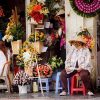
The New Poor Post-pandemic: Time for Cushioning the Most Vulnerable in Southeast Asia
After decades of impressive growth, for the first time, Southeast Asia is experiencing a drop in measured human development. The economic fallout from the COVID-19 pandemic will likely take months to reveal itself and years to put right. Yet, a legacy of mobilizing under constraints is leading Southeast Asia’s pandemic response.« Previous Page — Next Page »





The Week with IPS

NEXT STOP - SDGs
Tracking global progress towards a sustainable world
Tracking global progress towards a sustainable world
