Languages
Friday, November 20, 2026



News and Views from the Global South
Featured

Green Groups Offer Broad Vision for Global Paper Sector Reforms
More than 120 environmental groups from across the globe have offered a comprehensive vision document on how to enact, strengthen and implement sustainability reforms across the paper sector.
ARV Shortages Hit Mozambique’s HIV Treatment Programme
Chronic shortages of antiretrovirals across Mozambique are endangering the health and the lives of tens of thousands of HIV positive people on treatment.
Water Cut-off in U.S. City Violates Human Rights, Say Activists
When the United Nations reaches out to resolve a water or sanitation crisis, it is largely across urban slums and remote villages in Asia, Africa or Latin America and the Caribbean.
U.S. Turns Attention to Ocean Conservation, Food Security
A first-time U.S.-hosted summit on protecting the oceans has resulted in pledges worth some 800 million dollars to be used for conservation efforts.
Argentina Once More on the Map, Invited by BRICS
As Argentina starts to mend fences with the international financial markets, the emerging powers that make up the BRICS bloc invited it to their next summit. This could be a step towards this country’s reinsertion in the global map, after its ostracism from the credit markets since the late 2001 debt default.
Women Herders Bring Change
When Sangan Bhai, a humble man in the Kutch region of India’s western state of Gujarat, was offered a position as an executive member of the local camel breeder’s association, he made a decision that surprised his community: instead of accepting the prestigious post he offered his wife’s name instead.
Saving Tanzania’s Underground Hip Hop Scene
Inside a dark, cramped, music studio on Arusha’s hillside slum of Kijenge Juu, a thumping hip hop beat rattles the window-less room.U.S. Looking to Make LGBT Rights a Foreign Policy Priority
New legislation has been introduced in the U.S. Congress that would make the rights of sexual minorities a foreign policy priority for the United States.
Picture the World as a Desert
Try to imagine an expanse of barren land, stretching for miles, with no trace of greenery, not a single bough to cast a sliver of shade, or a trickle of water to moisten the parched earth. Now imagine that desert expanding by 12 million hectares a year. Why? Because it’s already happening.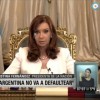
Argentina Seeks to Ward Off “Paradoxical” Default
Argentina finds itself in a strange position since the U.S. Supreme Court rejected its appeal Monday to take a case in which a small group of creditors is suing this country for full repayment: it is on the brink of default even though it is one of the countries in the world that has done the most to dig itself out of debt.
South Sudan’s Wildlife Become Casualties Of War and Are Killed to Feed Soldiers and Rebels
While South Sudan’s President Salva Kiir and his former deputy Riek Machar agreed last week to end the country’s devastating six-month conflict by forming a transitional government within the next two months, it may come too late for this country’s wildlife as conservation officials accuse fighters on both sides of engaging in killing wild animals to feed their forces.
U.S. Supreme Court “Validates” Vulture Fund Activities
The U.S. Supreme Court’s decision to reject an appeal by the Argentine government will embolden aggressive “holdout” creditors, anti-poverty groups say, and make it far more difficult to arrive at debt-relief agreements for poor countries.
Pacific Disability Theatre Group Inspires and Educates
In the Pacific Island state of Vanuatu, 23 actors with disabilities, from youth to senior citizens, who have battled physical and social barriers all their lives, are now empowering themselves and others through socially engaged theatre.U.S. Economy Will Grow But Not Trickle Down, OECD Warns on Inequality
Even though the U.S. economy is now expected to grow – albeit sluggishly – over the coming two years, inequality will not improve without policy reforms, a major grouping of rich countries is warning.

From Religious Conflict to an Interfaith Community
Holy men and their holy books have etched a trail of tears and blood in the annals of human history. From the depths of peaceful temples, mobs have been dispatched with flaming torches; from steeples and minarets messages of hatred have floated down upon pious heads bent in prayer. For too long religion has incited violence and fueled conflict.
Turkey’s Kurdish Problem Likely to Worsen After ISIS Gains in Iraq
Eighteen months after a ceasefire between the outlawed Kurdistan Workers Party (PKK) and Turkey’s security forces took effect, clouds of trouble are gathering in the country’s south-east.
Germany’s New Energy Revolution Still Moving Ahead
Germany has now become the world’s first modern renewable energy economy, according to the experts. The Federal Republic of Germany already obtains 29 percent of its electricity from renewable sources, meaning photovoltaic, hydro and wind power, and power produced by burning wood or other biomass.
Disaster-Prone Caribbean Looks to Better Financing
A freak storm, followed by heavy floods in December 2013, will go down in history as the most destructive natural disaster to have hit the Caribbean island nation of St. Vincent and the Grenadines, with reported total damages and losses of at least 103 million dollars.
Obama’s Free Trade Strategy Falters in Asia
Amid simmering territorial conflicts across the Western Pacific, specifically between China and its neighbours in the South and East China Seas, coupled with China rising to the rank of top trading partner with Japan, South Korea, Australia and the Association of Southeast Asian Nations (ASEAN), the Obama administration has been hard-pressed to re-assert its strategic footprint in the region.
FIFA World Cup – Where the Spectacle Is the Champion
The seven-year-old got bored after running here and there for five minutes, amidst a group of a dozen classmates. He eventually stomped off the field because he hadn’t managed to kick the ball even once.
In Developing World, Pollution Kills More Than Disease
Pollution, not disease, is the biggest killer in the developing world, taking the lives of more than 8.4 million people each year, a new analysis shows. That’s almost three times the deaths caused by malaria and fourteen times those caused by HIV/AIDs. However, pollution receives a fraction of the interest from the global community.« Previous Page — Next Page »


The Week with IPS

NEXT STOP - SDGs
Tracking global progress towards a sustainable world
Tracking global progress towards a sustainable world
