
Wednesday, October 7, 2026



News and Views from the Global South
Gender Violence
Afghanistan: The Year of Illusions
Afghanistan is where history has taken it! The Trump-Taliban "Agreement for Bringing Peace to Afghanistan," signed on 29 February 2020, is deemed by many as the submission of a superpower to a group that had perpetrated acts of extreme ferocity and terror.
Transforming Girls’ Education, Changing The World
As we approach this year’s Transforming Education Summit, global leaders can and must prioritize expertise and mobilize political will to support efforts to ensure inclusive and quality education for all, especially girls. This is at the heart of Sustainable Development Goal 4 in the 2030 Agenda for Sustainable Development, as well as the commitments made in the Charlevoix Declaration and the G7 Declaration on Girls’ Education.
Gender Equality & Women’s Rights Wiped out Under the Taliban
In the year that has passed since the Taliban’s takeover in Afghanistan we have seen daily and continuous deterioration in the situation of Afghan women and girls. This has spanned every aspect of their human rights, from living standards to social and political status.
Climate Change is Putting Women & Girls in Malawi at Greater Risk of Sexual Violence
It is often those least responsible for causing climate change that suffer the most from the impacts. And such is the case with women and girls in Malawi - one of the world’s poorest and lowest carbon-emitting countries but ranked fifth in the Global Climate Index 2021 list of nations worst affected by climate-related extreme weather.
A Future Horror and the Hope of the Present
This is an alert message: if nothing stops the wave of violence in Mexico, by the end of 2024 the country could exceed the figure of 150,000 missing persons.
‘When it Comes to Gender Equality, Our Best is Not Good Enough’: says Dr Phumzile Mlambo-Ngcuka
 The Covid-19 pandemic has impacted lives all over the world. According to this report, gender is emerging as a significant factor in the social, economic and health effects of Covid-19. Women have been hit much harder socially and economically than men. The greatest and most persistent gender gap was seen in employment and uncompensated labour, with 26% of women reporting loss of work compared with 20% of men globally in September 2021.

Missing Women in Peru – Pain that Never Ends
"They mustn’t stop looking for her," said Patricia Acosta, mother of Estéfhanny Díaz, who went missing on Apr. 24, 2016, along with her five-year-old and eight-month-old daughters, after attending a children's birthday party in Mi Perú, a town in the coastal province of Callao, next to the Peruvian capital.
Taliban: The Return of Misogynistic Gynophobes in Afghanistan
Gynophobia is defined as an intense and irrational fear of women or hatred of women, it may be characterized as a form of specific phobias, which involves a fear that is centered on a specific trigger or situation, which in the case of gynophobia is women.

Assisting At-Risk Youth Becomes Life’s Work for Trafficking Survivor
Arien Pauls-Garcia’s journey to working with at-risk youth in California was long and dangerous and started at 19 when she found herself sold and exploited by traffickers.
Will Apex Court Ruling Remove Stigma for Sex Workers in India?
Social activists, including Lucknow-based Tahira Hasan, have welcomed the Indian Supreme Court’s recent ruling recognising sex work as a profession.
War & Peace 2.0: Ukraine Showing the World How to Fight Back
It has been over 100 days since Russia first invaded Ukraine on 24 February 2022, turning the country into a slaughterhouse. The United Nations (UN) in this report says that, as of 1 June, 2022, more than 6.9 million refugees have left Ukraine and 2.1 million have returned, while eight million people are displaced inside Ukraine itself. War in Ukraine has caused the fastest growing refugee crisis since World War II.

Ukraine Refugee Rape Survivors Struggle to Access Abortions in Conservative Poland
An ultraconservative group in Poland has begun checking with hospitals to find out if Ukrainian refugees are being offered terminations in line with the country’s strict abortion laws amid warnings refugee victims of rape are struggling to access local help and clinical services.
Those Who Dare: Feminist Movements in Sudan, Lebanon & Syria
The year 2019 was not just a time before the world saw the global pandemic, but also a time when the world saw mass political uprisings with women at the forefront. The MENA region in a way led this force, in Sudan women played as drivers of the revolution, protesting decades of corruption, socioeconomic grievances and gendered violence. Nubian queen became the symbol of the revolution in Sudan which finally saw the overthrow of the dictatorship in 2019.
Those Who Dare: Voices of Women in the MENA Region
When it comes to gender equality and development, the Middle East, North Africa (MENA) and the Arab States region continues to be in a paradoxical situation. While within the region, several laws, policies and programming focused on gender equality are growing, women’s representation in government jobs, corporate roles, and national programming seem to be dismissed. Healthcare, education have seen improvement, most countries have become tech inclusive as well, but access to hospitals and educational institutions –at times due to social programming or gender-related policies continues to prevent women from accessing them and using them.

Misogynistic Online Abuse Poses Major Threat to Women Journalists
Women journalists around the world are experiencing an exponential increase in misogynistic online abuse, which poses a grave risk to women's media participation in the digital age.
Youth Icon’s Fight for Rights Among India’s Destitute
Pooja Shukla, 25, a socialist candidate, has lost her maiden elections to the provincial parliament in Uttar Pradesh (UP), India. But Shukla is no loser.
Profound Effect of Covid Pandemic on Women and Girls in Asia-Pacific Documented
Women and girls in the Asia-Pacific region were adversely impacted due to COVID-19 pandemic responses – with marginalized women and girls’ access to sexual and reproductive health rights (SRHR) and gender-based violence (GBV) services profoundly affected.
Women, Children Fleeing Ukraine Vulnerable to Human Trafficking
States must do more to protect women and children fleeing war in Ukraine, rights groups have urged, amid growing concerns they are falling prey to trafficking and sexual violence.
South Sudan: Oil Underground, Blood on the Surface
While several politicians -and media– have been viewing the ongoing armed conflict in South Sudan as a “civil war” between rival ethnic groups, so nothing to worry about, there are some key facts that should be considered for the sake of having a wider, more accurate panorama. One of them is that this country is rich in oil.
Commission on the Status of Women: The Streets Have Already Spoken
The 66th session of the Commission on the Status of Women (CSW) was just launched. Due to the ongoing impacts of the COVID-19 pandemic, the main annual global forum on gender equality is once again taking place in a hybrid format – both at the UN’s New York headquarters, where government delegations will be meeting, and online, where most civil society activity will take place.
International Women’s Day, 2022
Girls’ Education Must Come First
For decades now, world leaders have talked about ending hunger and poverty and building a new world order based on human rights and gender-equality.
« Previous Page — Next Page »





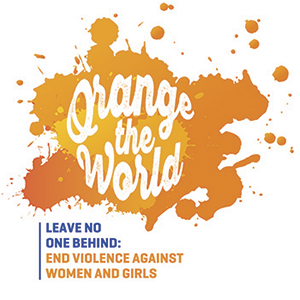
One in three women around the world have been subject to violence. Women face physical, sexual, and psychological violence in both public and private. Taking forms such as violence in the intimacy of a relationship, human trafficking, and sexual exploitation, gender violence is an issue that affects women in all countries. Only two-thirds of countries have outlawed domestic violence, leaving millions of women unprotected from abuse including from marital and de facto partners in many cases. Additionally, through human trafficking countless women are subjected to sexual exploitation and sexual violence, including horrific acts such as genital mutilation. Today many actors from individuals, to multinational organizations work to address these issues. These articles help to shed light on the violence that women experience every day and how its is being addressed.

The Week with IPS

Tracking global progress towards a sustainable world
