
Thursday, October 15, 2026



News and Views from the Global South
Gender Violence
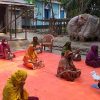
The Impact of COVID-19 on Child Marriage and Other Gender-Based Violence
I recently visited rural areas of Bangladesh amid the COVID-19 pandemic and returned to Dhaka with a new understanding of the impact that COVID-19 is having on child marriage, a harmful practice that is a global challenge. The fundamental shift that I saw was that child marriage, which has typically been encouraged by struggling parents, is now being encouraged by struggling girls. This worrisome trend underscores a new burden of the pandemic on the poor.
Online Violence, Fueled by Disinformation and Political Attacks, Deeply Harms Women Journalists
An alarmingly high number of women journalists are now targets of online attacks associated with orchestrated digital disinformation campaigns. The impacts include self-censorship, retreat from visibility, an increased risk of physical injury, and a serious mental health toll. The main perpetrators? Anonymous trolls and political actors.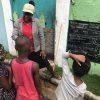
Pandemic Puts Jamaican Children at Heightened Risk of Abuse
In Jamaica, school playgrounds are deserted, filled only with phantom shrieks of delight. Blackboards remain devoid of arithmetic and uniforms hang wrinkle-free in closets. When the first case of Covid hit Jamaican shores in early March, the government closed primary and secondary schools and over 500,000 children transitioned to remote learning. The majority of schools have yet to resume face-to-face classes since the March 13 closure.
Helping Women to Step out of the ‘Shadow Pandemic’ of Women Abuse
The United Nations Secretary-General’s UNiTE by 2030 to End Violence against Women campaign marked the 16 Days of Activism against Gender-based Violence (25 November to 10 December 2020) at a time when COVID-19 exacerbated the conditions women operate under.
Discriminatory Laws Still Holding Women Back in the Middle East
Decades of aggressive efforts to create equal opportunities for women, shatter the glass ceiling and build a more inclusive society only ends up in failure, when the key stake holders refuse to acknowledge discriminatory laws, socio-cultural and religious set ups that continue to threaten progress made by the female work force.
Reduce Military Spending – the Much-Needed Response to Violence Against Women
The COVID-19 pandemic is NOT the biggest pandemic the world confronts at the moment, despite over 69 million cases and 1.5 million deaths worldwide.1 If it’s not COVID, what is it then? It is violence against women!
Safe at home or scared at home?
If one is asked, where do you feel most safe and secure? The answer will invariably be "my home".
Nigerian Focus Group Reveals Why Ending Gender-Based Violence is Necessary
Every year, the global 16 Days of Activism against Gender-Based Violence begins on November 25 and ends December 10. The theme of this year’s activism is "Orange the World: Fund, Respond, Prevent, Collect!"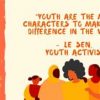
Lost in Translation? Understanding Relevance of Women, Peace & Security in Arms Control & Disarmament
“What does the Women, Peace and Security Agenda have to do with arms control and disarmament?”. Under varying formulations, this question keeps coming up whenever someone refers to the Women, Peace and Security (WPS) Agenda as a basis for ensuring that women’s voices and their specific security needs were taken into account in multilateral arms control discussions.
Online Attacks On Female Journalists Are Increasingly Spilling Into the ‘Real World’ – New Research
The insidious problem of online violence against women journalists is increasingly spilling offline with potentially deadly consequences, a new global survey suggests.
My Voice, Our Equal Future! Joining the Chorus of Girls Who Are Speaking up for Change
Girls are change makers and world shapers! When girls speak up, they are a powerful force to be reckoned with.
Reversing the Rohingya Crisis: One Woman at a Time
“This is a crisis without a quick fix that could take years to resolve unless there are concerted efforts to address its root causes”, says Manuel Fontaine, UNICEF Director of Emergency Programmes.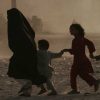
Women in War-Ravaged Afghanistan Fight Back for Their Rights
Bullets, bombs, tyranny and torture. Children crying for food, civilians struggling to survive, women unable to walk out of their homes freely. When we are not under siege from bombs and landmines, ordinary Afghans suffer from hunger, natural hazards and poverty.
The Rape of India’s Dalit Women: It’s All about Gender & Class Subordination
Shabnam*, a young woman from Northern India’s Haryana state, is two years away from becoming a law graduate. She sees parallels between her own rape and that of the 19-year-old Maha Dalit woman whose brutal rape and torture by a group of men from a “dominant” or “higher” caste in the neighbouring state of Uttar Pradesh triggered nationwide protests.
Rising above the Hate Online – Indian Muslim Women Speak Out
When a minority woman with an opinion doesn’t comply with stereotypes, she is targeted with online hate, says award-winning journalist and senior editor at The Wire, Arfa Khanum Sherwani in an exclusive interview with Inter Press Service.
Human Trafficking Survivor Harold D’Souza: “The Perpetrators are More Aggressive Than Ever”
The fallout of the COVID-19 pandemic continues: as more people around the world lose their livelihoods, human trafficking is on the rise. Support services for survivors have been shut, and past gains to combat it have been reversed. Funding has dried up.
Education: Act Now, Don’t Wait for the Bill
School reopening doesn’t mean that education is back on course. For a start, schools remain closed in over 50 countries, affecting more than 800 million students. The poorest ones may never make it back to school, driven by poverty into child labour or early marriage. Distance learning has been out of reach for one third of the 1.6 billion students affected worldwide by school closures. They may disengage altogether if school closures continue.
Building Back Better: Education Cannot Wait
 The United Nations General Assembly adopted Resolution 66/170 declaring October 11 as the International Day of the Girl Child, to recognize girls’ rights and the unique challenges girls face around the world.
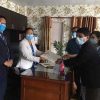
Nepal Moves Against Acid Attacks on Women
After a prolonged lobbying campaign, the Government of Nepal recently took some important actions against perpetrators of acid attacks while offering better provisions to support the process of rehabilitation of their victims.
Central Sahel – Shaping peace together with women and young people Statement for International Peace Day
The countries of Central Sahel—Burkina Faso, Mali, and Niger—face an unprecedented crisis, marked by violent extremism, forced displacement, and rising insecurity. The sharp increase in armed attacks on communities, health centres, schools and other public institutions and infrastructure has disrupted livelihoods and access to social services. The impact on affected people is devastating.
Impact of COVID-19 on Women and Children
The impacts of crises are never gender-neutral and COVID-19 is no exception. The pandemic has resulted in increased rates of violence against women and has exacerbated challenges in accessing justice. Women are losing their livelihoods faster than men.« Previous Page — Next Page »





One in three women around the world have been subject to violence. Women face physical, sexual, and psychological violence in both public and private. Taking forms such as violence in the intimacy of a relationship, human trafficking, and sexual exploitation, gender violence is an issue that affects women in all countries. Only two-thirds of countries have outlawed domestic violence, leaving millions of women unprotected from abuse including from marital and de facto partners in many cases. Additionally, through human trafficking countless women are subjected to sexual exploitation and sexual violence, including horrific acts such as genital mutilation. Today many actors from individuals, to multinational organizations work to address these issues. These articles help to shed light on the violence that women experience every day and how its is being addressed.

The Week with IPS

Tracking global progress towards a sustainable world
