Languages
Sunday, November 8, 2026



News and Views from the Global South
Gender

Champions of Hygiene
Lydia Abuya, a tenant living in the Kaptembwa informal settlement west of Nakuru town, leaves one of the six on-plot toilets. She returns with a pail of water to splash away the waste.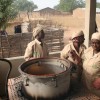
Innovations Boost Income for Women Rice Farmers
Salabanya Tabaitou no longer squints from the irritating wood smoke each time she has to parboil her rice paddy. Now Tabaitou feeds logs into a chute of a specially designed brick stove with a chimney that draws away the smoke. The stove with a stainless steel parboiling vessel cooks her rice in 20 minutes - something she would have spent two hours doing using the traditional method.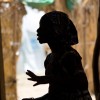
The Unknown Fate of Thousands of Abducted Women and Girls in Nigeria
The plight of 219 Chibok schoolgirls abducted two years ago is all too common in Nigeria's conflict-affected north-eastern communities, and up to 7,000 women and girls might be living in abduction and sex slavery, senior United Nations officials on 14 April 2016 warned.
Will the UN’s new leader stand for the powerful or the powerless?
After hundreds of questions were posed to nine candidates vying for the role of United Nations Secretary-General this week, a lasting question remains; will the UN’s new leader stand for the powerful or the powerless?
Land Tenure Still a Challenge for Women in Latin America
Rural women in Latin America continue to face serious obstacles to land tenure, which leave them vulnerable, despite their growing importance in food production and food security.
Gender Equality and Equity in Health Will Anchor Drive Towards a Sustainable National Development
Last month, the Government of Kenya (GoK) in partnership with United Nations Population Fund (UNFPA) at the sidelines of the 60th Session of the UN Commission of Women in New York, launched the report on the ‘Assessment of the UNFPA Campaign to End Preventable Maternal and New-born Mortality in support of the Campaign for Accelerated Reduction of Maternal Mortality in Africa’Female Engineers Defy the Odds
Nearly every aspect of modern life is a result of the work done by engineers; from running water to the internet, sky-scrapers to smartphone apps that people use for dating. Sadly, in Tanzania this profession attracts only a few women due to prevalent attitudes that it is a man’s job.
More Children Displaced, Used for Suicide Attacks by Boko Haram
A dire humanitarian and security crisis continues to worsen in the Lake Chad Basin with severe consequences for youth, said Regional Humanitarian Coordinator for the Sahel Toby Lanzer.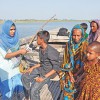
Stepping Out of the Cocoon
To encourage more young women into community media and journalism, and to work for the development of rural communities, in 2013, Bangladesh NGO's Network for Radio and Communication (BNNRC), in partnership with Free Press Unlimited (FPU), launched a three month fellowship programme entitled “Youth women in Media and Journalism”. In the programme, an experienced mentor trains the attendees how to produce news, reports, features, case study and human profiles.Sliding Scale
That Pakistan is a hostile terrain for women is widely known. The vast majority of the poor have little choice but to carry on with life as best as they can, holding out in the hope that the state and its set of laws, law enforcement and justice systems will be able to protect their freedoms and dignity.
Plan for Poorer Countries to Fund HIV Response Raises Concerns
Calls for low and middle income countries to contribute an additional 6.1 billion dollars to the global HIV response by 2020 could see some vulnerable groups left behind, said HIV activists meeting at the United Nations last week.Debunking Stereotypes: Which Women Matter in the Fight Against Extremism?
Violent extremism is the topic du jour, as government officials are busy developing plans of action on “preventing or countering violent extremism” (P/CVE). In these plans there is dutiful reference to engaging “women”. The more progressive mention gender sensitivity.
Temple Tantrums
Women comprise nearly half of India's 1.2 billion population, yet gender bias and patriarchal mindsets continue to plague them well into the 21st century. Even holy places -- temples and mosques -- it seems aren't free from discriminating against the fair sex.
Violence at Home
Amidst robust campaigning by liberal sections to activate the feminist lobby and strong criticism by clerics defending Islam’s endowment of women’s rights, there is a risk of overlooking the essence of what is a major human rights and public health issue — domestic violence.
Women Benefit From Simple Economic Ventures
Angelina Chiziane starts her day by getting her husband ready for work in a small village in the southern province of Gaza, Mozambique, some 216 kilometers away from the capital, Maputo.
Benefits of Backpack Biogas
Billions of dollars of aid has been pumped into Africa. Yet effective change too often remains an elusive outcome, leading to a vicious cycle: more needs, more aid but still little change. How to resolve this seemingly intractable dilemma?
The Rise of Investor-State Dispute Settlement in the Extractive Sectors
African countries have been active in concluding international investment treaties. According to the United Nations Conference on Trade and Development (UNCTAD), as of end 2013, 793 bilateral investment treaties (BITs) have been concluded by African countries, representing 27% of the total number of (BITs) worldwide.
Why Poverty Won’t Go Away
In an email interview, Dr Geof Wood shares with Amitava Kar of The Daily Star why poverty and inequality persist despite all the fuss. Emeritus Professor of International Development at the University of Bath, Dr Wood is an internationally renowned development anthropologist and author of several books and numerous journal articles, with a regional focus on South Asia. On March 9, he presented a seminar titled “The Security of Agency: Towards a Sociology of Poverty” at Bangladesh Institute of Development Studies (BIDS). Here is a condensed version of the interview.
NGO Pledges $500 Million Towards Sustainable Development Goals
CMMB -Healthier Lives Worldwide– a leading international nonprofit health non-governmental organisation (NGO) – has pledged 500 million dollars to help implement the UN’s Sustainable Development Goals (SDGs)– with a specific focus on maternal, newborn, child and adolescent health.
Galvanizing Efforts Towards the 2030 Agenda and Fostering Partnerships, UN Women Unveils New Media Compact
More than 35 leading media outlets commit to increase women’s representation in the newsroom and in news content Media Contacts: Oisika Chakrabarti, Ph: +1 646 781-4522; Email: oisika.chakrabarti[at]unwomen.org Sharon Grobeisen, Ph: +1 646 781-4753; Email: sharon.grobeisen[at]unwomen.org
Are Indigenous Women Key to Sustainable Development?
"We, indigenous women want to be considered as part of the solution for sustainable development, because we have capabilities and knowledge, " said Tarcila Rivera, a Quechua journalist and activist for the rights of indigenous people in Peru, at a press conference on the Empowerment of Indigenous Women.« Previous Page — Next Page »





Women make up half the world's population, but don't nearly share half of the world's wealth, well-being and opportunity. Two-thirds of the world poor are women, disproportionally exposing women to precarious living conditions, disease and unmitigated natural disasters. The media, meanwhile, remains a male-dominated sector in much of the world, contributing to women's voices lacking a crucial amplifier to put their concerns on political agendas and unleash the development potential of their ingenuity. Rather than then stereotypical victims of local and global forces, women are also organizer, innovators, conservators and community builders. These are some of their stories.

The Week with IPS

NEXT STOP - SDGs
Tracking global progress towards a sustainable world
Tracking global progress towards a sustainable world
