Languages
Sunday, November 8, 2026



News and Views from the Global South
Gender

From Bangladesh to Bihar
Times are a-changing for Bihar, a state popularly described as a state of mind. The recent elections have brought back Nitish Kumar as the chief minister for the fifth time. Since his first innings as a developmental CM from 2005, he has transformed Bihar from being an archetype of India’s backwardness to one of its fastest growing states. Besides improving governance, he has also politically empowered women in that benighted state. Not surprisingly, the women’s vote was decisive for his electoral success. He now has the historic opportunity to shift gears towards sustainable gender-based development.
Analysis: Is Empowerment of Women a Will-o’-the-Wisp?
Few dispute that women’s autonomy and betterment of their lives are moral imperatives. But whether these are also key to economic development is contested.
Opinion: From Despair to Hope – Fulfilling a Promise to Mothers and Children in Mandera County
Mandera in northeastern Kenya, has often been described as “the worst place on earth to give birth.” Mandera’s maternal mortality ratio stands at 3,795 deaths per 100,000 live births, almost double that of wartime Sierra Leone at 2,000 deaths per 100,000 live births.
Opinion: Integrating Water, Sanitation and Health are Key to the Promise of the UN Global Goals
The 193 member states of the United Nations have adopted an ambitious 15-year sustainable development agenda, the 2030 Global Goals.
Opinion: Women on Reproductive Strike
Women are having fewer than two children on average in 83 countries, representing nearly half of the world’s population. And in some countries, such as Germany, Italy, Japan, Poland, Singapore, South Korea and Spain, average fertility levels are now closer to one child per woman than the replacement level of about two children (Figure 1).
Opinion: Imagine a Rape-Free Delhi
Delhi’s shame is that it’s the rape capital of India. The recent brutal rape of minors only underscores the tragic fact that nothing has changed since December 16, 2012 when a 23-year old physiotherapy student was gang-raped in a moving bus and triggered a nationwide outrage.Opinion: The Unlikely Chance of a Serious Human Rights Debate in Cuba
Nearly a month since Pope Francis ended his historic visit to Cuba, any hope that authorities would loosen control on free expression in the country is fading as fast as the chants that welcomed him.
Kenya: Transforming Mandera County’s Deadly Reputation for Maternal Health
For many women in Mandera County – a hard to reach, insecure and arid part of North Eastern Kenya – the story of life from childhood to adulthood is one about sheer pain and struggle for survival.
Native Women Green the Outskirts of the City, Feed Their Families
The hands of women who have migrated from rural areas carefully tend to their ecological vegetable gardens in the yards of their humble homes on the outskirts of Sucre, the official capital of Bolivia, in an effort to improve their families’ diets and incomes.
Opinion: Will the SDGs Serve to Bridge the Gender Gap?
Increasingly gender equality, rooted in human rights, is recognized both as a key development goal on its own and as a vital means to helping accelerate sustainable development. And while the field of gender has expanded exponentially over the years, with programmes focused exclusively on women and girls and greater mainstreaming of gender into many development activities, a range of challenges remain.
Youngster Uses Technology to Fight Teen Pregnancy in Honduran Village
Four years ago, Cinthia Padilla, who is now 16, learned how to use a computer in order to teach children, adolescents and adults in this isolated fishing village in northern Honduras how to use technology to better their lives.
Women Seek Permanent Seat at Peace Negotiations
When the U.N. Security Council (UNSC) adopted a landmark resolution on women, peace and security 15 years ago, that resolution was best known by its numerals: 1325.
Only 1325 National Plans will trigger the Resolutions Implementation
This week, the United Nations Security Council is holding an open debate to undertake its High Level Review of the 15 years of implementation of the landmark Resolution 1325 on “Women and Peace and Security.”Opinion: Turn Words into Action Involving Women for Lasting Peace
We have recently celebrated the peace deal struck between the government in Colombia and the main guerrilla group. The deal reached on justice issues represents the clearest sign yet of a possible end to five decades of conflict.Opinion: International Day of the Girl Must Start with Good Laws
Everyday should be about girls, but yesterday, October 11, was dedicated especially to them. International Day of the Girl is yet another opportunity to put girls at center stage.
Pakistan Initiative Seeks to Improve Maternal-Child Care in Rural Areas
“We are extremely happy over the government’s initiative to give money to the pregnant women and enable them to seek proper treatment,” said Sharif Ahmed at a basic health unit (BHU), near Peshawar, the capital of Khyber Pakhtunkhwa (KP) province.
Minorities Speak Out in Latin American Population Conference
“The countries of Latin America have not fully committed themselves to the international conventions and have not given indigenous peoples access. Nor have their contents been widely disseminated,” to help people demand compliance and enforcement, said Guatemalan activist Ángela Suc.
Opinion: “Sanitation, Water & Hygiene For All” Cannot Wait for 2030
The new Sustainable Development Goals, agreed upon recently by the member states of the United Nations, are all interconnected, as has been reiterated time and again. However, it is in the new Goal 6 – “Ensure access to water and sanitation for all”—for which this interconnectedness is most apparent.
Analysis: Is the Miracle of Microfinance Illusory?
Mohammad Yunus, the founder of Grameen Bank in Bangladesh, transformed the lives of millions of poor women through unsecured micro loans or micro credit to self-help groups. Microcredit evolved into microfinance that also includes savings and basic forms of insurance and transfer mechanisms. Within a few years, microfinance became a global phenomenon. Although microfinance continues to grow, the enthusiasm for it shows signs of waning.
Women’s Alliance Plans to Counter Violent Extremism
When the Security Council recently hosted a meeting of world leaders to discuss the growing threats from violent extremism, Secretary-General Ban Ki-moon warned that any success in battling intolerance will be predicated on a “unified response.”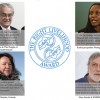
Italy and Uganda Bag Right Livelihood Awards Fist Time Ever
The 2015 Right Livelihood Awards were announced today in Stockholm at the Swedish Foreign Office International Press Centre by Ole von Uexkull, Executive Director, and Dr Monika Griefahn, Chair of the Board of the Right Livelihood Award Foundation.« Previous Page — Next Page »





Women make up half the world's population, but don't nearly share half of the world's wealth, well-being and opportunity. Two-thirds of the world poor are women, disproportionally exposing women to precarious living conditions, disease and unmitigated natural disasters. The media, meanwhile, remains a male-dominated sector in much of the world, contributing to women's voices lacking a crucial amplifier to put their concerns on political agendas and unleash the development potential of their ingenuity. Rather than then stereotypical victims of local and global forces, women are also organizer, innovators, conservators and community builders. These are some of their stories.

The Week with IPS

NEXT STOP - SDGs
Tracking global progress towards a sustainable world
Tracking global progress towards a sustainable world
