Languages
Wednesday, November 11, 2026



News and Views from the Global South
Gender
MIDEAST: Not School Time Yet for Bedouin Girls
For mother of five Shimaa al-Aasam, providing her children with the opportunity to complete their education despite a severe lack of classrooms in their Bedouin community is of prime importance.
Q&A: “We Have to Find a Way to Communicate”
"The anger that rushes through me goes well beyond the hellish night I've just lived through. In a flash, I feel a terrible bond not only with the victims of September 11th but also with the kids brainwashed to become instruments of death in the name of an invented Islam," Mariane Pearl wrote in her 2003 book "A Mighty Heart".
GUATEMALA: More Not Always Better for Women
"Women have more opportunities nowadays to participate in the economic, social and political development of the country, but this has still not improved the quality of their lives," said Laura Reyes, one of the three women candidates for vice president of Guatemala.
Q&A: “People With Disabilities Want Work”
More than one billion people worldwide live with disabilities, some 15 percent of the world's population.Reproductive Health Security Empowers Women’s Choices
Each day, one thousand women die in childbirth and one million people become infected with sexually transmitted infections (STIs), including 7,000 cases of HIV. Yet these numbers are preventable, experts insist, when countries possess the resources and willpower to address and deal with them.
COLOMBIA: Women Make an Oasis in Violence-Wracked Neighbourhood
In one of the poorest neighbourhoods in the Colombian capital, 26-year-old Sandra Sánchez has created an oasis that offers meals, recreational opportunities, company and much more to hundreds of children and elderly people, in an example of solidarity and leadership that has transcended borders.
AFRICA: Slow Progress in Reducing Maternal Mortality
Agnes Kalunda’s doctor feared that because of her slight frame there was a high chance of her developing complications during delivery.US-LATAM: Human Trafficking Scourge Needs More Than Policing
South American experts and officials met in Washington this week to discuss current policy initiatives to combat human trafficking in their respective countries, part of a broader U.S.-wide tour to share information and strategies to deal with the issue.
HAITI: U.N. Troops Accused of Exploiting Local Women
Seventeen-year-old Rose Mina Joseph says she is nine months pregnant. Her belly is swollen and she moves slowly, placing each step, as she walks around her family's dusty yard.
CLIMATE CHANGE: Nepali Women Sow a Secure Future
Learning a lesson from crop failures attributed to climate change, Nepal’s women farmers are discarding imported hybrid seeds and husbanding hardier local varieties in cooperative seed banks.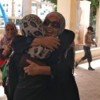
LIBYA: New Chapter Opens After Gaddafi
Libyan children will go back to school without Muammar Gaddafi’s ubiquitous presence, despite a lack of new books.
MALAWI: Government Becomes a One-Man Show
For the last two weeks, Malawi’s president has been running the country’s 22 ministries on his own after firing his entire cabinet. But political and economic analysts say that his delay in appointing a new cabinet is detrimental to the country’s development. Some analysts say government has come to a standstill because of this, while others say the situation shows that the president has lost control.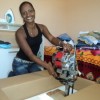
CLIMATE CHANGE: Brazilian Women Rise Above the Waters
Almost a year and a half after floods wreaked havoc in a large part of the state of Rio de Janeiro, a group of women are struggling to rebuild their lives. They lost everything except their will to pick themselves up again and make the best of the aid they receive, to become self-sufficient again.
Q&A: “Former Genocidaires Still Wandering Free”
The year 1994 was marked by blood. Between April and June, more than 800,000 Rwandans were killed in 100 days, in a terrible genocide that followed the assassination of Rwandan President Juvenal Habyarimana and the explosion of racial tensions between the country's two major ethnic groups, the Hutus and the Tutsis.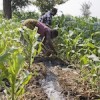
SOUTH AFRICA: While Politicians Deliberate Climate Change, Others Adapt
While many scientists, academics and politicians still theorise about ways to adapt to climate change, a South African civil society organisation has launched a hands-on project that mobilises communities to take easy steps to reduce carbon emissions.
NEPAL: Fasting Against Corruption Spreads
Inspired by Indian socialist leader Anna Hazare’s celebrated public fast against corruption in the Indian capital of New Delhi, starvation protests have sprung up in Nepal to press for a timely new constitution.MEXICO: Women Inmates Share Prison Conditions with Their Children
María S. lays her infant son down on one of the cold concrete slabs of her cell in the central penitentiary of Santa María Ixcotel, in the metropolitan area of this city in southwestern Mexico.
HAITI: Patchy Healthcare Adds to Miseries of Women and Girls
"I just gave birth on the ground...I had no drugs for pain during delivery," one Haitian mother tells Human Rights Watch (HRW) in a report released Tuesday that says a year and a half after the country's devastating earthquake, women and girls are still facing gaps in access to available healthcare services necessary to stop preventable maternal and infant deaths.
IRAN: Music Finds a Voice in Tehran
The waiter at the coffee shop moves rapidly to the entrance for a quick glance outside. Within, a young Iranian musician has started to play the saxophone. He has five minutes to perform, he cannot risk a raid on the "guerrilla" location for a little music.
Female Trafficking Soars in Iraq
Rania was 16 years old when officials raped her during Saddam Hussein’s 1991 crackdown in Iraq’s Shia south. "My brothers were sentenced to death, and the price to stop this was to offer my body," she says.BRAZIL: Fight for Gay Rights Making Strides
Brazil is making progress in cracking down on homophobia and upholding the rights of homosexuals. The latest step was the introduction in Congress of a bill on sexual diversity, sponsored by the bar association in consultation with civil society.« Previous Page — Next Page »





Women make up half the world's population, but don't nearly share half of the world's wealth, well-being and opportunity. Two-thirds of the world poor are women, disproportionally exposing women to precarious living conditions, disease and unmitigated natural disasters. The media, meanwhile, remains a male-dominated sector in much of the world, contributing to women's voices lacking a crucial amplifier to put their concerns on political agendas and unleash the development potential of their ingenuity. Rather than then stereotypical victims of local and global forces, women are also organizer, innovators, conservators and community builders. These are some of their stories.

The Week with IPS

NEXT STOP - SDGs
Tracking global progress towards a sustainable world
Tracking global progress towards a sustainable world
