Languages
Wednesday, November 11, 2026



News and Views from the Global South
Gender
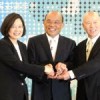
TAIWAN: East Asia May Get its First Woman President
Taiwan may become the first country in East Asia with a female head of state if opposition Democratic Progressive Party Chairwoman Tsai Ing-wen wins the island country’s fifth presidential election next Jan. 14.YEMEN: Youth Ready to Confront Gender Roles
Despite being at the forefront of sweeping changes taking place in the country, the lives of the majority of Yemeni women are restricted to early marriage, motherhood and serving husbands, according to a new study by Women Without Borders (WWB), a Vienna based public relations and advocacy platform for women’s voices around the world.BANGLADESH: Women Defy Islamic Clergy
Bangladeshi women are pushing government to implement the recently approved National Women Development Policy (NWDP) 2011, which has met with strong resistance from Islamic clergy.
PAKISTAN: Health Workers Without Maternity Leave
Shazia Kiran is seven months pregnant with her third child and worried she might be unable to juggle her work and the responsibilities of caring for a newborn. But what worries her more is that she has no maternity benefits, and she has not received her salary as a Lady Health Worker (LHW) for the last three months.DEVELOPMENT: IBSA Fund Packs Small But Sustainable Punches*
Despite only three million dollars a year coming into the India-Brazil-South Africa (IBSA) Fund for Poverty and Hunger Alleviation, it aims to pack punches above its weight with small but sustainable projects.OP-ED: Maternal Meltdown From Chernobyl to Fukushima
On this day 25 years ago, a massive explosion at the Chernobyl nuclear power plant in Ukraine released clouds of radioactive particles into the atmosphere across Russia and Europe. The catastrophe had lasting effects on people's health, particularly on women and their unborn children. On this sober anniversary, we look back at Chernobyl and the lessons learned to ensure the health of Japanese women as the Fukushima disaster unfolds.BURKINA FASO: Training Gives Domestics Hope of Escaping Their Lot
Emeline Djigma, a twenty-year-old domestic worker, is preparing for the entrance exam to the National Teachers' College this year. She hopes she'll make it, having finally obtained her secondary school certificate thanks to five years of evening classes.
BANGLADESH: W.A.S.H. Keeps Communities Clean
One sunny afternoon, 19-year-old Sufia Aktar presides over a courtyard gathering of housewives discussing the use of safe water, a hygienic environment, and personal cleanliness. It is the last of such gatherings for Sufia, who will soon leave, knowing it was "mission accomplished."ENVIRONMENT: Women Key to Greening the Economy
Earth Day celebrated its 41st year Friday with the slogan ‘A Billion Acts of Green’. The grassroots demonstration is said to have inspired the modern environmental movement, and continues to inform and promote green economic policies worldwide, while attracting over a half billion people every year.Women Struggle to Unite Fractured Bahrain
Women in Bahrain have launched new initiatives to tackle sectarian tensions that emerged as the fallout of widespread unrest sweeping the country since Feb. 14.
CUBA: Gender Inequality Persists Behind Closed Doors
While gender roles have changed since Cuba's 1959 revolution, inequalities persist among men and women in private life, and young people are both accepting that and breaking with it.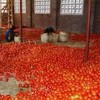
EAST AFRICA: Women Breaking Through Trade Barriers
For 12 years now, the women around Tsangano in Malawi’s southern district of Ntcheu have put together their tomato harvest, selling some 20 tons at the outdoor markets that abound in Lilongwe, the capital. But they have very little to show for their hard work.
Headscarf Is Also a Scarf Over the Head
While Belgium’s politicians, academics, business leaders and feminists grapple with the concept and reality of a law banning headscarves in public institutions and beyond, two entrepreneurial women have joined forces to rescue the headscarf from the country’s political debate. Inge Rombauts and Fatima Rafiy run the exclusive hijab boutique Noor D’Izar, which offers women, "a fashionable solution regardless of their reasons for wanting to wear a headscarf," Inge Rombauts tells IPS.
LATIN AMERICA: Lack of Prevention, Timely Treatment Make Women Vulnerable to Cancer
In many cases, cancer is preventable, treatable and curable if detected on time. But the fate of millions of women with the disease varies enormously, depending on where they live.JAPAN: Quake’s Aftermath Weighs Heavily on Women
Since the horrific Mar. 11 earthquake and tsunami that devastated her coastal town of Minato, in Ishinomaki city, Masami Endo’s three-year-old daughter has been crying and clinging to her every night.
PERU: Local Gov’ts Fail to Prioritise Equality for Women
Legally, each of Peru's 25 administrative regions must have a plan for promoting equal opportunities for women. But over the last year, only 10 regions have actually allocated resources to the task of overcoming gender inequity, while another 10 have not even drawn up the compulsory equal opportunities plan.DEVELOPMENT: IBSA Fund Packs Small But Sustainable Punches
Despite only three million dollars a year coming into the India-Brazil-South Africa (IBSA) Fund for Poverty and Hunger Alleviation, it aims to pack punches above its weight with small but sustainable projects.Vast Majority of Stillbirths Found in Developing Countries
According to a special series in the medical journal The Lancet presented in New York Wednesday at the U.N. children's agency UNICEF, over 2.6 million stillbirths occur worldwide annually, affecting mostly African and Asian women who lack proper access to health care and facilities.U.N. Decries Stagnant Funding For Population Goals
As the international community readies to cope with a rising world population of some seven billion people by the middle of this year, U.N. Secretary-General Ban Ki-moon warns that financial assistance for population-related activities has made no visible gains since 2008.
Kenyan Women Pulling Together Against Poverty
When it works, it's spectacular: Esther Ngonyo Njuguna's dairy project stands as testimony to the potential of microcredit schemes to boost rural incomes.
Mexican Women March for Rights, Mourn Slain Activists
For the first time, Mexico has a female attorney general - the highest post ever reached by a woman in this country. But elation at this achievement is overshadowed by grief over the brutal murders of women police chiefs and activists, and the persecution endured by the family of another woman who was killed in 2010.« Previous Page — Next Page »





Women make up half the world's population, but don't nearly share half of the world's wealth, well-being and opportunity. Two-thirds of the world poor are women, disproportionally exposing women to precarious living conditions, disease and unmitigated natural disasters. The media, meanwhile, remains a male-dominated sector in much of the world, contributing to women's voices lacking a crucial amplifier to put their concerns on political agendas and unleash the development potential of their ingenuity. Rather than then stereotypical victims of local and global forces, women are also organizer, innovators, conservators and community builders. These are some of their stories.

The Week with IPS

NEXT STOP - SDGs
Tracking global progress towards a sustainable world
Tracking global progress towards a sustainable world
