Languages
Saturday, November 14, 2026



News and Views from the Global South
Gender
POLITICS-BOTSWANA: I Lost the Election, But I Am a Winner
When Kgomotso Mogami threw her name into the hat to contest the Gaborone Central parliamentary seat it was easy for many people to write her off.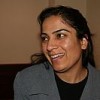
Q&A: “Karzai Assigned a Rabbit to Take Care of the Carrot”
In the aftermath of national elections widely condemned as fraudulent, the United States and its allies are wondering what to do about Afghanistan.
RIGHTS-LAOS: How Women Cope With Disability – Part 1
Before 2002, Chanhpheng Sivila held training workshops for the many Lao disabled women and men at her own house.Q&A: Maternal Mortality Rates ‘One of the Saddest Cases’ in Asia
Nearly 15 years after a landmark international conference to advance the rights and freedoms of women, the picture in the Asia-Pacific region is mixed, says a leading women’s rights advocate and senior United Nations official.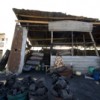
ENERGY-TANZANIA: Charcoal a Dirty Trade-Off
The sun is setting slowly over Dar es Salaam's Tabata Changombe neighbourhood. Ameenah and Skukulu Juma lean against the corrugated iron walls of their makeshift charcoal shop.SOUTH SUDAN: Media Give Us a Fair Deal – Women
The guns have gone silent – except for sporadic conflict in parts of the vast South Sudan region, such as the Eastern Equatoria State. It may not be the absolute end of the conflict in the region, but it is a reason for renewed hope.
CLIMATE CHANGE: Women Central to Adaptation, Mitigation
Poor women will bear the greatest ‘climate burden’, says the United Nations Population Fund in its 2009 State of the World Population report, released today.DEVELOPMENT: UNFPA Puts Human Face on Climate Blowback
A new U.N. report on the hazards of climate change brings a fresh human perspective to an ongoing wide-ranging debate that has focused primarily on energy efficiency and industrial carbon emissions.
Q&A: Women Should Be More Than Window Dressing
Women in developing countries are among the most vulnerable to the effects of crisis - be that climate change, food price hikes, the HIV/AIDS pandemic or the global recession. It is becoming more commonplace to hear women's testimony, but are women's voices heard when it comes to deciding on solutions?Q&A: “What is Important is to Give Equal Opportunity” – Part 2
Although women have long made major contributions to science, their efforts have often been overlooked. For the past 12 years, the United Nations Educational, Scientific and Cultural Organisation (UNESCO) has teamed up with cosmetics giant L'Oréal to highlight the achievements of female scientists.GENDER: Women in Science Face Discrimination in India – Part 1
Just 10 of the 443 Indian scientists who received the prestigious Shanti Swarup Bhatnagar (SSB) award in the last 50 years were women.POLITICS: Malawians Demand Local Councils
In Malawi, local government elections are as rare and endangered as the country’s black rhinoceros.
CUBA: Fewer Storks Visiting Shiny Maternity Clinics
Women in Cuba cite a variety of reasons to explain their decision to have only one child, ranging from the housing shortage to the rising cost of living and the many work responsibilities they have to shoulder. But many say that if things were different they would have a bigger family.MIDEAST: Gazans Brace for Cold, Bleak and Miserable Winter
Tens of thousands of Gazans living in tents and damaged homes face a wet, cold and miserable winter as Israel’s blockade of the coastal territory continues to prevent the importation of building and reconstruction material.RIGHTS-TURKEY: Transforming Men from Culprits to Allies – Part 1
Success in fighting violence against women may well hinge on partnership with an often overlooked but still a critically vital party - men themselves.CENTRAL AMERICA: Gender-based Violence, the Hidden Face of Insecurity
Gender-based violence and sexual abuse are serious public security problems in Central America, and Nicaragua is no exception, according to reports by United Nations agencies and women’s organisations.
GENDER: “Truly Exciting If the U.S. Could Ratify CEDAW” – Part 2
CEDAW or the U.N. Convention on the Elimination of All Forms of Violence Against Women (CEDAW) was adopted by the U.N. General Assembly in 1979.
GENDER: Laws, Budgets and Pigeonholes – Part 1
The fight for women's rights came about hand in hand with the struggle for democracy, civil rights and national liberation in different countries and periods, says Inés Alberdi, executive director of UNIFEM.
POLITICS-NAMIBIA: The Struggle Does So Not Continue
They are called the "born frees", the children of Namibia’s Independence, and they will vote for the first time this month. Struggle credentials mean zip to them, and they have a serious beef with politicians.
U.S.: Army Sends Infant to Protective Services, Mom to Afghanistan
U.S. Army Specialist Alexis Hutchinson, a single mother, is being threatened with a military court-martial if she does not agree to deploy to Afghanistan, despite having been told she would be granted extra time to find someone to care for her 11-month-old son while she is overseas.
SWAZILAND: Help Sex Workers – Senator
It is one of the world's oldest professions, dating so far back that it is even mentioned in the Bible. But in the deeply cultural and religious country of Swaziland, Senator Thuli Msane stirred a hornet's nest when she publicly challenged a new strict bill opposing prostitution.« Previous Page — Next Page »


Women make up half the world's population, but don't nearly share half of the world's wealth, well-being and opportunity. Two-thirds of the world poor are women, disproportionally exposing women to precarious living conditions, disease and unmitigated natural disasters. The media, meanwhile, remains a male-dominated sector in much of the world, contributing to women's voices lacking a crucial amplifier to put their concerns on political agendas and unleash the development potential of their ingenuity. Rather than then stereotypical victims of local and global forces, women are also organizer, innovators, conservators and community builders. These are some of their stories.

The Week with IPS

NEXT STOP - SDGs
Tracking global progress towards a sustainable world
Tracking global progress towards a sustainable world
