Languages
Tuesday, November 17, 2026



News and Views from the Global South
Gender

Q&A: Crises Are Left for Another Day…
The Doha Financing for Development Conference is over and many are now wondering how it went and what really happened. Sylvia Borren, co-chair of the Global Call to Action Against Poverty (GCAP), was there.DR CONGO: Activists Slam World’s “Grotesque Indifference”
International lust for the enormous mineral and resource riches of the Democratic Republic of the Congo (DRC) abetted by international indifference has turned much of country into a colossal "rape mine" where more than 300,000 women and girls have been brutalised, say activists.Q&A: Masculinity Doesn't Mean Macho
The rules for "being a man" that predominate in Latin America include "never saying no" to temptations out on the street, being "macho" - hanging tough - no matter what the risks, and above all, avoiding any characteristics or feelings that might be seen as feminine or cast doubts on one's masculinity.POLITICS-SOUTH AFRICA: Women's Participation Needs More Than Quotas
The African National Congress (ANC) directive to increase the number of women on South Africa's ruling party's election lists to 50 percent (up from 30 percent) might actually weaken the role of women in local government.
MALAYSIA: Rights Champion Seeks Political Career
After winning a gruelling 13-year court battle to avoid being jailed on charges of maliciously publishing false news, Malaysia's best-known human rights champion seeks a political career to continue defending migrant workers and other vulnerable sections of society.
DEVELOPMENT: ‘No Bailout Plan for the Vulnerable’
"Good but not enough!" "Missed opportunity!" "Talks fail to deliver!" These were some of the reactions from civil society as the U.N. Financing for Development (FfD) talks drew to a close in Doha, Qatar, on Tuesday.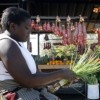
POVERTY-ZIMBABWE: Gardening Lifeline for Urban Women
Growing and selling vegetables has become a lifeline for 41-year-old Mavis Dube at a time when millions of Zimbabweans face increasing poverty and hunger after years of debilitating economic recession.
POLITICS-KENYA: Taking Up a Women's Agenda
The first woman from the Muslim majority island constituency of East Lamu to contest for a seat in Kenyan parliament, Shakila Abdalla is determined to give voice to the country's poor and marginalised.
DEVELOPMENT: Change Comes To Villages in Uganda
In her village they call her ‘councillor’. But Jenipher Namugwere is no ordinary councillor elected by the people to represent them in the local council.DEVELOPMENT: Rights In Times of Crisis
For the past three decades, indebted developing countries have been forced by the International Monetary Fund (IMF) and the World Bank to deregulate financial and labour markets, privatise national industries, abolish subsidies, and reduce social and economic spending.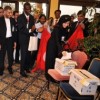
DEVELOPMENT: 'G192' Urged to Put People in Doha Talks
The demand is seemingly simple. ‘Vote for democratic, people-centred development’, advise civil society at the ongoing inter-governmental review of the Monterrey Consensus in Doha, Qatar.Q&A: "How Are We Going to Sustain Gender Approaches?"
The negative aspects of Africa's experience with structural adjustment programmes beginning in the 1990s have been well-documented - facing high debt loads, African governments agreed to liberalise their economies, privatise public enterprises, and sharply reduce social spending with often painful effects on the most vulnerable.
UGANDA: On the Global Market Track to Prosperity
Uganda's finance ministry has ambitious plans to reduce the country’s donor dependence. With foreign funds accounting for almost 50 percent of the national budget, officials believe a slew of measures announced in the 2008/09 budget could bring that down to about 30 percent.
POLITICS-MOZAMBIQUE: Few Women Mayors This Term
Bad news for women: of the eight women running for mayor in Mozambique's municipal elections held on Nov. 19, only three won. Overall, 114 candidates ran for mayor in 43 municipalities.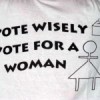
POLITICS-GHANA: The Fruits of the Future
The upside: three political parties selected women as vice-presidential candidates in the general elections of Dec. 7, the first time ever in Ghana’s history. The downside: the parties are small and have no real chance of victory.CUBA: Films that Tackle Touchy Social Issues
"Viviendo al límite" (Living to the Limit), a documentary by Cuban filmmaker Belkis Vega that follows the lives of five HIV-positive people, will be shown for the first time on Cuban television this week, four years after its release.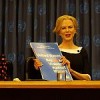
RIGHTS: Gender Violence "Pandemic" Highlighted at U.N.
Activists and U.N. officials called on governments to take stronger action to end violence against women Tuesday, with at least one out of every three women around the world having been beaten, coerced into sex or otherwise abused in her lifetime - with the abuser usually someone known to her.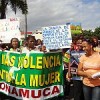
DOMINICAN REPUBLIC: Marching Against Machismo
Raising their voices in agreement with the declaration over the loudspeaker that "machismo kills", hundreds of Dominican women, carrying banners and roses, ended a march through the streets of Santo Domingo Tuesday in front of the Supreme Court Building, protesting the rising level of murders of women.RIGHTS-AFRICA: No More Excuses on Gender Violence
As the world marks the twenty-seventh International Day for the Elimination of Violence against Women, United Nations figures indicate that in the course of her lifetime, one in every three women is beaten, coerced into sex or abused, by a relative or acquaintance. In Africa, concerns continue to be raised over poor legislation and enforcement to protect women and girls from harm.RIGHTS-AUSTRALIA: Abortion Decriminalised But Stays Controversial
While pro-choice groups have welcomed the recent decriminalisation of abortion in Victoria - Australia’s second most-populous state, where around 20,000 abortions are believed to be performed annually - anti-abortionists have vowed to continue opposing termination of pregnancies.RIGHTS: Domestic Workers Often Prisoners in a Gilded Cage
On the eve of the International Day for the Elimination of Violence Against Women, a New York-based human rights watchdog group called on the governments of the world to protect domestic workers.« Previous Page — Next Page »


Women make up half the world's population, but don't nearly share half of the world's wealth, well-being and opportunity. Two-thirds of the world poor are women, disproportionally exposing women to precarious living conditions, disease and unmitigated natural disasters. The media, meanwhile, remains a male-dominated sector in much of the world, contributing to women's voices lacking a crucial amplifier to put their concerns on political agendas and unleash the development potential of their ingenuity. Rather than then stereotypical victims of local and global forces, women are also organizer, innovators, conservators and community builders. These are some of their stories.

The Week with IPS

NEXT STOP - SDGs
Tracking global progress towards a sustainable world
Tracking global progress towards a sustainable world
