Languages
Saturday, November 7, 2026



News and Views from the Global South
Gender

If Your Civic Space is Closed, your Human Rights Dissolve
On Human Rights Day, civil society calls for the protection of civic space as a fundamental freedom, as more than 80% of the world’s population live in countries where civic space is closed, repressed or obstructed.
Reduce Military Spending – the Much-Needed Response to Violence Against Women
The COVID-19 pandemic is NOT the biggest pandemic the world confronts at the moment, despite over 69 million cases and 1.5 million deaths worldwide.1 If it’s not COVID, what is it then? It is violence against women!
Human Rights Must Be at the Heart of the COVID-19 Recovery
On 10 December every year, we celebrate Human Rights Day, marking the anniversary of the adoption of the Universal Declaration of Human Rights. The Universal Declaration guarantees a spectrum of human rights that belong to each of us equally, and unite us as a global community and upholds our humanity.
What Indonesia’s Local Elections Mean for National Politics
In just over a day, on 9 December, Indonesia holds 270 simultaneous local elections for executive office. This involves nine of the republic’s 34 governors, 224 of 416 bupati (district chiefs) and 37 of 98 mayors. The polling was initially scheduled for 23 September but the independent KPU (General Elections Commission) put the date back to 9 December due to the Covid-19 pandemic.
Safe at home or scared at home?
If one is asked, where do you feel most safe and secure? The answer will invariably be "my home".
Nigerian Focus Group Reveals Why Ending Gender-Based Violence is Necessary
Every year, the global 16 Days of Activism against Gender-Based Violence begins on November 25 and ends December 10. The theme of this year’s activism is "Orange the World: Fund, Respond, Prevent, Collect!"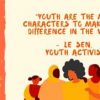
Lost in Translation? Understanding Relevance of Women, Peace & Security in Arms Control & Disarmament
“What does the Women, Peace and Security Agenda have to do with arms control and disarmament?”. Under varying formulations, this question keeps coming up whenever someone refers to the Women, Peace and Security (WPS) Agenda as a basis for ensuring that women’s voices and their specific security needs were taken into account in multilateral arms control discussions.
Women Empowerment During COVID-19 Through Remote Learning – the Fuzia Perspective
This year, the world commemorated the 25th anniversary of the Beijing Declaration and Platform for Action, instead of celebration; however, its progress has been impeded by the COVID-19.
Online Attacks On Female Journalists Are Increasingly Spilling Into the ‘Real World’ – New Research
The insidious problem of online violence against women journalists is increasingly spilling offline with potentially deadly consequences, a new global survey suggests.
CARE Offers Policies That Engender Success for Young People in Agribusiness
Often cited as Africa’s greatest asset, its youth are also among the most vulnerable and volatile. A large and growing population of talented young people has the potential to drive economic growth and well-being of societies across the continent but, as the African Development Bank warns, current conditions of severe unemployment are translating into poorer living conditions, higher flows of migration, and greater risks of conflict – in short, a social disaster in the making.
From Political Prisoner to Champion of Human Rights – The Wai Wai Nu Story
Instead of being cowed by her seven-year imprisonment, Wai Wai Nu, emerged stronger and more determined to fight for the rights of all people, including the Rohingya in her native Myanmar.
Farmers Will (Again) Feed the World
Wealthier countries struggling to contain the widening COVID-19 pandemic amid protests over lockdowns and restrictions risk ignoring an even greater danger out there – a looming global food emergency.
My Voice, Our Equal Future! Joining the Chorus of Girls Who Are Speaking up for Change
Girls are change makers and world shapers! When girls speak up, they are a powerful force to be reckoned with.
Vietnam and Cambodia: Leveraging Support to Enhance Climate Ambition
The COVID-19 pandemic has disrupted nearly every facet of our lives and delayed what was slated to be a landmark Conference of the Parties (COP26). This pivotal year marks the first due date for countries to submit revised national climate plans per the five-year cycle required by the Paris Agreement. Remarkably, countries are still moving forward with renewed urgency. And many countries are integrating green recovery into their COVID-19 responses, further contributing to climate action. While many countries have positive stories to tell, both of our nations, Vietnam and Cambodia, are sterling examples of nations taking strong, decisive action, particularly with support through the NDC Partnership. Just last month, the people of Vietnam submitted their updated national climate plan and, in short order, the people of Cambodia will do likewise.
African Employers for Gender Equality
Africa has over 700 companies with an annual revenue of more than $500 million, including 400 with revenue above $1 billion. The ability of these companies to thrive rests on building and retaining talented women and men.
COVID-19 Compounding Inequalities
The United Nations’ renamed World Social Report 2020 (WSR 2020) argued that income inequality is rising in most developed countries, and some middle-income countries, including China, the world’s fastest growing economy in recent decades. Inequality dimensions While overall inter-country inequalities may have declined owing to the rapid growth of economies like China, India and East Asia, national inequalities have been growing for much of the world’s population, generating resentment.
Reversing the Rohingya Crisis: One Woman at a Time
“This is a crisis without a quick fix that could take years to resolve unless there are concerted efforts to address its root causes”, says Manuel Fontaine, UNICEF Director of Emergency Programmes.
In India, Ending FGM Demands Truth and Transparency
“My daughter is eight years old. In May 2017, I had her ‘Khatna,’ her circumcision, done. I had taken her to a traditional cutter. Once back home I made her sleep on the bed. After some time, around 4:00 p.m. I took her to the bathroom, she was bleeding as if she had started her menses. It seemed like she was urinating blood. By 6:00 p.m. my daughter had been bleeding so heavily, the blood had soaked three bed sheets and I was very worried. And my daughter was quiet and she also kept asking me if she will be fine.” Excerpt from: How I got her from the hands of death: WeSpeakOut study 2018
Punches & Insults: Why Zimbabwe’s Women Candidates Want to Change the Political Playing Field
“I have long given up on active politics,” Gertrude Sidambe, a 36-year-old member of one of Zimbabwe’s opposition parties, tells IPS. When female members of the ruling Zimbabwe African National Union – Patriotic Front complained last month about political violence as male members chose brawn over brains to solicit for positions, the party’s National Secretary for Women’s Affairs Mabel Chinomona advised that they enter the punch-and-insult battlefield and “fight” like everyone else.
Women in War-Ravaged Afghanistan Fight Back for Their Rights
Bullets, bombs, tyranny and torture. Children crying for food, civilians struggling to survive, women unable to walk out of their homes freely. When we are not under siege from bombs and landmines, ordinary Afghans suffer from hunger, natural hazards and poverty.
Forced Child Marriage & Conversion: Public Discussion & Legal Reforms Called for in Pakistan
October 13 began like any other day at the Lal house as Raja Lal and his wife Rita Raja left for work at 7:30 am. "I made the usual breakfast of anda paratha (egg and flat bread) and told my eldest to lock the door from inside," Raja, who works as an ayah in a school, told IPS. Their 13-year old daughter, the youngest of their four children, did not go to school that day as her school shoes no longer fit and her parents hadn’t bought her a new pair yet. Little did they know that that day was the beginning of a nightmare for the Lal household. Their daughter would then allegedly be "abducted, forcefully converted and married in just one day”, Lal, a Christian, told IPS.« Previous Page — Next Page »





Women make up half the world's population, but don't nearly share half of the world's wealth, well-being and opportunity. Two-thirds of the world poor are women, disproportionally exposing women to precarious living conditions, disease and unmitigated natural disasters. The media, meanwhile, remains a male-dominated sector in much of the world, contributing to women's voices lacking a crucial amplifier to put their concerns on political agendas and unleash the development potential of their ingenuity. Rather than then stereotypical victims of local and global forces, women are also organizer, innovators, conservators and community builders. These are some of their stories.

The Week with IPS

NEXT STOP - SDGs
Tracking global progress towards a sustainable world
Tracking global progress towards a sustainable world
