Languages
Friday, October 2, 2026



News and Views from the Global South
Women's Health

Educating Children One Radio Wave at a Time
Nigeria’s conflict has displaced more than a million children, leaving them without access to education. However, an innovative radio program aims to transform this bleak scenario.
Digitizing Family Planning: The Way of the Future
Online shopping may have its pros and cons, but when it comes to buying products that have an invisible morality tag, it’s the safest possible option, believes Franklin Paul.
2 Billion People Don’t Have Access To Clean Water, Opens up Fissures of Inequality
More than two billion people lack access to clean and safe drinking water, according to a new report released by the World Health Organisation (WHO).
For India’s Urban Marginalized, Reproductive Healthcare Still a Distant Dream
In a semi-lit room of a southern Chennai neighborhood, a group of women sit in a circle around a table surrounded by large cardboard boxes of "Nirodh" – India’s most popular condom.
Is Religion the New Colonial Frontier in International Development?
A decade ago, it was difficult to get Western policy makers in governments to be interested in the role of religious organizations in human development. The secular mind-set was such that religion was perceived, at best, as a private affair. At worst, religion was deemed the cause of harmful social practices, an obstacle to the “sacred” nature of universal human rights, and/or the root cause of terrorism. In short, religion belonged in the ‘basket of deplorables’.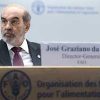
Progress on World Hunger Has Reversed
World hunger has increased, reversing years of progress, said a UN specialised agency. During its biennial conference held in Rome, Italy from 3-8 July, the Food and Agriculture Organisation (FAO) noted that the world is facing it’s worst food crisis since World War II.
Ending Child Marriage Could Add Trillions to World Economy
The benefits of ending child marriage are many—boosting a young girl’s morale and increasing her chances of education and work, and by that virtue, curbing high population rates in developing economies and boosting growth.
More Bang for Your Buck: Saving Lives by Investing in the Poorest
Investing in the health of the poorest communities saves almost twice as many lives, according to a UN agency’s analysis.
“Big Reflection” Needed on Opioid Crisis
Opioids are among the most devastating drugs and are creating a crisis of epidemic proportions, said the UN drug agency.
Sexual Violence Fuels Vicious Recruitment Cycle in Congolese Militia
In the Democratic Republic of Congo (DRC), the active recruitment of young girls by armed militias has produced disastrous effects—facing social stigma when they’re freed, many girls find their way back to these violent groups and rejoin them.
Achieving Universal Health Coverage (UHC) in Kenya through Innovative Financing
Every year, one million Kenyans are driven below the poverty line by healthcare-related expenditures. Poverty predisposes them to disease and slows all aspects of growth in the economy.
Women, Still Major Victims of Sharp Disparities at Workplaces
Reducing gender disparities at workplaces by 25 per cent by 2025 could inject nearly 5.8 trillion dollars into the global economy and boost tax revenues, according to a United Nations report, ahead of the UN Labour Organization’s Summit on "A better future for women at work" on June 15.The “Shocking” Reality of Child Marriage in the U.S.
While stories of child marriage are commonly associated with the Global South, lesser known are the cases closer to home: in the United States.
AIDS Pandemic Far From Over: 37 Million Living with HIV Globally
During the process of developing the Sustainable Development Goals it was clear to me how relevant and innovative the approach to ending AIDS had been and how important it would continue to be.
Africa Drives Global Action Against Mercury Use
With a new international treaty, an increasing number of African countries are committing to phasing out mercury, a significant health and environmental hazard.
Time To Focus On ‘Hidden Hunger’
As World Hunger Day May 28 approaches, it is time for us all to redouble our efforts to reach the goal of Zero Hunger by prioritizing the battle against micronutrient deficiency. If the international community pulls together this year to incorporate proven solutions such as biofortifying crops into the UN framework for sustainable development, we could reduce malnutrition on a truly global scale.
Menstrual Health and Vitality: Breaking the Silence, Stemming the Flood
Menstruation matters to everyone, everywhere. But it still matters so much more to women and girls, who have historically been asked to bleed in stoic silence so that no one even knows they have their period.
The ‘Public’ in Public Health
The discourse must move beyond a top-down approach to listen to the people and formulate best insurance practices

Sexual Violence as a “Threat to Security and Durable Peace”
Sexual violence is increasingly used as a tactic of terrorism and thus must be addressed as a peace and security issue, officials said at a United Nations Security Council meeting.
Kenya’s Drought: Response Must Be Sustainable, Not Piecemeal
A malnutrition emergency Food security in Kenya has deteriorated significantly since the end of 2016. UNICEF reports a significant increase in severe acute malnutrition. Nearly 110,000 children under-five need treatment, up from 75,300 in August 2016.

Civil Society: “Everyday Things Are Getting Worse” for Children in Yemen
Persistent attacks on health care in Yemen is severely impacting children’s well-being, civil society detailed at the launch of a report.« Previous Page — Next Page »


Worldwide, women’s health is a serious issue. The result of a wide diversity of factors, most notably insufficient access to education, women’s health issues must be addressed. Without access to proper schooling, many girls grow up without the necessary understanding of reproductive health. Due to this, reproductive issues and sexually transmitted infections plague women in developing countries. Women struggle to battle infections such as HIV. The lack of relevant services, coupled with the lack of women’s rights pertaining to their own health, are some of the serious issues that these stories seek to explain.

The Week with IPS

NEXT STOP - SDGs
Tracking global progress towards a sustainable world
Tracking global progress towards a sustainable world
