Languages
Wednesday, November 11, 2026



News and Views from the Global South
Global Governance

Drought, Disease and War Hit Global Agriculture, Says U.N.
The United Nations has warned of drought, disease and war preventing farmers from producing enough food for millions of people across Africa and other regions, leading to the need for major aid operations.
What Should FAO’s New Director General Focus on?
On 23 June 2019 Mr Qu Dongyu of China was elected as the new Director General of the Food and Agriculture Organization. FAO is one of the largest UN specialized agencies with a budget for 2018-19 of US$2.5 billion, offices in over 130 countries and more than 11,000 employees.
Will the UN & World Bank Continue to Lag Behind Europe in Ending Male Leadership?
The nominations of Christine Lagarde of France as the first woman to head the European Central Bank (ECB) and Ursula von der Leyen of Germany as the first woman to lead the 28-nation European Commission, have been described as significant landmarks in the higher echelons of international institutions long dominated by men.
Industrial Policy Finally Legitimate?
For decades, the two Bretton Woods institutions have rejected the contribution of industrial policy (IP), or government investment and technology promotion efforts, in accelerating and sustaining growth, industrialization and structural transformation. Finally, two International Monetary Fund (IMF) staff members, Reda Cherif and Fuad Hasanov, have broken the taboo. They embrace industrial policy, arguing against the current conventional wisdom that East Asian industrial policies cannot be successfully emulated by other developing countries.
The Libyan Disaster: Little Bits of History Repeating
The Libyan catastrophe and the suffering of ”illegal” migrants are generally depicted as fairly recent events, though they are actually the results of a long history of greed, contempt for others and fatal shortsightedness. Like former Yugoslavia, Libya was created from a mosaic of tribal entities, subdued by colonial powers and then ruled by an iron-fisted dictator. Now, Libya is a quagmire where local and international stakeholders battle to control its natural resources. The country holds the largest oil reserves in Africa, oil and gas account for 60 percent of GDP and more than 90 percent of exports.1 This is one reason why Egypt, France, Russia, Saudi Arabia, the U.S., and many other nations are enmeshed in Libya. Furthermore, European nations try to stop mainly sub-Saharan refugees and migrants from reaching their coasts from Libya. An attempt to understand Italy´s essential role in the struggle over Libya´s oil and attempts to control unwanted immigration may help to clarify some issues related to the current situation.
Media and Web Freedom Threatened in Sudan Turbulence
The United Nations has condemned an internet shutdown and the blocking of social media channels during Sudan’s political crisis, as fears persisted over a crackdown on media freedoms in the turbulent African country.
Sustainable Development Needs a Hardware Update
When UN Member States adopted the 2030 Agenda and its SDGs in September 2015, they signalled with the title Transforming our World that ‘business as usual’ is no longer an option and fundamental changes in politics and society are necessary.
We Can Get the 2030 Agenda Back on Track – With More Empowered, Inclusive, & Equal Partnerships
The 2030 Agenda for Sustainable Development, universally adopted in 2015, is a plan to create a better and more sustainable future for all in just 15 years, through 17 Sustainable Development Goals (the SDGs). It sounds implausible.
Africa’s Free Trade Area Misses Nigeria
When Africa’s free trade area launches on 7 July, a key player will be missing. However, Victor Adetula, head of research at Nordic Africa Institute (NAI) in Sweden, predicts that Africa’s largest economy, Nigeria, will gradually open up and join the project.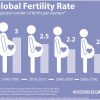
Zero Population Growth vs Population Control
Knowledge is power, but with the caveat that said knowledge is based in fact. Otherwise, it’s misinformation.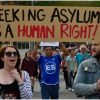
Australia’s Forgotten Asylum Seekers
As the focus of Australian politics shifts away from refugee and asylum-seeker policies, the government avoids accountability for inhumane actions.
Sri Lanka on Security Alert Long After Easter Bombings
Sri Lanka continues to be on a security alert long after the devastation caused by a string of bombings on Easter Sunday this year. Raisa Wickrematunge, Editor of Groundviews, told IPS: “There has been a tightening of security. There are now security checks being carried out outside hotels and shopping malls - either through scanners or bag and body searches”.
Are We Fighting a Losing Battle in the War Against Drugs?
How effective is the global war on drugs? The latest statistics released by the UN Office on Drugs and Crime (UNODC) are staggering: 35 million people across the globe currently have a substance use disorder, and as of 2017, 585,000 people have died worldwide as a result of drug use.
Paraguay Moves Towards Sustainable Commodities
The statistics are alarming. By 2050, the world will require an estimated 60 percent growth in agricultural production to meet the food demand of a population of close to 9 billion people.
Financialization Undermines Real Economy
The relationship between finance and the real economy is arguably at the root of the contemporary economic malaise. Unlike earlier acceptance of simple linear causation, recent recognition of a curvilinear relationship between finance and economic growth, implying ‘diminishing returns’, has important implications.
U.S.-backed Kurds to Halt Child Soldier use in Syria
The United States-backed Syrian Democratic Forces (SDF) have struck a deal with the United Nations to stop using child soldiers across swathes of eastern Syria under their control and to release all youngsters from their ranks, the U.N. announced Monday.
Unseen and Unsafe: Violence Against Women within Migrant Families
Refugee and migrant women often face inescapable violence in the home. And the potential for intimate forms of violence is exacerbated by humanitarian crises and job insecurity.
Could the Election of Qu Dongyu as FAO´s General-Director be a Turning-point for Sustainable Agricultural Development?
Agriculture is the bedrock of sedentary human civilization, without it we would have no governments or nations. It was food surplus generated by agriculture that enabled people to live in cities and form regimes able to organize food production in such a manner that some community members could engage in other activities than direct food production and thus give rise to the ideologies, techniques and goods which now constitute and govern our existence.
US & Iranian Actions Put Nuclear Deal in Jeopardy
Iran’s announcement that it may soon breach the 300-kilogram limit on low-enriched uranium set by the 2015 nuclear deal is an expected but troubling response to the Trump administration’s reckless and ill-conceived pressure campaign to kill the 2015 nuclear agreement, known as the Joint Comprehensive Plan of Action (JCPOA).
Is there a Co-Relation Between Human Development & SDGs?
“People are the real wealth of nations,” began the first Human Development Report (HDR). That 1990 report marked a turning point in the global development debate.
We Cannot Save the World from Climate Catastrophe if Largest Emitters of CO2 Don’t Step up Now
SUVA, Fiji, 27 June 2019 (IPS) -- Are the most climate-vulnerable nations of the world right to demand that developed and major economies commit to carbon neutrality by 2050? Should the poorest nations of the world insist that the “haves” put their significant economic and political resources behind aggressive efforts to combat climate change?« Previous Page — Next Page »





The Week with IPS

NEXT STOP - SDGs
Tracking global progress towards a sustainable world
Tracking global progress towards a sustainable world
