Languages
Friday, November 20, 2026



News and Views from the Global South
Global Governance

Cubans Want to Know When They Will Feel the Effects of Thaw with U.S.
While the normalisation of diplomatic relations between the United States and Cuba is moving ahead, and the U.S. and Cuban flags have been proudly waving in Havana and Washington, respectively, since last July, the year gone by since the thaw has left many unanswered questions.Analysis: Kurdish-Led Peace Conference Is Best Hope for Syria
While the war in Syria continues to draw in more outside forces, the work towards finding a political solution to this five-year old conflict carries on. In the past week, no less than three separate conferences were organized by different clusters of opposition groups. Conferences were held in three places: Damascus, Dêrîk – a city in the Kurdish-controlled northern part of Syria – and Riyadh, the Saudi capital, respectively.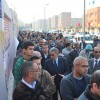
New Poll Highlights Need for Reform in the Middle East
A new public opinion survey undertaken in six Arab countries, Iran, and Turkey finds that people are more likely to blame “corrupt, repressive, and unrepresentative governments” and “religious figures and groups promoting extremist ideas and/or incorrect religious interpretations” for the rise of violent groups like al-Qaeda and the Islamic State than they are to blame “anger at the United States.”Development Aid on the Decline, Warns New Study
UN Secretary-General Ban Ki-moon expressed fears last month that increases in humanitarian aid to thousands of refugees invading Europe could result in sharp cuts on development aid by Western donors.
2016: The Forthcoming Adjustment Shock
Analysis of the latest International Monetary Fund (IMF) expenditure projections for 187 countries between 2005 and 2020 reveals that there have been two distinct phases of government spending patterns since the onset of the global economic crisis.
Cities Emerge as Urgent Climate Solution at COP21
As the climate conference advances into its final stages amid the colossal challenge of having 195 countries agree on a single and unified global policy on climate change, urban areas appear a a different issue but complementary solution for all.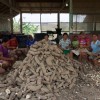
Soy, an Exotic Fruit in Brazil’s Amazon Jungle
In the northern Brazilian state of Pará, the construction of a port terminal for shipping soy out of the Amazon region has displaced thousands of small farmers from their land, which is now dedicated to monoculture.
Middle East Part II – 99.5 Years of (Imposed) Solitude
One hundred years ago, on 6 May 1916, two men, Briton Sir Mark Sykes and French diplomat François Georges-Picot, were entrusted by their respective governments with a rather exceptional task.
The Over-Written, Under-Reported Middle East – Part I: Of Arabs and Muslims
Of all over-written, under-reported issues and regions, the Middle East is perhaps one of the oldest, outstanding ones.
Native Seeds Help Weather Climate Change in El Salvador
Knife in hand, Domitila Reyes deftly cuts open the leaves covering the cob of corn, which she carefully removes from the plant – a process she carries out over and over all morning long, standing in the middle of a sea of corn, a staple in the diet of El Salvador.
“Paris Is Not the End of a Climate Change Process but a Beginning”
Chilean President Michelle Bachelet says the climate summit in Paris “is not the end of a process but a beginning,” and that it will produce “an agreement that, although insufficient with respect to the original goal, shows that people believe it is better to move ahead than to stand still.”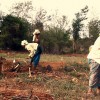
World’s Poorest Nations Battle Rising Rural Poverty
The world’s 48 least developed countries (LDCs), described as the poorest of the poor, are fighting a relentless battle against rising rural poverty.
Did Argentina’s Elections Mark Start of Shift to the Right in South America?
Different degrees of economic problems are a common denominator in South American countries where governments that identify as leftist may start to fall, in a shift that began in Argentina and could continue among its neighbours to the north.The Challenge of Climate Change: an Indian perspective
Few countries in the world are as vulnerable to the effects of climate change as India is with its vast population (of over 1.2 billion) that is dependent on the growth of its agrarian economy, its expansive coastal areas and the Himalayan region and islands.Open Defecation to End by 2025, Vows UN Chief, Marking World Toilet Day
The state of the world’s toilets reveals the good, the bad and the ugly – but not necessarily in that order.UN Advisory Board Seeks Powerful New Global Arena for Water and Sanitation
A 21-member UN Advisory Board on Water and Sanitation (UNSGAB), which has just completed its 11-year mandate, is calling for a complete overhaul of how the United Nations and the international community deals with two unresolved socio-economic issues on the post-2015 development agenda: scarcity of water and inadequate sanitation.Civil Society May be Snagged at Paris Climate Talks
The rising security concerns, following the terrorist attacks in Paris last week, are threatening to unsettle civil society participation in the upcoming landmark international conference on climate change in the French capital.
Latin America to Push for Food Security Laws as a Bloc
Lawmakers in the Parliamentary Front Against Hunger in Latin America and the Caribbean decided at a regional meeting to work as a bloc for the passage of laws on food security – an area in which countries in the region have show uneven progress.Nepali Farmers Get Climate Smart
Bimala Bajagain, a farmer and mother of three, wears a fading red kurta and appears older than her age at 35. She offers us plates of salted guavas at the porch of her quake-damaged house.
Leading Powers to Double Renewable Energy Supply by 2030
Eight of the world’s leading economies will double their renewable energy supply by 2030 if they live up to their pledges to contribute to curbing global warming, which will be included in the new climate treaty.Maternal Deaths Decline by 44 Percent, Says New Study
When world leaders adopted a set of eight Millennium Development Goals (MDGs) at a summit meeting in September 2000, one of the heavily-publicised goals was the commitment to reduce extreme poverty and hunger by the end of 2015.« Previous Page — Next Page »


The Week with IPS

NEXT STOP - SDGs
Tracking global progress towards a sustainable world
Tracking global progress towards a sustainable world
