Languages
Saturday, November 21, 2026



News and Views from the Global South
Global Governance
European Ruling Ignites Freedom Debate
A ruling by the European Court of Human Rights (ECHR) in relation to a Turkish national has kicked up a new row on anti-racism legislation.
Abolitionists Want to Set a Deadline for Nuclear Ban
Countries in favour of nuclear disarmament have reached the point where they are ready to set a date for the start of formal negotiations to eliminate nuclear weapons, a decision that could be taken in Austria at the end of this year.
Growing Inequality Mars 20 Years of Women’s Progress
As the world moves closer to the 2015 end mark of the Millennium Development Goals (MDGs), a new U.N. report illuminates how far global society has come, but also how far it still must travel to achieve its objectives.
Nuclear Weapons Leave Unspeakable Legacy
For decades, Yasuaki Yamashita kept secret his experiences as a survivor of the nuclear attack launched by the United States on the Japanese city of Nagasaki on Aug. 9, 1945.
Internet Holds a Presidential Hope
Turkey is waiting to see if President Abdullah Gul will ratify the government's controversial Internet bill, which opposition parties, civil society and the international community call a major restriction on freedom of expression.OECD in “Game-Changing” Move to Halt Tax Evasion
A major grouping of rich countries has unveiled a new model for the automatic exchange of certain individual financial information between countries, aimed at significantly cutting down on offshore tax evasion.
Waiting for Justice for Mali’s Missing Soldiers
Aminata Diarra last saw her brother, Malamine, a member of the Malian Red Berets, special forces loyal to ousted president Amadou Toumani Toure, alive on national television almost two years ago.
OP-ED: We Need Everyone to Build a More Sustainable World
Last week, I had the privilege of attending the Delhi Sustainable Development Summit, an annual event that deals with a subject that is very close to my heart. The summit gathered together amazing people: Nobel Prize winners, thought leaders, heads of state, corporate innovators, and academicians to deal with the paramount challenges of the 21st Century all focused on three pressing dimensions of sustainability: food, water and energy.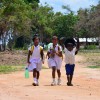
After War Comes Peace, Not Prosperity
Sri Lanka’s war-battered Northern Province had reason to celebrate when the results of a countrywide exam were announced last December. Of the 16,604 students from the province who sat for the exam, 63.8 percent secured the required marks for entry into prestigious national universities.
Nuke Summit Agenda Circumvents Armed Powers
When over 50 world leaders meet in the Netherlands next month for a Nuclear Security Summit (NSS), the primary focus will be on a politically-loaded question: how do we prevent non-state actors and terrorists from getting their hands on nuclear weapons or nuclear materials?
An Iran in Flux Marks 35th Anniversary of Revolution
Thirty-five years ago today, millions of Iranians embraced a religious leader promising freedom from a corrupt monarchy and national independence. Now many want a better standard of living and improved civil rights.
Mexico Deputises Vigilantes in Cartel Wars
“In the long term, what benefit will regulation of the autodefensas [self-defence groups] bring us? Do you think I have an aptitude or professional vocation for police work?” asked Juan Carlos Trujillo, a peace activist in the Mexican state of Michoacán.
DRC Mega-Dam to Be Funded by Private Sector, Groups Charge
Watchdog groups here are warning that a deal has been struck that would see Chinese investors fund a massive, contentious dam on the Congo River, the first phase of a project that could eventually be the largest hydroelectric project in the world.
Philippines Makes Tentative Truce With Islamists
After two years of intensive negotiations, the Philippine government and the country’s largest rebel group, the Moro Islamic Liberation Front (MILF), have signed a final peace agreement, which paves the way for a lasting resolution of one of the world’s longest-running intra-state conflicts.
Bursting the ‘Blood Bubble’
The longstanding Israeli practice of labelling settlement products “Made in Israel” is leading to mounting opposition to the occupation.
Poverty Wages Unraveling Cambodia’s Garment Industry
Cambodia’s garment industry is regularly plagued with strikes and protests. But when armed security forces opened fire on striking workers in the capital city of Phnom Penh on Jan. 3, killing five and injuring dozens, it suddenly became clear that this was not just another protest.
Economic Crisis in Mali’s North as the South Recovers
Under the harsh Sunday afternoon sun, Daouda Dicko washes his client’s clothes on the shore of the Niger River, which runs through Mali’s capital, Bamako. “I started doing this to survive two years ago. Now, I am used to it and I don’t mind the extra money it brings,” Dicko, who also works as a gardener, tells IPS.
Misread Telexes Led Analysts to See Iran Nuclear Arms Programme
When Western intelligence agencies began in the early 1990s to intercept telexes from an Iranian university to foreign high technology firms, intelligence analysts believed they saw the first signs of military involvement in Iran’s nuclear programme. That suspicion led to U.S. intelligence assessments over the next decade that Iran was secretly pursuing nuclear weapons.
Carbon-Neutral Costa Rica: A Climate Change Mirage?
Meeting Costa Rica’s self-imposed goal of being the first country in the world to achieve carbon neutrality by 2021 will depend on the priority given this aim by the winner of the second round of the presidential elections in April.
Not Enough Money to Bring Peace to CAR
There are growing concerns that the massive funding crisis for peacekeeping operations in the Central African Republic (CAR) will jeopardise any prospect of restoring stability to the country.
Pakistan Caught Between Talking and Fighting
Whether to make war or peace with the Taliban has become a dilemma for the Pakistani government.« Previous Page — Next Page »


The Week with IPS

NEXT STOP - SDGs
Tracking global progress towards a sustainable world
Tracking global progress towards a sustainable world
