Languages
Monday, October 5, 2026



News and Views from the Global South
Peace

Mali must not Be a New Site for Clashes Between Global Powers
Last week, I was delighted to speak to the United Nations Security Council. In the ten years that my country has been experiencing conflict, violence, and instability, dozens of conferences and other international summits have been held without ever really making room for those who are mobilized on a daily basis for more social justice, the defense of human rights and achieving Malian peace.
Fully Ready to Kill, Shockingly Unprepared to Save Lives
While absolutely ready to kill, with the biggest military powers spending in 2020 nearly two trillion US dollars on weapons, the world is shockingly unprepared to save the lives of millions of unarmed, innocent civilian victims of wars… and other man-made catastrophes.
On Nuclear Weapons, Actions Belie Reassuring Words
On Jan. 3, the leaders of the five nuclear-armed members of the nuclear Nonproliferation Treaty (NPT) issued a rare joint statement on preventing nuclear war in which they affirmed, for the first time, the 1985 Reagan-Gorbachev maxim that “a nuclear war cannot be won and must never be fought.”
Interview with Siddharth Chatterjee, UN Resident Coordinator in China, on the Beijing Winter Olympics and Paralympics
The interview was originally conducted by Beijing Daily. Beijing Daily: The world is paying attention to whether the Beijing Winter Olympic Games can be successfully held 6 months after the Tokyo Olympics in the face of COVID-19. How do you evaluate the preparations for the Beijing Winter Olympics? What is the key to the success of the Beijing Winter Olym-pics? What kind of signal will the successful hosting of the Beijing Winter Olympics send to the world?
When the Glass House by the East River Exploded in Laughter….
Created in 1945 following the devastation caused by World War II, the United Nations was mandated with the task of maintaining international peace and security as one of its primary political missions. But the seriousness of its far-reaching mandate has been tempered by occasional moments of levity which have rocked the “glass house by the east river” with laughter -- as recounted in a newly-released book on the United Nations titled “No Comment –and Don’t Quote me on That”.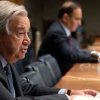
A Nuclear-Weapons-Free-Zone in the Middle East— & the Elephant in the Room
Israel’s nuclear presence in the Middle East is best characterized as “the elephant in the room” -– an obvious fact intentionally ignored with deafening silence.
Global Arms Industry Thrives Amid Worldwide Pandemic Devastation
The 21-month long pandemic, which began with the outbreak of the deadly corona virus back in March 2020, ravaged hundreds and thousands of businesses and industries resulting either in widespread losses, closures or bankruptcies.
COP26: Climate Emergency Includes Threat of ‘Nuclear Winter’
When world leaders gather in Scotland next week for the COP26 climate change conference, activists will be pushing for drastic action to end the world’s catastrophic reliance on fossil fuels.
Disarmament Week? But Hundreds of Nukes Can Be Launched Within Minutes
Hadn't it been so worrisome, it would be ironic to hear that humanity is to mark the World Disarmament Week (Oct 24 to 30, 2021) barely six months after learning that the world’s biggest military powers had spent last year some 2,000,000,000,000 US dollars on killing machines.
Will Taliban Honour UN Treaties Signed by Afghanistan Over the Last 20 Years?
When the Islamic Emirate of Afghanistan receives the political blessings of the 193-member General Assembly-- and eventually inherits its seat at the United Nations-- it will have to ultimately prove its credentials as a member of good standing by adhering to the UN Charter and the Universal Declaration of Human Rights (UDHR) – as all member states do.
Biden’s Nuclear Posture Review Must Reduce the Role of Nuclear Weapons
Most successful U.S. presidents have actively led efforts to advance arms control agreements and reduce the risk of nuclear war. Although much has been achieved over the years, there are still 14,000 nuclear weapons and nine nuclear-armed states; progress on disarmament has stalled; and tensions between the United States and its main nuclear adversaries—Russia and China—are rising.
When Taliban Ministers Avoided Eye Contact With Senior Female UN Officials
When the Taliban ruled Afghanistan during 1996-2001, the United Nations was engaged in a losing battle for women’s rights. And that battle was occasionally led by two senior female UN officials, one of them working for a UN agency providing humanitarian assistance inside unfriendly Taliban territory.
The Covid-19 Youth Employment Crisis in Asia & the Pacific
A pre-pandemic report published by the International Labor Organization, ILO, the Global Employment Trends for Youth 2020, offered a sober analysis on the job market prospects for youth.
As War Keeps Poisoning Humanity, Organizing Continues to Be the Antidote
Last weekend, U.S. corporate media continued a 20-year repetition compulsion to evade the central role of the USA in causing vast carnage and misery due to the so-called War on Terror. But millions of Americans fervently oppose the military-industrial complex and its extremely immoral nonstop warfare.
A Milestone Anniversary Reiterates The Culture of Peace is a Movement, not a Revolution
Today, on 13 September 2021, the UN Declaration and Programme of Action adopted by the General Assembly in 1999 will be turning 22. You would recall that the 20th anniversary of The Culture of Peace of its adoption by the world’s highest multilateral body in 2019 was observed by the United Nations in an appropriate and befitting manner, as called for by the Assembly. It was an occasion for reiteration and recommitment by us all to create the culture of peace in our world, beginning with each one of us.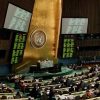
The Islamic Emirate, led by an Insurgent Group, Aims at Capturing a Coveted Seat at the UN
When the high-level segment of the 76th session of the UN General Assembly opens September 21, the Islamic Emirate of Afghanistan is unlikely to occupy a much-coveted seat in the world body.
Afghanistan – Another Viet Nam?
There are several points of similarity between the war in Afghanistan and the war in Viet Nam. The Taliban, like the North Vietnamese and the Viet Cong, proved to be formidable tacticians and fighters. They managed to contain a far better equipped opponent and mount effective counteroffensives; access sufficient domestic and foreign funding to pay their fighters and support their families; build a formidable intelligence network; and acquire necessary technical capabilities in areas such as repair and maintenance of small arms.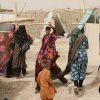
Afghanistan – a Turning Point?
Headlines in the press, live TV and internet coverage of the chaos at Kabul airport following the American withdrawal from Afghanistan has generated an impression around the world of an American foreign policy debacle, belittling the supremacy of American military power.
Biden’s Revenge: Fueling ‘Madness of Militarism’ in Afghanistan
Joe Biden provided a stirring soundbite days ago when he spoke from the White House just after suicide bombers killed 13 U.S. troops and 170 Afghans at a Kabul airport: “To those who carried out this attack, as well as anyone who wishes America harm, know this: We will not forgive. We will not forget. We will hunt you down and make you pay.”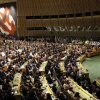
Taliban’s Quest for Legitimacy – and a Seat at the United Nations
When the Taliban captured power back in 1996, one of its first political acts was to hang the ousted Afghan President Mohammed Najibullah in Ariana Square in Kabul. The newly-installed government played a triple role: judge, jury and hangman, all three rolled into one.
After Afghanistan, War’s Idealists Must Accept Defeat
As the Western occupation of Afghanistan has come to an end, TV news is broadcasting harrowing scenes of death and destruction, citizens in fear, allies abandoned, and dreams dashed.« Previous Page — Next Page »


The Week with IPS

NEXT STOP - SDGs
Tracking global progress towards a sustainable world
Tracking global progress towards a sustainable world
