
Sunday, August 30, 2026



News and Views from the Global South
IPS UN: Inside the Glasshouse

Biodiversity Agreement Historic But Difficult to Implement
The pillar coral (Dendrogyra cylindrus), which takes its name from its shape, is found throughout the Caribbean Sea, but its population has declined by more than 80 percent since 1990. As a result, the International Union for Conservation of Nature (IUCN) has listed it as "critically endangered" due to the effects of the human-induced climate crisis.
Digital Treatment of Genetic Resources Shakes Up COP15
In addition to its nutritional properties, quinoa, an ancestral grain from the Andes, also has cosmetic uses, as stated by the resource use and benefit-sharing permit ABSCH-IRCC-PE-261033-1 awarded in February to a private individual under a 15-month commercial use contract.
Making the UN Charter a Reality: Why is UN Day Important for Asians at the UN?
To commemorate the seventy-seventh UN Day, the United Nations Asia Network for Diversity & Inclusion (UN-ANDI) held a panel discussion on the topic “Making the UN Charter a reality”. The discussion took place virtually on 27 October, and the event was attended by diverse participants from around the world.
COP15: Unsustainable Infrastructure Threatens Biodiversity
Created in 2016, the Mexican Caribbean Biosphere Reserve (MCBR) hosts 1900 species of animals and plants and contains half of the Mesoamerican Barrier Reef System, the second largest in the world after Australia's Great Barrier Reef.
IPS Journalist Emilio Godoy Wins UNCA Gold Medal
Inter Press Service (IPS) correspondent in Mexico Emilio Godoy has won the prestigious Prince Albert II of Monaco Foundation Award for coverage of climate change, biodiversity and water, awarded by the United Nations Correspondents Association (UNCA), receiving a gold medal.
COP15: ‘Super Reefs’ Offer Hope for Ocean Recovery Ahead of Biodiversity Summit
Delegates from more than 190 countries are donning thick coats and winter boots to attend the long-delayed UN biodiversity summit in Montreal, Canada—the land of caribou, beluga whales and wolverines.
A Little Land Helps Indigenous Venezuelans Integrate in Brazil
A group of Warao families are, through their own efforts, paving the way for the integration of indigenous Venezuelans in Brazil, five years after the start of the wave of their migration to the border state of Roraima.
Volunteerism: Path to Achieve UN’s Agenda 2030
The International Volunteer Day, a worldwide event commemorated every year on the 5th of December, comes at the end of a long line of special commemorations, each of them relevant and paramount to achieve the UN’s Agenda 2030.
Three Ways to End Gender-based Violence
How are the multiple shocks and crises the world is facing changing how we respond to gender-based violence? Almost three years after the COVID-19 pandemic triggered high levels of violence against women and girls, the recent Sexual Violence Research Initiative Forum 2022 (SVRI) shed some light on the best ways forward.
UN Deploys Unarmed Weapon in Humanitarian & Peacekeeping Operations
A sign outside the United Nations reads, perhaps half-seriously, that it is a “No Drone Zone”—and “launching, landing or operating Unmanned or Remote-Controlled aircraft in this area is prohibited”. The “warning” comes even as Unmanned Aerial Vehicles (UAVs) – or drones – are some of the new weapons of war deployed mostly by the US, and more recently, by Iran, Ukraine and Russia in ongoing military conflicts.
Loss and Damage Fund Saves COP27 from the Abyss
They were on the brink of shipwreck and did not leave happy, but did feel satisfied that they got the best they could. The countries of the global South achieved something decisive at COP27: the creation of a special fund to address the damage and loss caused by climate change in the most vulnerable nations.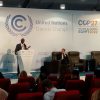
Will the Global Energy Crisis Accelerate the Energy Transition? The Big Question at COP27
COP27 is unlikely to produce new commitments to reduce emissions of climate-changing gases, but the global energy crisis will eventually prompt more action by countries to move away from fossil fuels. That is the positive feeling that many observers are taking away from the annual climate summit being held in Egypt.
Indigenous Peoples Have Their Own Agenda at COP27, Demand Direct Financing
Indigenous peoples are no longer content just to attend as observers and to be seen as victims of the impacts of the current development model, at the 27th Conference of the Parties (COP27) on Climate Change. That is why they came to the summit in Egypt with an agenda of their own, including the demand that their communities directly receive funding for climate action.
Making the UN Charter a Reality: Towards a New Approach to Development Cooperation?
We are living in a world where both our bilateral and multilateral achievements, consensuses on human rights and social justice, and our resolve to public good are being tested like never before.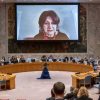
Solidarity and Negotiations to End the Ukraine War
On November 1, a statement of solidarity with Russians opposed to the Ukraine War was published. It was signed by more than 1,000 U.S. men and women who had opposed the U.S. invasions of Vietnam, Afghanistan and Iraq.
A Beacon of Light in Dark Times: the Dublin Platform for Human Rights Defenders
Before she was murdered in Honduras in 2016, the Lenca Indigenous woman and human rights defender Berta Cáceres poignantly said: “They are afraid of us because we are not afraid of them.”
Russian Dispute Over Drones Threaten to Escalate World Food Crisis
A war of words between Russia on the one hand, and the US, Britain, France and Germany on the other—specifically on the deployment of drones in Ukraine -- has triggered an unintended consequence: a new world food crisis. The Western powers last week asked the UN to verify whether Iranian drones were being used “illegally” in violation of the 2015 Security Council resolution 2231 which endorsed the Joint Comprehensive Plan of Action (JCPOA) on Iran’s disputed nuclear programme.
Activists Call Out 11 Muslim Member States to Repeal Death Penalty for Blasphemy
Eleven out of 57 members of the Organization of Islamic Cooperation (OIC) still sanction the death penalty for blasphemy and apostasy, silencing their citizens and emboldening violence by non-state actors.
Accelerating Post-Pandemic SDG 6 Achievements on Water & Sanitation
Global progress has been staggeringly inadequate against Sustainable Development Goal 6, “clean water and sanitation for all.” According to the latest SDGs progress assessment, 2 billion people still lack safely managed drinking water, 3.6 billion lack sanitation services, and 3 billion lack basic hygiene services.
Time is Running Out for Decisions on Debt Relief as Countries Face Escalating Development Crisis
Developing low- and middle-income economies are taking hard hits from global economic developments outside their control. Monetary tightening in advanced economies coupled with increasing fears of a global recession have weakened currencies, sent interest rates soaring, and investors fleeing.
The US-Saudi Alliance Will Stand the Test of Time
The recent conflict between the United States and Saudi Arabia over Riyadh’s decision to cut its oil production by 2 million barrels a day should be addressed in the context of their long and extensive relationship.« Previous Page — Next Page »


It was dubbed "The Glass House" by U.S. ambassador James Wadsworth in 1966. Half a century later, the United Nations has gradually expanded its role as agent of peace and protector of the world's vulnerable populations, while simultaneously facing internal pressures to become more inclusive, increase transparency and maintain legitimacy in the post-Cold War political and economic order. Highlighting the local impacts of global policies on economic development, environment, health and human rights, IPS's coverage goes beyond the edicts of the Security Council to illuminate the power struggles, successes and shortcomings of the 193-member institution as it grapples with crises like climate change, armed conflict, poverty and HIV/AIDS.

The Week with IPS
