Languages
Monday, November 16, 2026



News and Views from the Global South
Headlines

The UN General Assembly: A 75-Year Journey Towards the Future We Want
The United Nations came into existence at a time of great despair, when the penholders of its founding document dared to imagine a better world, one that would be defined by peace and equality. Visionary world leaders chose hope over cynicism, empathy over indifference and partnership over distrust when they came together in San Francisco on 26 June 1945 to sign the Charter of the United Nations. They embarked upon a new, rules-based world order, with an Organization of unrivalled legitimacy at its core.
Make a Fool of Yourself in the Third Act
Long ago, I was reviewing the offer of readings on the Internet, as a break from the search for academic sources for one of those articles with which to comply with professional rules, impress colleagues and students, and continue climbing steps in the university.
The New Poor Post-pandemic: Time for Cushioning the Most Vulnerable in Southeast Asia
After decades of impressive growth, for the first time, Southeast Asia is experiencing a drop in measured human development. The economic fallout from the COVID-19 pandemic will likely take months to reveal itself and years to put right. Yet, a legacy of mobilizing under constraints is leading Southeast Asia’s pandemic response.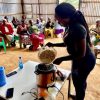
Clean Cooking Transition: Pathways as Seen by Kenyan Villagers
The Sustainable Development goals on energy speak clear: universal access energy and clean cooking by 2030 (SDG7). But the current efforts are still lagging several steps behind the specific needs of the communities and are not enough to achieve energy access for all, especially clean cooking solutions.
Religion & the Pandemic: A Call Beyond the Here & Now
-- I have never been interested in religion or spirituality before, but I found myself tuning in to all sorts of on-line religion and spirituality related forums “in search of something.”
Address Malnutrition with Food Insecurity
The 2020 State of Food Security and Nutrition in the World, issued by the Food and Agriculture Organization and its United Nations partners in mid-July, reports that chronic hunger continued to increase to 690 million worldwide in 2019, 60 million more than in 2014.
Kashmir Now Hotspot of Illegal Riverbed Mining
Going against its own orders, the government in the Indian Union Territory of Jammu and Kashmir has ordered the fast-tracking of environmental clearances despite manifest evidence of illegal sand mining.
With Proper Investment in Youth, Kenya’s Potential for Progress Is Unlimited
Africa’s demographic boom has been hailed as its biggest promise for transforming the continent’s economic and social outcomes, but only if the right investments are made to prepare its youthful population for tomorrow’s world.
SDGs: Accelerating Action & Transformative Pathways through Nature-based Solutions
The theme of this year’s High-Level Political Forum, where governments reviewed progress on the Sustainable Development Goals was “Accelerated action and transformative pathways: realizing the decade of action and delivery for sustainable development.”
The COVID-19 Plastic Pandemic
The coronavirus pandemic was a respite for nature everywhere. The air was cleaner, trekking trails were pristine, the summit of Mt Everest was deserted, and worldwide carbon emission dipped by -26%.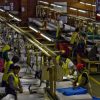
Why the African Free Trade Area Could be the Game-Changer for the Continent’s Economies
Most economists see structural transformation as one of the main routes to Africa’s sustainable development. What it means is changing the share of agriculture, manufacturing and services in an economy. It is a central aim of the African Union’s Agenda 2063.
The Good, the Bad and the Ugly
In the cinematic context of the death of the Italian and universal composer, Ennio Morricone, author of the background music of more than four hundred films, as an indirect tribute, Europe took a solid step.
The Charter of the United Nations: Ideals for Shaping Our Reality
“Reconciling the requirements of the ideal with the possibilities of the real": this is how Georges Bidault, Minister for Foreign Affairs and head of the French delegation to the San Francisco Conference, summed up the objective pursued by the drafters of the Charter of the United Nations. On the still living ashes of the Second World War, the fathers of an Organization charged with developing friendly relations between nations, promoting human rights and economic and social progress were less utopian than visionary. They understood that the community of States should have a common constitution. It has been tested by conflict, crisis and upheaval, but its resilience and strength have shaped the very structure of contemporary international relations.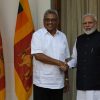
Modern Tools, Age-old Wisdom: on India-Sri Lanka Relations
The unique India-Sri Lanka relationship, de jure, is between equals as sovereign nations. But it’s asymmetric in terms of geographic size, population, military and economic power, on the one hand, and social indicators and geographical location, on the other. It is steeped in myth and legend, and influenced by religious, cultural and social affinities.
Southeast Asia Has a Chance to Build Back Better Post-Pandemic
Southeast Asia’s response to the coronavirus pandemic has been efficient, but some areas such as data privacy, measures to go back to normalcy after lockdown is lifted, and resources for migrant or transient populations will need addressing.
Corporate Bailout or Cash Transfers for All, including Children?
The Covid-19 pandemic seems to have spared children from the direct health effects of the virus but the crisis has affected their social and economic rights directly and indirectly beyond what we could have foreseen. And there's no doubt that children who come from more vulnerable backgrounds will feel the long-term impact of the pandemic and the measures taken to prevent its spread the hardest.
Google’s $10 Billion Investment in India Should be Inclusive of Persons with Disabilities
Over the next seven years, Google will invest a whopping $10 billion in India to improve technology, health and education, according to CEO Sundar Pichai. This is unprecedented and could be a game changer that could improve health, education and economic empowerment.
Sierra Leone – Why Everyone is Not Celebrating the New Media Law
Last week, Sierra Leone’s parliament voted to repeal the country’s 55-year-old libel law, which criminalised the publication of information that was deemed defamatory or seditious, and which had been used by successive governments to target and imprison media practitioners and silence dissenting views. But not everyone is convinced it was in the best interest of media freedom.
Only Governments Can Prevent Covid-19 Recessions Becoming Depressions
Covid-19 threatens economic life the world over. The most urgent and important need is for governments, businesses and families to survive. Governments must revive economies and livelihoods to prevent Covid-19 recessions from becoming protracted depressions. The Covid-19 crisis is clearly a ‘black swan event’, threatening both public health and livelihoods. Both the pandemic and containment efforts are not due to business operations and decisions, but nonetheless have compelling consequences for them.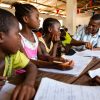
Last Mile Teachers
“It has gotten really tough for us,” says James, a father in rural Liberia, of COVID-19 lockdown and school closures. “My son is trying but he is missing his friends and teachers. Children want to be in school.”
Food Security Threats: Now a Warning and Later May Be Too Late
Recent world reports confirm that the goals set by the international community to end poverty and hunger, and create a more balanced, sustainable and fair world by 2030, are currently in danger. If effective and rapid global action is not taken, the goals will not be met and the results in just 10 years may be very negative for all of us.« Previous Page — Next Page »


