Languages
Friday, November 20, 2026



News and Views from the Global South
Headlines

Critical Issues to Watch in 2018
Another new year has dawned, and on a world facing serious disruption on many fronts. What are the trends and issues to watch out for in 2018?
Central America Weakens Forest Shield Against Future Droughts
Jazziel Baca lives in the municipality of Esquías, in western Honduras, one of the areas hardest hit by the southern pine beetle (Dendroctonus frontalis), which damaged almost 500,000 hectares of forest in that Central American country between 2013 and 2015.
The Political Responsibility in the Collapse of Our Planet
On 20 December, Europe’s 28 Ministers of Environment met in Brussels, to discuss the plan for reducing emissions prepared by the Commission, to comply with the Paris Agreement on climate change. Well, it is now clear that we have lost the battle in keeping the planet as we have known it. Now, of course, this can be considered a personal opinion of mine, devoid of objectivity.
US Faces Collective Defiance at UN Over Jerusalem
When the UN General Assembly condemned the United States for its decision to recognize Jerusalem as the capital of Israel, the vote was described as a “collective defiance” of the international community against public threats against the United Nations and its member states by a politically unpredictable and predictably wavering US President.
Central America Hashes Out Agenda for Sustainable Use of Water
The countries of Central America are striving to define a plan to promote the sustainable use of water, a crucial need in a region that is already suffering the impacts of climate change.
Goodbye to 2017, a Trump-dominated Year
In 2017, Donald Trump dominated the year by using US clout to change many aspects of global relations, and not for the better.
How a Venezuelan Living with HIV Could Change the Way Mexico Deals with Refugees
As Daniel*, a 26-year-old architect, stood before a visibly exhausted doctor in the main public hospital of the once-idyllic beach resort town of Isla Margarita, northern Venezuela, a terrifying premonition took hold of him.
Ethiopia’s New Addiction – And What It Says About Media Freedom
On a Saturday afternoon in one of Addis Ababa’s khat houses, a group of men and women chew the mildly narcotic plant while gazing mesmerized toward a television featuring a South Korean soldier stripped to his waist and holding a young lady’s hand while proclaiming his undying love—somewhat incongruously—in Amharic.
“Only Our Youth Can Save the Planet” – Kumi Naidoo
"Today’s youth should think of new solutions for old problems like climate change and social injustice." That's the strong message of the South African activist Kumi Naidoo. The former executive director of Greenpeace says young people need to be more innovative and visionary, "because the solutions of my generation have failed."
To Be a Latin-American Migrant in Madrid
If you are in Madrid and have some spare time, just go to an area which residents consider a “high class” neighbourhood situated in a district bordering Barrio de Salamanca, one of the richest areas in the Spanish capital.
Perpetrators of Crimes against Humanity Must be Brought to Justice
On the occasion of the 2017 International Day of Human Solidarity observed on 20 December, the Chairman of the Geneva Centre for Human Rights Advancement and Global Dialogue Dr. Hanif Hassan Ali Al Qassim calls for peace for and human solidarity with, the Rohingya minority in Myanmar.
Rise of Teenage Pregnancy Deters Development Goals
A few years ago, someone shared a video with me that deeply impacted me. It was called "The Girl Effect". In three minutes, the video demonstrates the fate of millions of girls and teenagers around the world.
Production Diversity, Diet Diversity and Nutrition in Sub -Saharan Africa
Lack of diet diversity is viewed as the major cause of micronutrient malnutrition in Sub-Saharan Africa. Imbalanced diets resulting from consumption of mainly high carbohydrate based-diets also contribute to productivity losses and reduced educational attainment and income. Consequently, micronutrient malnutrition is currently the most critical for food and nutritional security problem as most diets are often deficient in essential vitamins and minerals. In Tanzania, for example, most rural and urban households consume mainly staples as their main food, which are high in carbohydrates, but low in micronutrients and vitamins. Staple food items increase energy availability but do not improve nutritional outcomes if not consumed together with micro-nutrient rich foods.
Venezuela’s Oil Industry Is Falling Apart
Corruption in the Venezuelan state oil industry, denounced by the government itself, and with former ministers and senior managers behind bars, is the latest evidence that, in the country with the largest oil reserves on the planet, the industry on which the economy depends is falling apart.
Long Maligned for Deforestation, Charcoal Emerges from the Shadows
“We have various financial obligations that push us to charcoal making. Top on the list is farming inputs and school fees,” explains Arclay Moonga, a charcoal producer and chairperson of the recently formed Choma District Charcoal Association in Southern Zambia.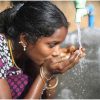
Water, Water Everywhere, Costs More Than You Might Think
Without reliable access to water, human beings cannot survive. Yet 3 out of 10 people do not have a safely managed water supply, and 6 out of 10 lack safely managed sanitation. Over 2 billion people drank water that was fecally contaminated in 2015, and the World Bank estimates that the annual cost of poor sanitation is in excess of $260 billion annually.
Our Right of Passage Should be Safe Migration, Not Leaky Boats
“I’m a migrant, but didn't have to risk my life on a leaky boat or pay traffickers. Safe migration cannot be limited to the global elite.” Thus spoke United Nations Secretary General Antonio Guterres in September 2017.
No Health Protection for Migrant-Women Healthcare Givers
While the media may be attracted by images of migrants drowning or sold as slaves, another flagrant but lesser-known drama is that of care workers, who are overwhelmingly women, often migrants, and who make a very large contribution to global public health, but are exposed to great health risks themselves with little or no protection, let alone basic labour rights.
Why the Rohingya Can’t Yet Return to Myanmar
On Nov. 23, the governments of Myanmar and Bangladesh signed an agreement to return the Rohingya refugees — more than 600,000 people who escaped from Rakhine state in western Myanmar to Cox’s Bazar in Bangladesh — after ethnic cleansing carried out by Myanmar’s armed forces since August.
Helping Nepal by Working Abroad
Only a few millimeters of corrugated metal keeps us apart from the advancing dusk.
Rohingyas: Lurching from Crisis to Crisis
Ferdous Begum was cleaning her child after he had defecated in the open, using leaves she collected from a nearby tree at Bangladesh’s Teknaf Nature Park. The settlement is packed with Rohingya refugees who fled military persecution in Myanmar since August.« Previous Page — Next Page »


