Languages
Sunday, November 22, 2026



News and Views from the Global South
Headlines

25th November – International Day for the Elimination of Violence against Women
Each year on November 25, the International Day for the Elimination of Violence against Women is commemorated. A commemoration in essence is an opportunity to reflect on the challenges, prove that progress can be made and celebrate victories. It is also a reminder of the obligations and the responsibility we all must own at both the private and the public level to ensure that every woman, every girl, in all corners of the world lives in a world free of violence and fear. They must be enabled to enjoy their most fundamental right to physical integrity and security.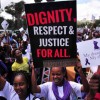
Let’s Unite to End Violence Against Women in Kenya
Consider this. According to the 2014 Kenya Demographic and Health Survey of Kenya, 4 out of every 10 Kenyan women undergo some form of violence, whether physical or sexual. This figure is staggering and should compel us to pause and reflect.
Ensuring Shared Progress for Sustainable Development and Peace
International inequality has grown over recent centuries, especially the last two. Before the Industrial Revolution, between-country inequalities were small, while within-country inequalities accounted for most of overall global income inequality. Now, inter-country income inequalities account for about two-thirds of world inequality with intra-country inequality accounting for a third.
Violence Against Black Women in Brazil on the Rise, Despite Better Laws
Four months in hospital and a number of operations saved the life of Maria da Penha Fernandes of Brazil, but the rifle shot left her paraplegic at the age of 37. When she returned home, her husband tried to electrocute her in the bathroom.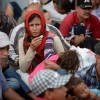
For Women and Girls Who Flee Conflict: Protection & Opportunity
Over the past 18 months, 1.3 million migrants and refugees crossed into Europe. For women and girls particularly, that journey is one of violence and trauma.
Initial Global Effects of Trump Even Before Taking Office
Even before taking office, President-Elect Donald Trump and the policies he promised during his campaign are already having a worldwide impact in at least three areas -- global finance, trade and climate change.
Australian Activists, Dissenters and Whistleblowers Feeling the Heat
For Australian activist Samantha Castro, it was her association with the non-profit publishing organisation Wikileaks that brought her to the attention of the Australian Federal Police (AFP).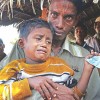
Refugees Slipping in, Getting Help
Wearing a burqa, Rashida Khatun was waiting in front of Lambabil fish market along the Cox's Bazar-Teknaf highway yesterday afternoon.
The Potential Cost of U.S. Climate Inaction
Although U.S. President-elect Donald Trump has hinted he may be softening his stance on climate change, many are still uncertain of what lies ahead concerning climate action within and beyond the United States.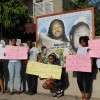
Jamaica’s Culture of Fear Allows Police to Get Away With Murder
The morning her brother was shot dead in January 2014, Shackelia Jackson had slept through her alarm. She woke up to the sound of his name and instantly knew something was wrong. When she ran down to the modest restaurant he operated in downtown Kingston, she noticed the spoon in the rice pot, the flour where the chicken was being fried. Then one of his slippers, and blood marks.
Battle of the Desert (and III): UNCCD ‘s Louise Baker on The Silk Road
Marking this year's World Day to Combat Desertification last June, the United Nations announced the launch of a China-United Nations Convention to Combat Desertification (UNCCD) Belt and Road Joint Action initiative to curb Desertification along the Silk Road.
Speaking Out on Sexism and Violence Through Hip-Hop
Young women are beginning to find their voices around issues such as sexism and violence, including through hip-hop, an art-form which has a long tradition of fighting oppression.
Terrorism’s Decreasing Numbers
Numbers, like words, tell stories. In recent years, the stories told by the numbers of Pakistan have mostly been sad ones that have largely to do with death. Collectively, they enumerate deaths from disease, deaths in childbirth, deaths at the hands of loved ones and the country’s security/state apparatus. Meanwhile, the numbers of deaths from terrorist attacks have been responsible for the state of the most bereft. We have, over the years, counted dead children, dead mothers, dead fathers, dead governors and dead prime ministers. People have died at terror’s hands while shopping, while taking their children to school, while praying and in hospitals while already dying.
The Less Talked about Abuse of Children
The NSPCC (National Society for the Prevention of Cruelty to Children), UK defines child abuse as any action that causes significant harm to a child, be it physical, sexual, or emotional. These terms bring to mind cases of molestation and rape, or torture caused by outsiders. Seldom do we think of the harsh behaviour inflicted by family members and teachers, whereas these are the things children are least able to revolt against.
Students Under Siege as Schools Burn in India’s Troubled Kashmir
In the fading light of a November afternoon, 12-year-old Mariya Sareer bends over a textbook, trying to read as much as she can before it gets dark. It's been nearly five months since the seventh grader from Shurat, a village 70 kms south of Srinagar city, last went to school, thanks to a raging political conflict.
Nations Lose Bid to Block UN LGBTI Expert
Following a contentious and close vote, a UN General Assembly (UNGA) committee reaffirmed the right of a newly appointed UN expert addressing violence and discrimination based on sexual orientation and gender identity to continue his work.
How Do You Make a Region Visible?
“One challenge we are facing is that we are invisible as a region, and the feminist movement is invisible, both inside and outside the region.” Natalia Karbowska, Board Chair of Ukrainian Women’s Fund said at a session on Eastern and South-East Europe, Caucasus, and Central Asia: Getting (back) on global feminist map during the recent AWID Forum held in Bahia, Brazil from the 8th-11th September, 2016.
Kenya’s Youth Unemployment Challenge Presents Opportunities
Consider this paradox. Every year 1 million young people join the job market in Kenya, yet Kenya has the largest number of jobless youth in East Africa. As the government puts in place measures for addressing the issue of high youth unemployment and poverty, The private sector needs to join forces to sustainably grow its business and markets. Businesses and the societies that they operate in are symbiotic and it is now an established maxim that business cannot succeed in societies that fail.
Children of the ‘Others’, Sons of Minor Gods
In December 1946, “faced with the reality of millions of children suffering daily deprivation in Europe after World War II,” the General Assembly of the United Nations created the UN International Children’s Emergency Fund (UNICEF), to mount urgent relief programmes.
Coal Mine Threatens Ecological Paradise in Chile’s Patagonia Region
An open-pit coal mine in the southern island of Riesco, a paradise of biological diversity in Chile’s southern Patagonia wilderness region, is a reflection of the weakness of the country’s environmental laws, which are criticised by local residents, activists, scientists and lawmakers.
Is Donald Trump Bad for the Environment?
Donald Trump's presidency is going to be a game-changer for the world. The impacts that it will have on major world issues such as terrorism, racism and global finance have been extensively discussed in the public sphere. Trump has claimed that he will make America “great again” by applying the same principles that have made him a business tycoon. Many of Trump's supporters believe that his methods will make all Americans richer and more successful like Trump himself. However, environmentalists are not impressed by this rhetoric. Businessmen are generally known to only think in terms of profit and loss. From this perspective, the environment can be degraded as long as it is profitable to do so. The US needs a responsible leader who will make the planet more sustainable by taking into account the needs of future generations; however, their new President is just another powerful businessman who could not care less about the environment.« Previous Page — Next Page »


