Languages
Sunday, November 22, 2026



News and Views from the Global South
Headlines
Caribbean: Rethinking Progress in Sustainable Development Era
Caribbean countries make a special case for development. The high and increasing exposure to hazards, combined with very open and trade-dependent economies with limited diversification and competitiveness portray a structurally and environmentally vulnerable region, composed, in the most part, of middle income countries.
New Government Inherits Conflict over Peru’s Biggest Mine
Of the 150 socioeconomic conflicts related to the extractive industries that Peru’s new government inherited, one of the highest-profile is the protest by the people living near the biggest mining project in the history of the country: Las Bambas.
Refugees Flee Political Violence in Burundi
 A year after political violence erupted in Burundi, nearly 300 000 people have fled to neighboring Tanzania and Democratic Republic of Congo.

In Host Country Lebanon, Refugee and Rural Women Build Entrepreneurship, Cohesion and Future
“When we were forced to leave our country, I never thought that a community in Lebanon would accept and treat me as an active member, the way I have been at the Kfeir Women’s Working Group,” says Hiba Kamal, an 18-year-old refugee from Syria who travelled to Lebanon with her family five years ago fleeing instability in her own country.The Asian Stage for the American Show
The Americans had their eye on Asia since Commodore Perry opened Japan in 1853, but now they have their heart set on this distant continent. It's clear as daylight that a quiet showdown is imminent, if not already at work. The United States signed a 10-year defense framework agreement with India last month. Japan is trying to reel in Russia. The purpose is to build a bulwark against China, and isolate it in its own backyard.
Catch ’em Young
According to Unesco’s Global Education Monitoring Report [GEMR] 2016 released recently, only two-thirds of children worldwide would have completed primary schooling by 2030, the deadline set by the UN’s Sustainable Development Goals.
European Security with or Without Russia?
Consequences of the Chinese-Russian Alliance on the Relationship Between USA and EU
The joint military manoeuvres between the Russian and Chinese navies, armies, and air forces has kicked off. It's a clear message for Washington, which has recently strengthened its action in Asia, indicating that as a country that overlooks the Pacific, it wants to play an important role in the continent, aimed at containing the Chinese expansion.

Economic Growth in Bangladesh: Challenge and Change for Women
A recent research study “Bangladesh: Looking Beyond Garments” conducted by the Asian Development Bank ADB has revealed that the positive economic turnaround in Bangladesh is largely due the rising presence of women in the workplace.
Militarised Conservation Threatens DRC’s Indigenous People – Part 2
The Bambuti people were the original inhabitants of Virunga National Park in the Democratic Republic of Congo, the oldest national park in Africa whose boundaries date back to 1925 when it was first carved out by King Albert of Belgium. But forbidden from living or hunting inside, the Bambuti now face repression from both park rangers and armed groups.
Building Bridges: Sheikh Mohamed bin Zayed of the Emirates at the Vatican
As the rise of religious racism and Islamophobia sweeps across Europe, the United Arab Emirates (U.A.E) is increasing their emphasis on the message for peaceful tolerance across all nations.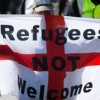
Brexit’s Pandora’s Box
Now that the dust has settled on the EU referendum results, we can take stock of the full extent of the damage. Not only has Brexit had political and economic repercussions, it has had social implications with frightening consequences, namely a sudden increase in xenophobic and racist attacks. The most recent being the assault in the small town of Harlow on 40-year-old Polish Arkadiusz Jóźwik, by a group of British youths, resulting in his death. The police are treating this attack as a hate crime.
A Government of Law, Not of Men
The rule of law, at its most basic, means that the law applies to everyone equally. It means that no one is above the law. It is also popularly understood as “a government of law, not of men.” And, while the law may be harsh, it is the law. Dura lex, sed lex.
New Public Website Offers Detailed View of Industrial Fishing
In a giant step for transparency at sea, environmentalists on Thursday unveiled a website that allows anyone with an Internet connection to see for free exactly where and when most of the world’s industrial fishing boats actually fish.
Corruption and Wildlife Trafficking: the Elephant in the Room
Wildlife trafficking is high on conservation and political agendas. It is also increasingly high on the global crime agenda. Rightly so: corruption was identified recently by the UN Office on Drugs and Crime as the main enabler of wildlife trafficking – one of the largest transnational criminal activities in the world.
UN Summit Won’t Resolve Refugee Resettlement Impasse
Next week’s landmark UN summit on refugees and migrants was supposed to help resettle one in ten refugees, instead UN member states have settled for vague gestures, including a campaign to end xenophobia.

Fish Farming, a Challenge and Opportunity for Small Farmers in Brazil’s Amazon
Domingo Mendes da Silva has lost track of how many visitors he has received at his 10-hectare farm in northwest Brazil. He estimates “more than 500,” including aquaculture technicians, government officials, peasant farmers, journalists and other people interested in fish farming.
Fifteen Years after 9/11: Is America Any Safer?
Is America Any Safer” is the cover story of this September's Atlantic magazine. CNN and other media outlets are also commemorating the catastrophic terror attacks on the morning of September 11, 2001. Reflecting their collective paranoia or delusions of persecution, and exaggerated self-importance, Americans in general are perplexed about certain things with regard to 9/11: a) what went wrong with their intelligence; b) why some people hate them so much; c) America is no longer invincible; and d) theirs being “The land of the free and the home of the brave” will always remain “Number One”. However, the politics of fear- and hate-mongering has impaired a large number of American minds, which only think Islamist terrorists are the sole security threat to their nation.
Global Citizenship Education Aims to Break Down Artificial Barriers
The importance of education in the promotion of peace, sustainable development and human dignity, and the prevention of violent extremism, was the focus of a Global Citizenship Education Seminar at UN headquarters in New York on Friday September 9.
Militarised Conservation Threatens DRC’s Indigenous People – Part 1
It is late afternoon when a light drizzle begins to fall over a group of young men seated together in Mudja, a village that lies approximately 20 kilometres north of Goma on the outskirts of the Virunga National Park. Mudja is home to a community of around 40 families of indigenous Bambuti, also known as ‘pygmies.’*
Today’s Malnourished Kids Are Tomorrow’s Drug Addicts
This is an interesting question. Whatever happened to the five-year-old kids who were on the “wasted and stunted” list 15 years ago due to malnutrition? I will throw in one answer: many of them may have gone into hopeless lives, then into illegal drugs. And some of them may be part of the rising statistics on the drug users and pushers killed in the current campaign against illegal drugs.
Man-Made Disasters Intensify Vulnerability
As sea levels continue to rise, coastal communities in the province of Sindh, Pakistan, must now move further inland. Whereas uncontaminated, fresh water could be found in abundance up to 20
years before , the villagers must now dig up to 18ft in search of the few sources of clean water. When the cyclone hit District Thatta in 1999, mass destruction followed in its wake. Today, villagers still feel the grave consequence of its aftermath.
« Previous Page — Next Page »


